

1 konvertibilna marka – Bosnia and Herzegovina
Add to wishlist
Bosnia and Herzegovina
Context
Years: 2000–2025
Issuer: Bosnia and Herzegovina
Period:
(since 1992)
Currency:
(since 1998)
Total mintage: 60,551,000
Material
References
KM: #
Numista: #3073
Value
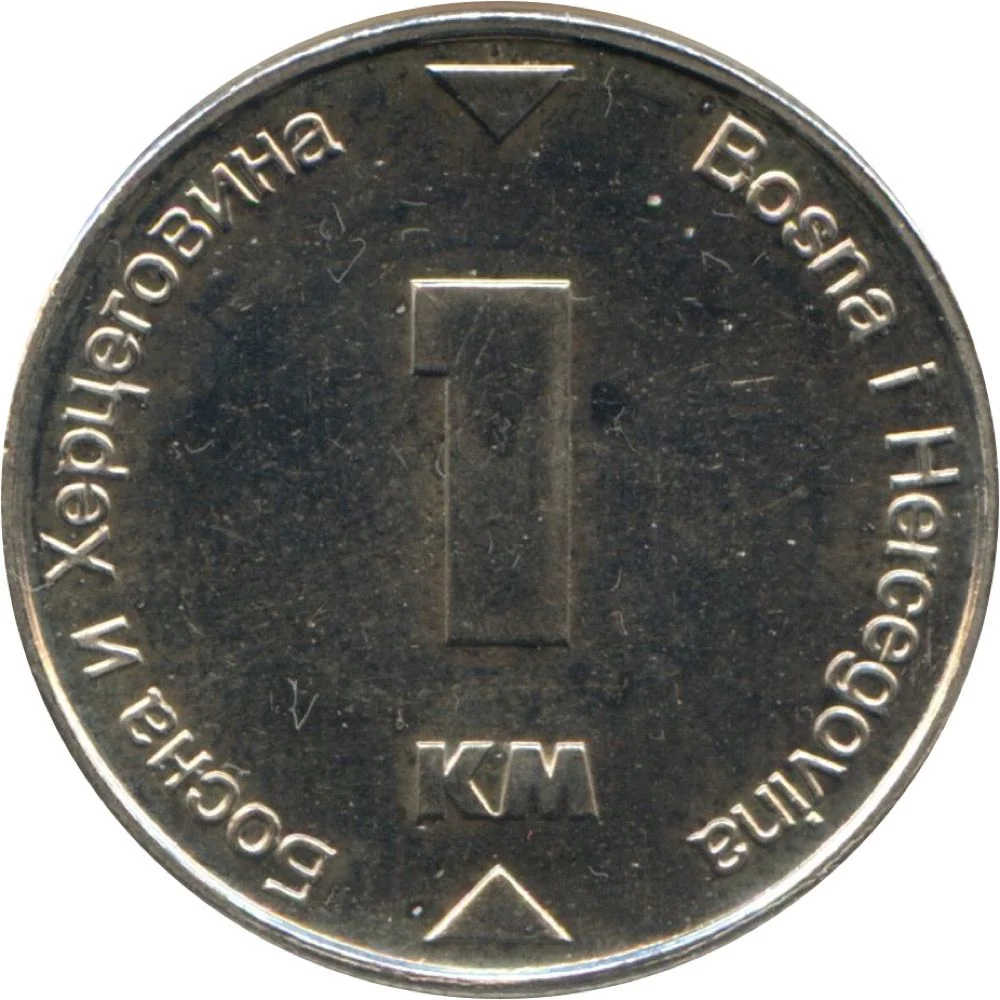
Exchange value: 1 BAM
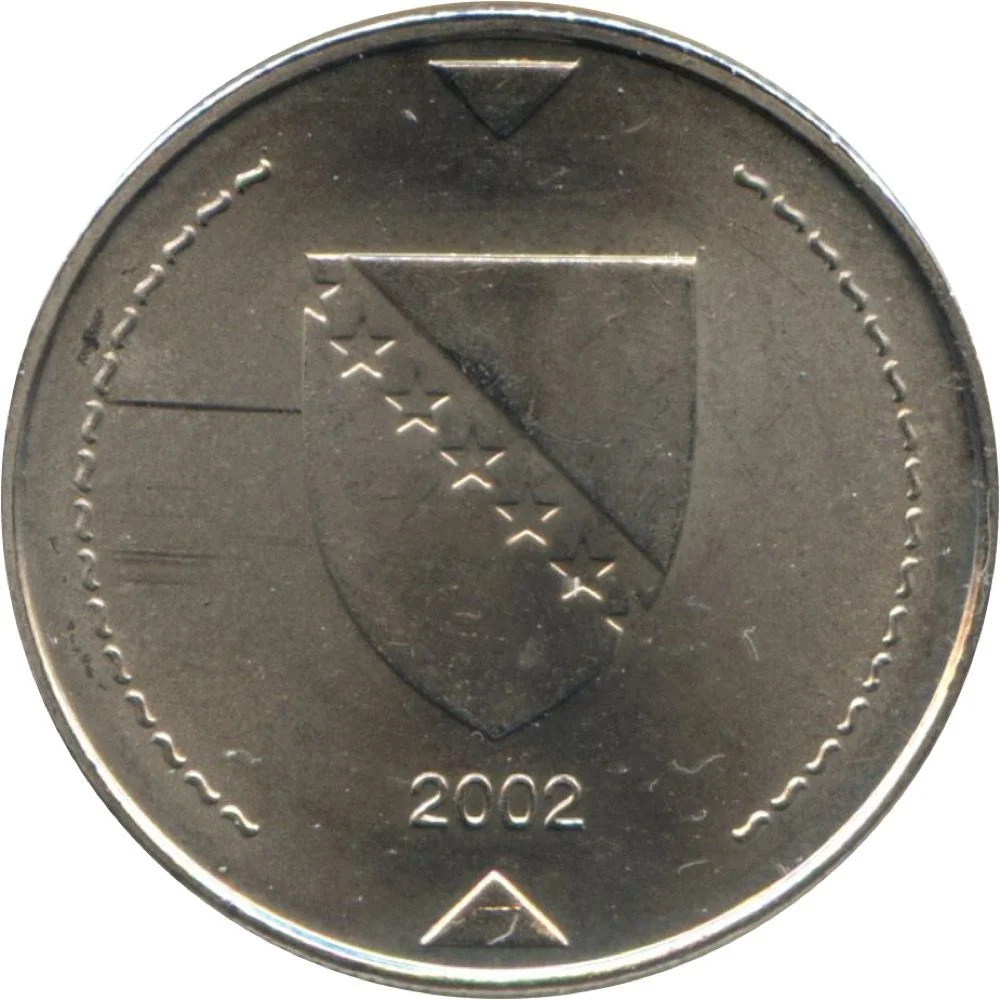
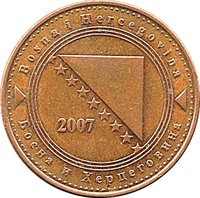
Obverse
Reverse
Edge
Segmented reeding
Categories
| Symbols> Coat of Arms |
Mints
| Name | Mark |
|---|---|
| Royal Mint | — |
Mintings
| Year | Mint Mark | Mintage | Quality | Collection |
|---|---|---|---|---|
| 2000 | — | 10,000,000 | ||
| 2002 | — | 7,000,000 | ||
| 2006 | — | 10,000,000 | ||
| 2007 | — | 5,551,000 | ||
| 2008 | — | 5,000,000 | ||
| 2009 | — | 5,000,000 | ||
| 2013 | — | 3,000,000 | ||
| 2017 | — | 15,000,000 | ||
| 2021 | — | — | ||
| 2025 | — | — |
Historical background
In 2000, Bosnia and Herzegovina's currency situation was defined by the profound stability of the Convertible Mark (KM or BAM), which had been successfully introduced in 1998 to replace the complex and politically fragmented monetary system that emerged after the 1992-1995 war. The KM was not a freely floating currency but was pegged to the German Deutsche Mark (DEM) at a strict 1:1 parity, a policy managed by the country's Currency Board. This institutional arrangement, established under international guidance, required that every KM in circulation be fully backed by foreign reserves (initially DEM, later euro), prohibiting the central bank from financing government deficits or engaging in discretionary monetary policy. This imposed severe fiscal discipline but was crucial for halting hyperinflation, building public trust, and unifying the monetary space across the country's two distinct entities, the Federation of Bosnia and Herzegovina and the Republika Srpska.
The primary challenge in 2000 was not inflation or instability, but rather the sluggish pace of economic transition and recovery within the constraints of the Currency Board. The economy remained weak, with high unemployment and limited industrial output. The rigid peg, while ensuring stability, also meant Bosnia imported the monetary policy of the European Central Bank (as the DEM was subsumed into the euro in 1999), leaving no tool for competitive devaluation or domestic interest rate adjustments to stimulate growth. Furthermore, the "euroization" of the economy was advanced, with a significant portion of bank loans and large transactions still conducted directly in Deutsche Marks, reflecting lingering public preference for the anchor currency itself over the local note.
Overall, the year 2000 represented a period of consolidated monetary stability but persistent economic fragility. The Currency Board had successfully achieved its primary goal of creating a single, credible currency, which was a cornerstone of post-war reconstruction and state-building. However, it also highlighted the longer-term dilemma: the system provided a crucial anchor of confidence but did not address underlying structural economic problems, leaving the country heavily dependent on foreign aid and remittances while its institutions worked to foster real economic growth within a very rigid monetary framework.
The primary challenge in 2000 was not inflation or instability, but rather the sluggish pace of economic transition and recovery within the constraints of the Currency Board. The economy remained weak, with high unemployment and limited industrial output. The rigid peg, while ensuring stability, also meant Bosnia imported the monetary policy of the European Central Bank (as the DEM was subsumed into the euro in 1999), leaving no tool for competitive devaluation or domestic interest rate adjustments to stimulate growth. Furthermore, the "euroization" of the economy was advanced, with a significant portion of bank loans and large transactions still conducted directly in Deutsche Marks, reflecting lingering public preference for the anchor currency itself over the local note.
Overall, the year 2000 represented a period of consolidated monetary stability but persistent economic fragility. The Currency Board had successfully achieved its primary goal of creating a single, credible currency, which was a cornerstone of post-war reconstruction and state-building. However, it also highlighted the longer-term dilemma: the system provided a crucial anchor of confidence but did not address underlying structural economic problems, leaving the country heavily dependent on foreign aid and remittances while its institutions worked to foster real economic growth within a very rigid monetary framework.
🌱 Very Common