

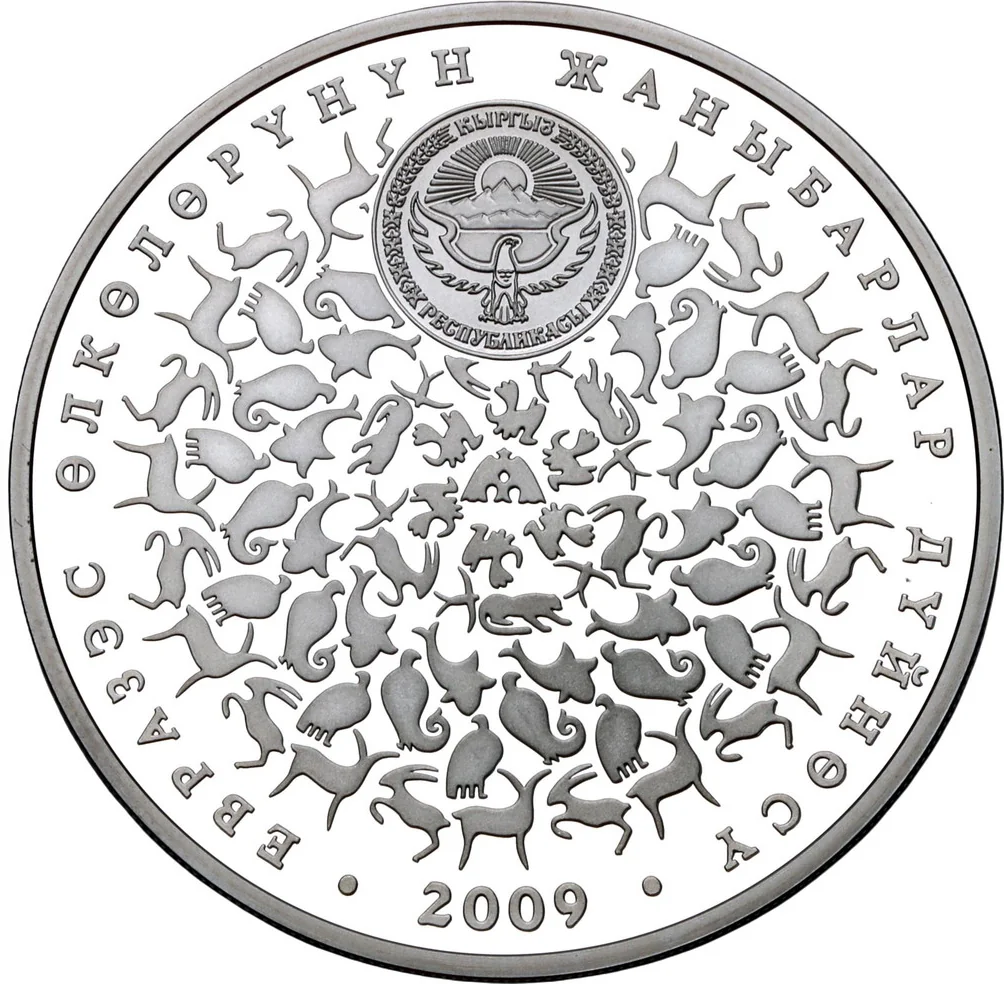
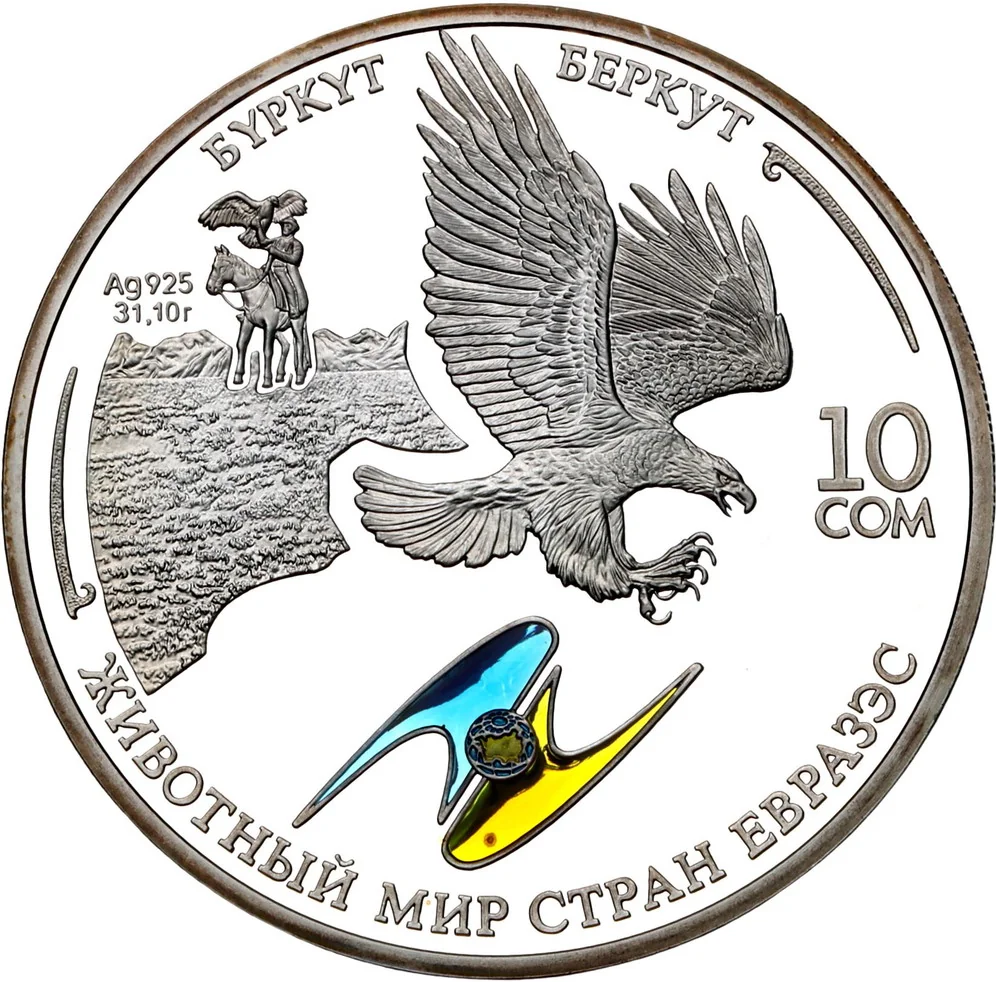
10 Som – Kyrgyzstan
Non-circulating coins
Commemoration: Golden Eagle
Kyrgyzstan
Context

Material
Diameter: 38.6 mm
Weight: 31.1 g
Silver weight: 28.77 g
Shape: Round
Composition: 92.5% Silver
Standard: Silver ounce
Magnetic: No
Technique: Milled
Alignment: Medal alignment
flip
References
KM: #Click to copy to clipboard38
Numista: #30634
Value
Exchange value: 10 KGS
Bullion value: $83.20
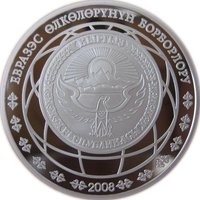
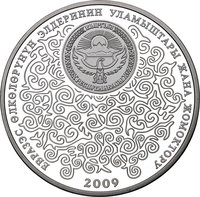
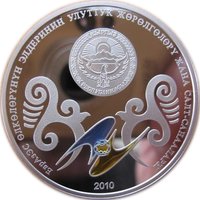
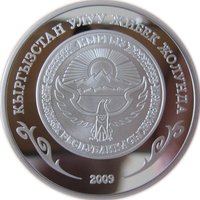
Obverse
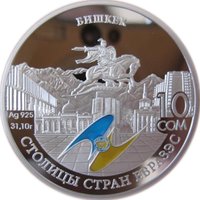
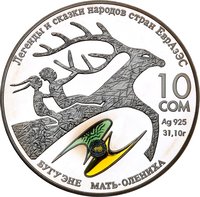
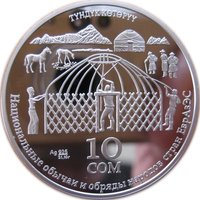
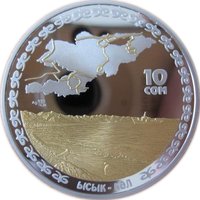
Reverse
Edge
Mintings
| Year | Mint Mark | Mintage | Quality | Collection |
|---|---|---|---|---|
| 2009 | — | 3,000 | Proof |
Historical background
In 2009, Kyrgyzstan's currency, the som (KGS), faced significant pressure amidst a backdrop of global financial crisis and acute domestic instability. The year began with the som trading at approximately 41 per US dollar, but it rapidly depreciated, losing around 20% of its value by mid-year and breaching 49 soms to the dollar. This sharp decline was primarily triggered by a severe contraction in remittances from Kyrgyz migrant workers in Russia and Kazakhstan, a critical source of foreign currency, as those economies were hit hard by the global recession. Concurrently, a poor harvest and declining exports, particularly of gold, further strained the country's foreign exchange reserves.
The currency crisis was exacerbated by a profound loss of confidence in the banking system and the government's ability to manage the economy. Widespread rumors of an impending devaluation led to a classic bank run, with citizens rushing to convert their som savings into dollars, draining commercial bank liquidity. The National Bank of the Kyrgyz Republic (NBKR) initially attempted to defend the som by spending its limited reserves on direct interventions in the foreign exchange market. However, this strategy proved unsustainable, and by April, the NBKR was forced to shift to a managed float, effectively allowing the som to depreciate to a market-driven level while using occasional interventions to smooth volatility.
The aftermath of the 2009 currency shock had lasting consequences. The depreciation, while making remittances in dollars more valuable in som terms, also fueled inflation, eroding purchasing power and increasing the cost of essential imports like food and fuel. The government sought financial support from international institutions, securing a $100 million loan from the World Bank and a $150 million stand-by arrangement from the IMF to bolster reserves and stabilize the macroeconomic situation. Thus, 2009 stands as a pivotal year highlighting the vulnerability of the Kyrgyz economy to external shocks and the critical role of remittances and confidence in maintaining currency stability.
The currency crisis was exacerbated by a profound loss of confidence in the banking system and the government's ability to manage the economy. Widespread rumors of an impending devaluation led to a classic bank run, with citizens rushing to convert their som savings into dollars, draining commercial bank liquidity. The National Bank of the Kyrgyz Republic (NBKR) initially attempted to defend the som by spending its limited reserves on direct interventions in the foreign exchange market. However, this strategy proved unsustainable, and by April, the NBKR was forced to shift to a managed float, effectively allowing the som to depreciate to a market-driven level while using occasional interventions to smooth volatility.
The aftermath of the 2009 currency shock had lasting consequences. The depreciation, while making remittances in dollars more valuable in som terms, also fueled inflation, eroding purchasing power and increasing the cost of essential imports like food and fuel. The government sought financial support from international institutions, securing a $100 million loan from the World Bank and a $150 million stand-by arrangement from the IMF to bolster reserves and stabilize the macroeconomic situation. Thus, 2009 stands as a pivotal year highlighting the vulnerability of the Kyrgyz economy to external shocks and the critical role of remittances and confidence in maintaining currency stability.
💎 Extremely Rare