

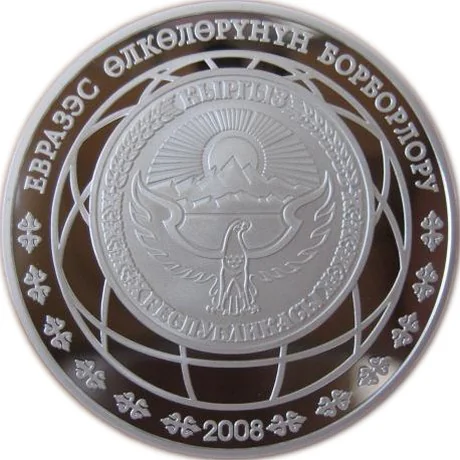
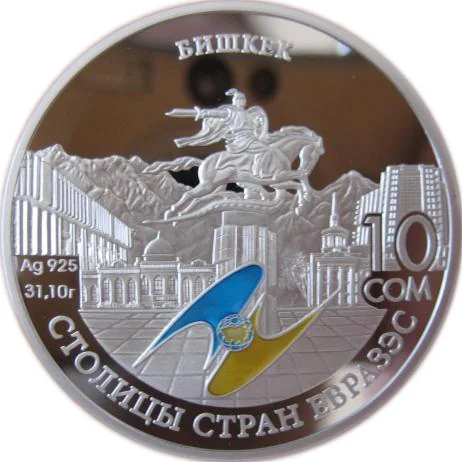
10 Som – Kyrgyzstan
Non-circulating coins
Commemoration: Bishkek
Kyrgyzstan
Context

Material
Diameter: 38.6 mm
Weight: 31.1 g
Silver weight: 28.77 g
Shape: Round
Composition: 92.5% Silver
Standard: Silver ounce
Magnetic: No
Alignment: Medal alignment
flip
References
KM: #Click to copy to clipboard23
Numista: #30623
Value
Exchange value: 10 KGS
Bullion value: $83.58
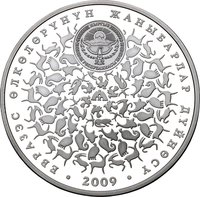
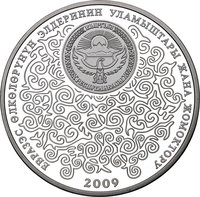
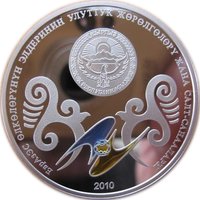
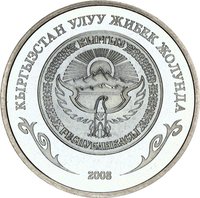
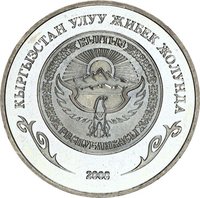
Obverse
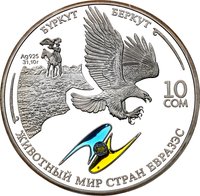
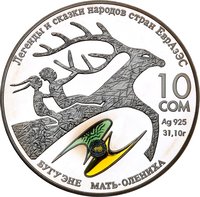
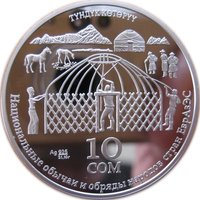
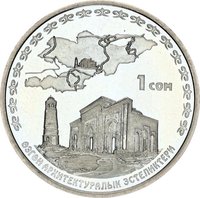
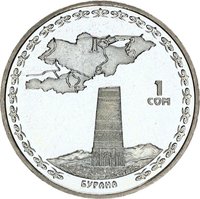
Reverse
Edge
Mintings
| Year | Mint Mark | Mintage | Quality | Collection |
|---|---|---|---|---|
| 2008 | — | 2,500 | Proof |
Historical background
In 2008, Kyrgyzstan's currency, the som (KGS), faced significant pressure amidst a complex economic backdrop. The year began with the country grappling with the lingering effects of a severe energy crisis and political instability from the preceding years, which had weakened fiscal discipline and foreign investor confidence. Furthermore, Kyrgyzstan, a remittance-dependent economy, was acutely vulnerable to the unfolding global financial crisis, which threatened the flow of money from migrant workers in Russia and Kazakhstan—a critical source of hard currency and domestic consumption.
The primary challenge emerged as a sharp and destabilizing depreciation of the som, particularly in the latter half of the year. Inflation soared to over 20% annually, driven by high global prices for food and fuel. This eroded purchasing power and triggered a strong demand for stable foreign currencies, especially US dollars. A widening trade deficit and declining reserves pressured the National Bank of the Kyrgyz Republic (NBKR), which initially attempted to manage the som's value within a controlled band but struggled to curb market-driven devaluation pressures.
By the year's end, the NBKR was forced to shift its policy, moving towards a more flexible exchange rate regime to conserve its dwindling foreign currency reserves. The som's depreciation, while painful for the population, was seen as a necessary adjustment to external shocks. The situation underscored the Kyrgyz economy's profound vulnerabilities to global commodity prices, remittance flows, and regional economic health, setting the stage for a difficult 2009 as the full impact of the worldwide recession took hold.
The primary challenge emerged as a sharp and destabilizing depreciation of the som, particularly in the latter half of the year. Inflation soared to over 20% annually, driven by high global prices for food and fuel. This eroded purchasing power and triggered a strong demand for stable foreign currencies, especially US dollars. A widening trade deficit and declining reserves pressured the National Bank of the Kyrgyz Republic (NBKR), which initially attempted to manage the som's value within a controlled band but struggled to curb market-driven devaluation pressures.
By the year's end, the NBKR was forced to shift its policy, moving towards a more flexible exchange rate regime to conserve its dwindling foreign currency reserves. The som's depreciation, while painful for the population, was seen as a necessary adjustment to external shocks. The situation underscored the Kyrgyz economy's profound vulnerabilities to global commodity prices, remittance flows, and regional economic health, setting the stage for a difficult 2009 as the full impact of the worldwide recession took hold.
✨ Legendary