

50 Centavos – Mexico
Mexico
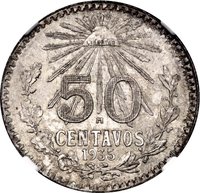
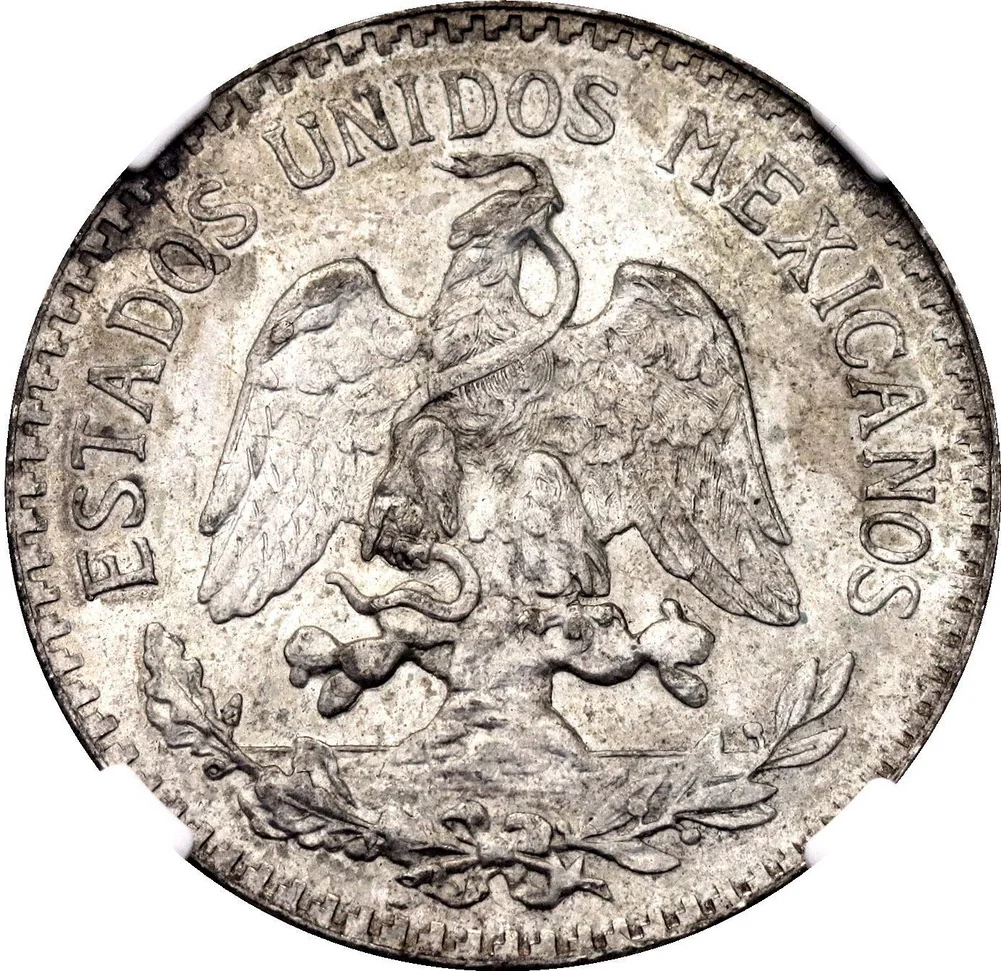
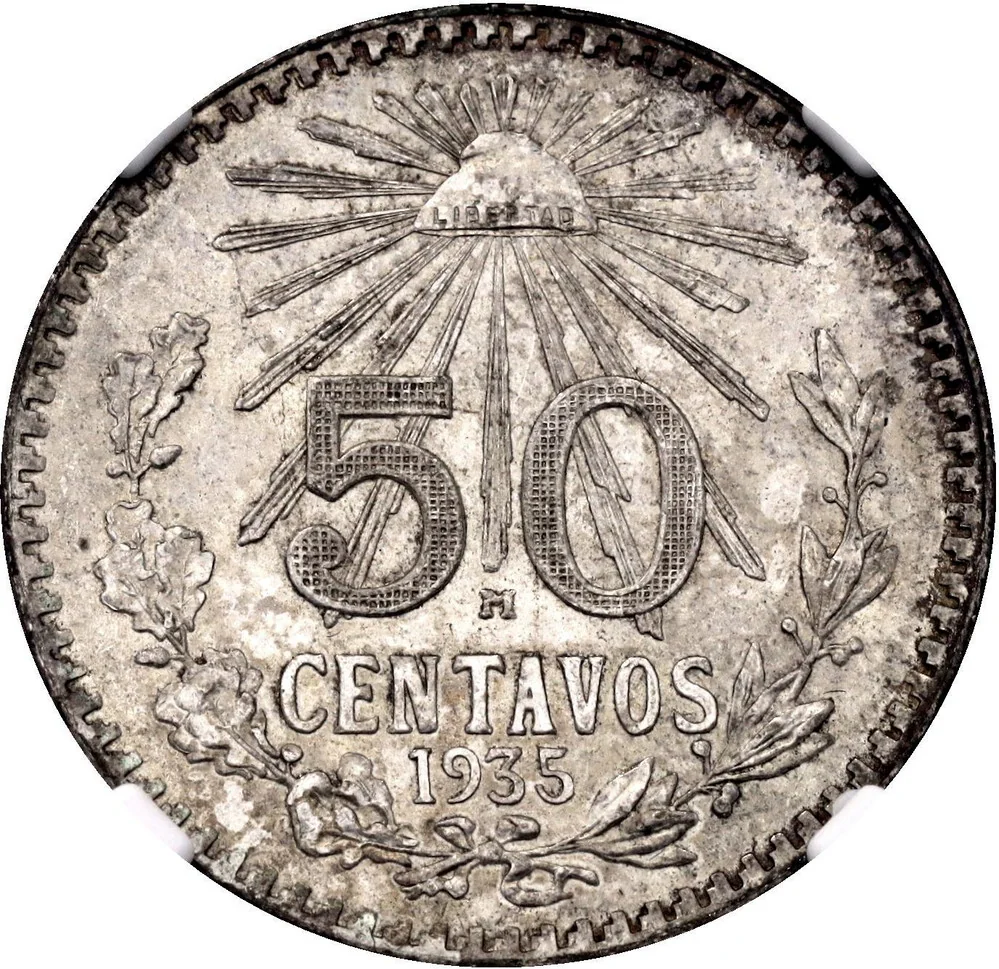
Obverse
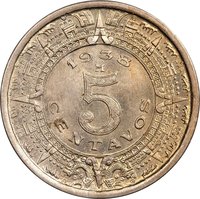
Reverse
Edge
Smooth with lettering.
Legend:
INDEPENDENCIA Y LIBERTAD
Translation:
Independence and Liberty
Language: Spanish
Categories
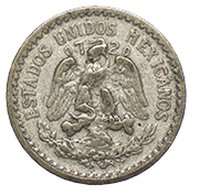
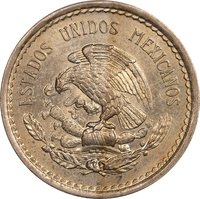
| Symbols> Coat of Arms |
| Symbol> Phrygian cap |
| Symbol> Wreath |
Mints
| Name | Mark |
|---|---|
| Mexican Mint | M |
| United States Mint of Denver | M |
| United States Mint of Philadelphia | M |
| United States Mint of San Francisco | M |
Mintings
| Year | Mint Mark | Mintage | Quality | Collection |
|---|---|---|---|---|
| 1935 | M | 70,800,000 |
Historical background
In 1935, Mexico's currency situation was characterized by significant instability and transition, stemming from the global economic turmoil of the Great Depression and the profound domestic reforms of President Lázaro Cárdenas. The country was operating on a de facto silver standard, with the peso's value loosely tied to the fluctuating international price of silver. This created vulnerability, as speculative flows of silver out of the country could drain monetary reserves and destabilize the exchange rate. The banking system was still recovering from the shocks of the early 1930s, and public confidence in paper money remained low, with many preferring hard currency.
The pivotal change came on April 25, 1935, when President Cárdenas issued a decree that fundamentally altered Mexico's monetary system. This law demonetized silver coins for domestic purposes, ending their role as legal tender for large transactions, and shifted the nation to a fiat currency system. The Banco de México was granted exclusive authority to issue paper money (billetes), which was declared the sole unlimited legal tender. This move was designed to centralize monetary control, halt the exportation of silver coinage, and provide the government with greater flexibility to manage the economy and finance its ambitious social and agrarian programs.
Consequently, 1935 marked the end of the silver peso era and the beginning of a managed, centralized currency. While the new fiat system aimed to provide stability, the immediate years that followed continued to see peso depreciation on foreign exchange markets, influenced by political uncertainties, such as the impending oil expropriation in 1938, and ongoing economic challenges. Thus, the year represents a crucial legislative turning point where the state asserted direct control over the currency, laying the institutional groundwork for the modern Mexican monetary system, albeit within a context of persistent economic pressure.
The pivotal change came on April 25, 1935, when President Cárdenas issued a decree that fundamentally altered Mexico's monetary system. This law demonetized silver coins for domestic purposes, ending their role as legal tender for large transactions, and shifted the nation to a fiat currency system. The Banco de México was granted exclusive authority to issue paper money (billetes), which was declared the sole unlimited legal tender. This move was designed to centralize monetary control, halt the exportation of silver coinage, and provide the government with greater flexibility to manage the economy and finance its ambitious social and agrarian programs.
Consequently, 1935 marked the end of the silver peso era and the beginning of a managed, centralized currency. While the new fiat system aimed to provide stability, the immediate years that followed continued to see peso depreciation on foreign exchange markets, influenced by political uncertainties, such as the impending oil expropriation in 1938, and ongoing economic challenges. Thus, the year represents a crucial legislative turning point where the state asserted direct control over the currency, laying the institutional groundwork for the modern Mexican monetary system, albeit within a context of persistent economic pressure.
🌱 Fairly Common