

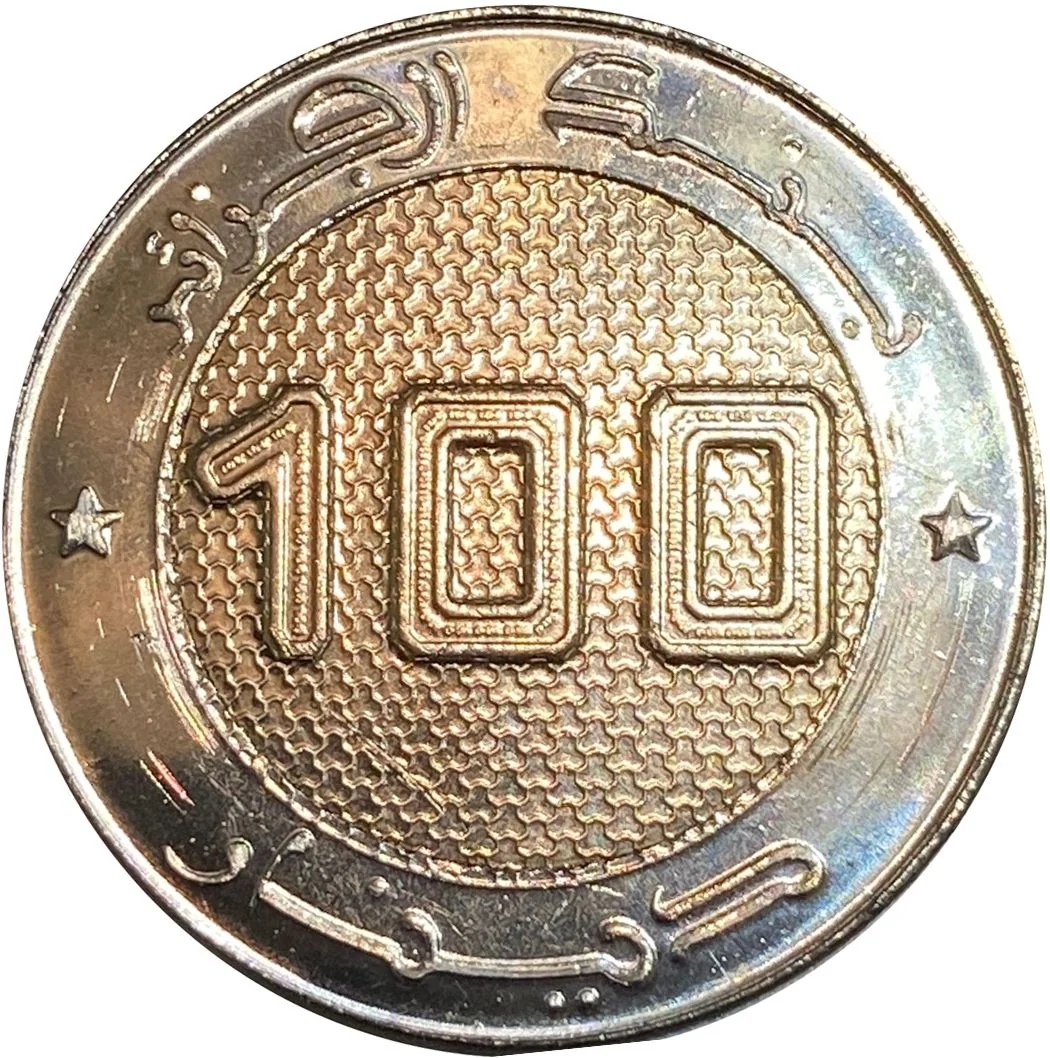
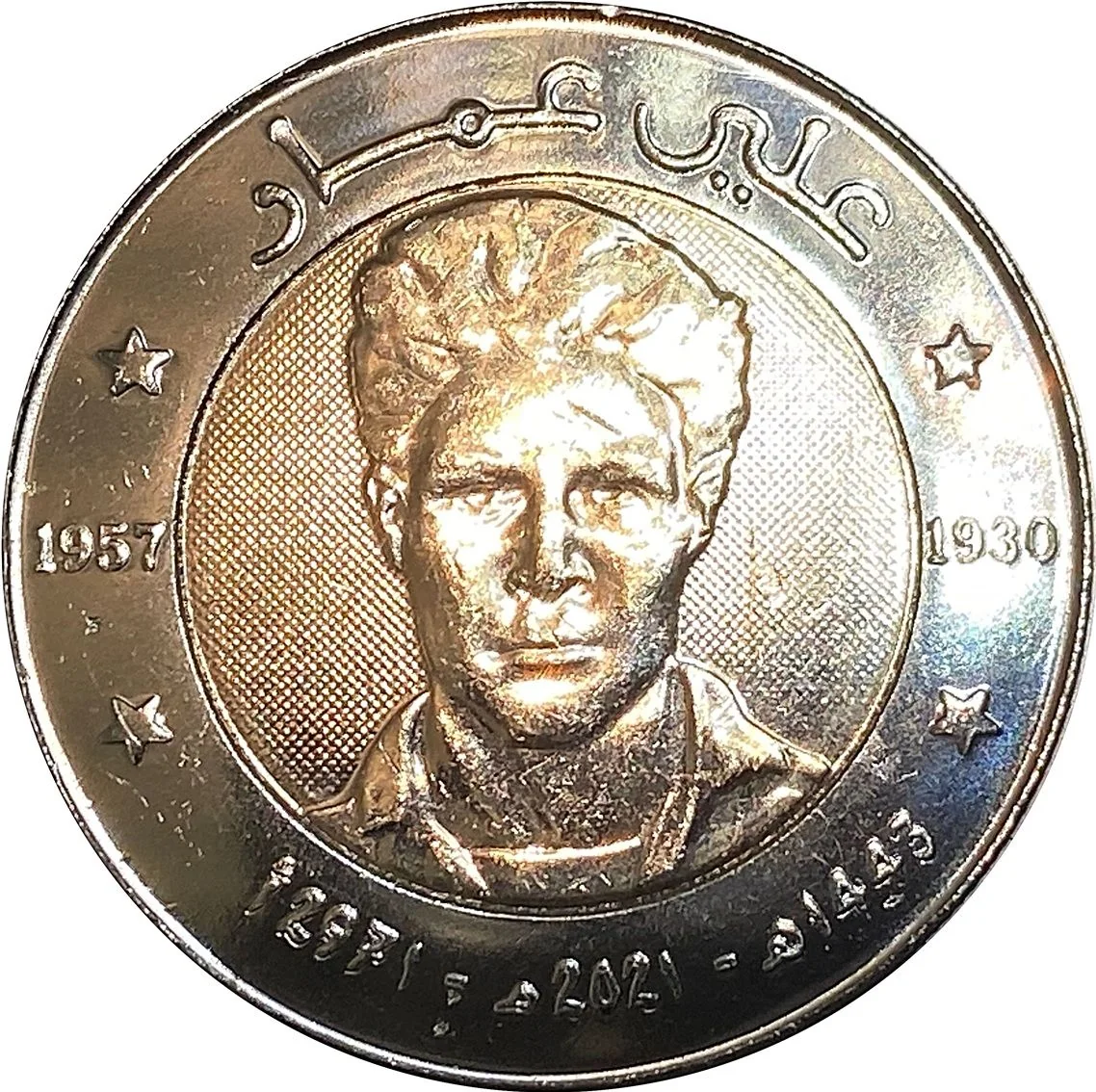
100 dinars – Algeria
Add to wishlist
Standard circulation coins
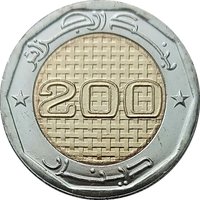
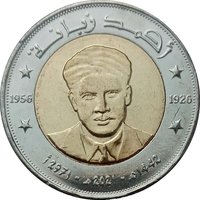
Commemoration: Ali Amar
Algeria
Context
Years: 2021–2025
Issuer: Algeria
Issuing organization: Bank of Algeria
Period:
(since 1962)
Currency:
(since 1964)
Material
References
KM: #
Numista: #304525
Value
Exchange value: 100 DZD
Obverse
Reverse
Edge
Milled
Categories
| Person> Military leader |
| Event> Revolution |
Mints
| Name | Mark |
|---|---|
| Algiers | — |
Mintings
| Year | Mint Mark | Mintage | Quality | Collection |
|---|---|---|---|---|
| 2021 | — | — | ||
| 2023 | — | — | ||
| 2023 | — | — | ||
| 2024 | — | — | ||
| 2025 | — | — |
Historical background
In 2021, Algeria continued to grapple with a severe foreign exchange (forex) crisis, a direct legacy of the 2014 oil price crash that depleted its hydrocarbon-dependent reserves. Despite a partial recovery in global energy prices, the country's forex reserves had fallen from over $178 billion in 2014 to approximately $44 billion by year-end 2021. This scarcity led to stringent import restrictions and a complex, multi-tiered exchange rate system managed by the Bank of Algeria. The official dinar rate was tightly controlled, but a significant and growing gap persisted with the much weaker parallel market rate, reflecting pent-up demand for hard currency and a lack of confidence in the local currency.
The government's response focused on severe import compression to conserve dollars, banning hundreds of non-essential goods and creating significant bottlenecks for businesses reliant on imported raw materials, spare parts, and semi-finished products. This protectionist policy aimed to stimulate domestic production and reduce the trade deficit, but it often resulted in shortages, inflated costs, and inflationary pressures. The hydrocarbon sector, still accounting for over 90% of total export revenue, remained the primary source of forex earnings, underscoring the economy's lack of diversification and its vulnerability to external shocks.
Economically, the situation stifled private sector growth and foreign investment, while socially, it contributed to rising living costs and periodic scarcity of certain goods. The authorities maintained a firm stance against devaluing the official dinar rate, fearing it would trigger a surge in inflation. Consequently, 2021 was characterized by a managed but precarious stability, with the structural weaknesses of the economy unresolved and the currency situation acting as a major constraint on broader economic recovery and reform efforts.
The government's response focused on severe import compression to conserve dollars, banning hundreds of non-essential goods and creating significant bottlenecks for businesses reliant on imported raw materials, spare parts, and semi-finished products. This protectionist policy aimed to stimulate domestic production and reduce the trade deficit, but it often resulted in shortages, inflated costs, and inflationary pressures. The hydrocarbon sector, still accounting for over 90% of total export revenue, remained the primary source of forex earnings, underscoring the economy's lack of diversification and its vulnerability to external shocks.
Economically, the situation stifled private sector growth and foreign investment, while socially, it contributed to rising living costs and periodic scarcity of certain goods. The authorities maintained a firm stance against devaluing the official dinar rate, fearing it would trigger a surge in inflation. Consequently, 2021 was characterized by a managed but precarious stability, with the structural weaknesses of the economy unresolved and the currency situation acting as a major constraint on broader economic recovery and reform efforts.
🌱 Fairly Common