

25 dīnār – Iran
Add to wishlist
Iran
Context
Material
Diameter: 19 mm
Weight: 2.9 g
Thickness: 1.2 mm
Shape: Round
Composition: Aluminium bronze
Magnetic: No
Technique: Milled
Alignment: Coin alignment
flip
References
KM: #
Numista: #30278
Value
Exchange value: 0.25 IRR
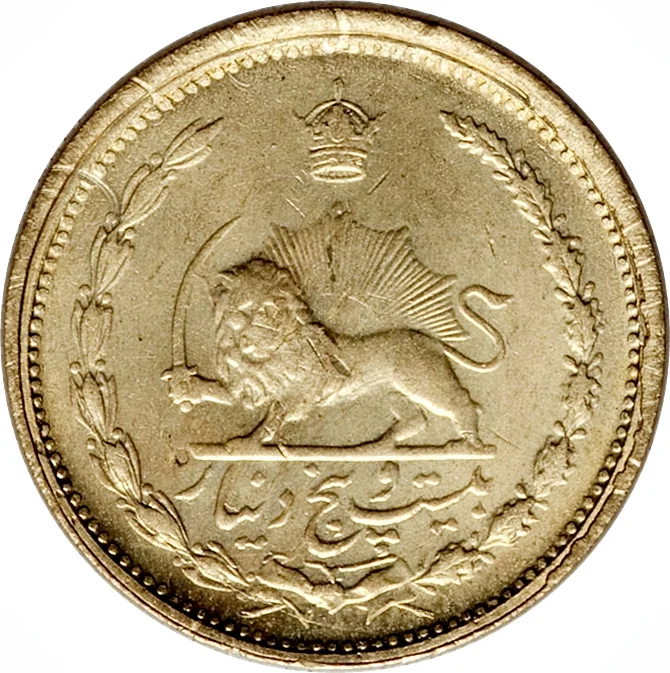
Obverse
Description:
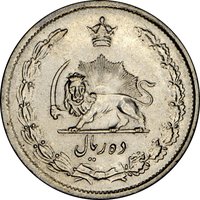
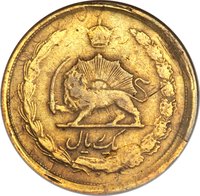
Lion with sword in crowned wreath.
Inscription:
بیست و پنج دینار
Translation:
Twenty-five dinars
Language: Persian
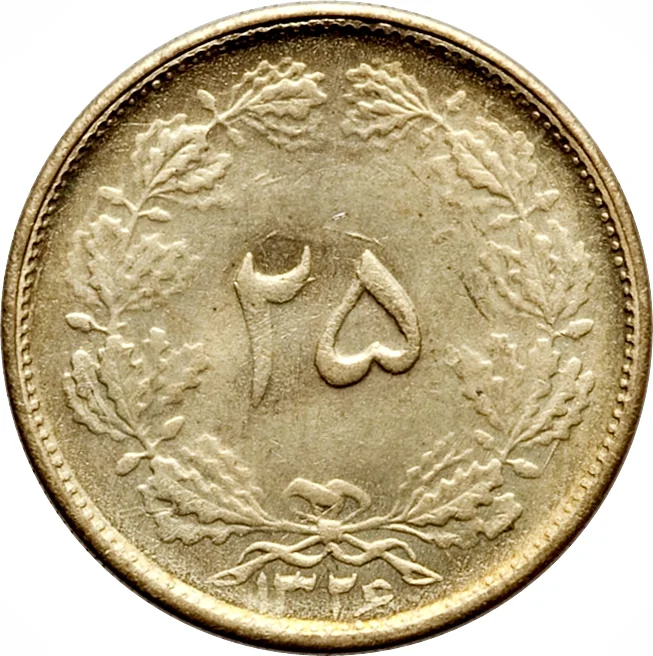
Reverse
Description:
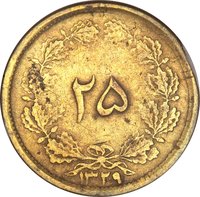
Wreath's worth
Inscription:
۲۵
۱۳۲۶
۱۳۲۶
Edge
Reeded
Mintings
| Year | Mint Mark | Mintage | Quality | Collection |
|---|---|---|---|---|
| 1947 | — | — | ||
| 1948 | — | — | ||
| 1950 | — | — |
Historical background
In 1947, Iran's currency situation was characterized by the dominance of the rial and a monetary system still heavily influenced by foreign powers, particularly Britain and the Soviet Union, despite recent strides toward sovereignty. The rial, managed by the state-owned Bank Melli Iran (established in 1928), was the sole legal tender, having replaced the earlier qiran. However, the country's financial autonomy was constrained. The Anglo-Iranian Oil Company (AIOC), a British enterprise, operated as a state-within-a-state, and its vast sterling revenues were handled outside Iran's direct control, creating a dual economic sphere and limiting the government's access to crucial foreign exchange.
This period fell within the final years of the reign of Reza Shah Pahlavi, a time of centralized state-building and modernization. Economically, Iran was recovering from the severe disruptions of World War II, during which Allied occupation had led to inflation and supply shortages. By 1947, the Fixed Rate Law was in effect, pegging the rial to the British pound sterling. This peg provided some stability but also tied Iran's currency to Britain's post-war economic fortunes and policy decisions, reflecting lingering imperial economic influence.
The broader financial context was one of rising nationalist sentiment and parliamentary assertion. The Majlis (Parliament) was beginning to challenge foreign concessions, a movement that would culminate in the 1951 nationalization of the oil industry. Therefore, while the currency itself was unified under the rial, the underlying monetary and fiscal landscape in 1947 was one of transition—caught between wartime recovery, enduring external dependencies, and gathering internal pressures for full economic independence and control over national resources.
This period fell within the final years of the reign of Reza Shah Pahlavi, a time of centralized state-building and modernization. Economically, Iran was recovering from the severe disruptions of World War II, during which Allied occupation had led to inflation and supply shortages. By 1947, the Fixed Rate Law was in effect, pegging the rial to the British pound sterling. This peg provided some stability but also tied Iran's currency to Britain's post-war economic fortunes and policy decisions, reflecting lingering imperial economic influence.
The broader financial context was one of rising nationalist sentiment and parliamentary assertion. The Majlis (Parliament) was beginning to challenge foreign concessions, a movement that would culminate in the 1951 nationalization of the oil industry. Therefore, while the currency itself was unified under the rial, the underlying monetary and fiscal landscape in 1947 was one of transition—caught between wartime recovery, enduring external dependencies, and gathering internal pressures for full economic independence and control over national resources.
🌟 Limited