

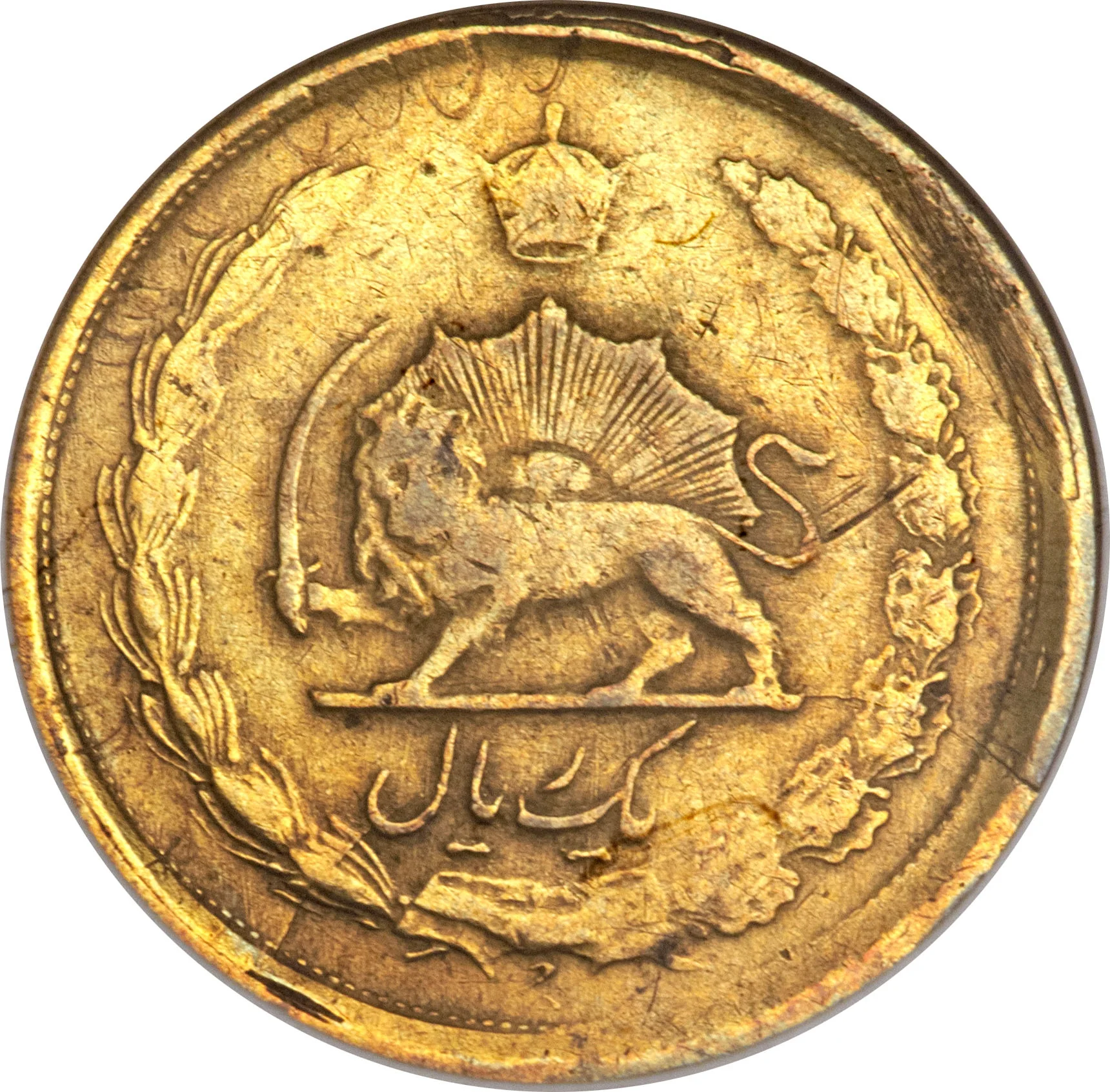
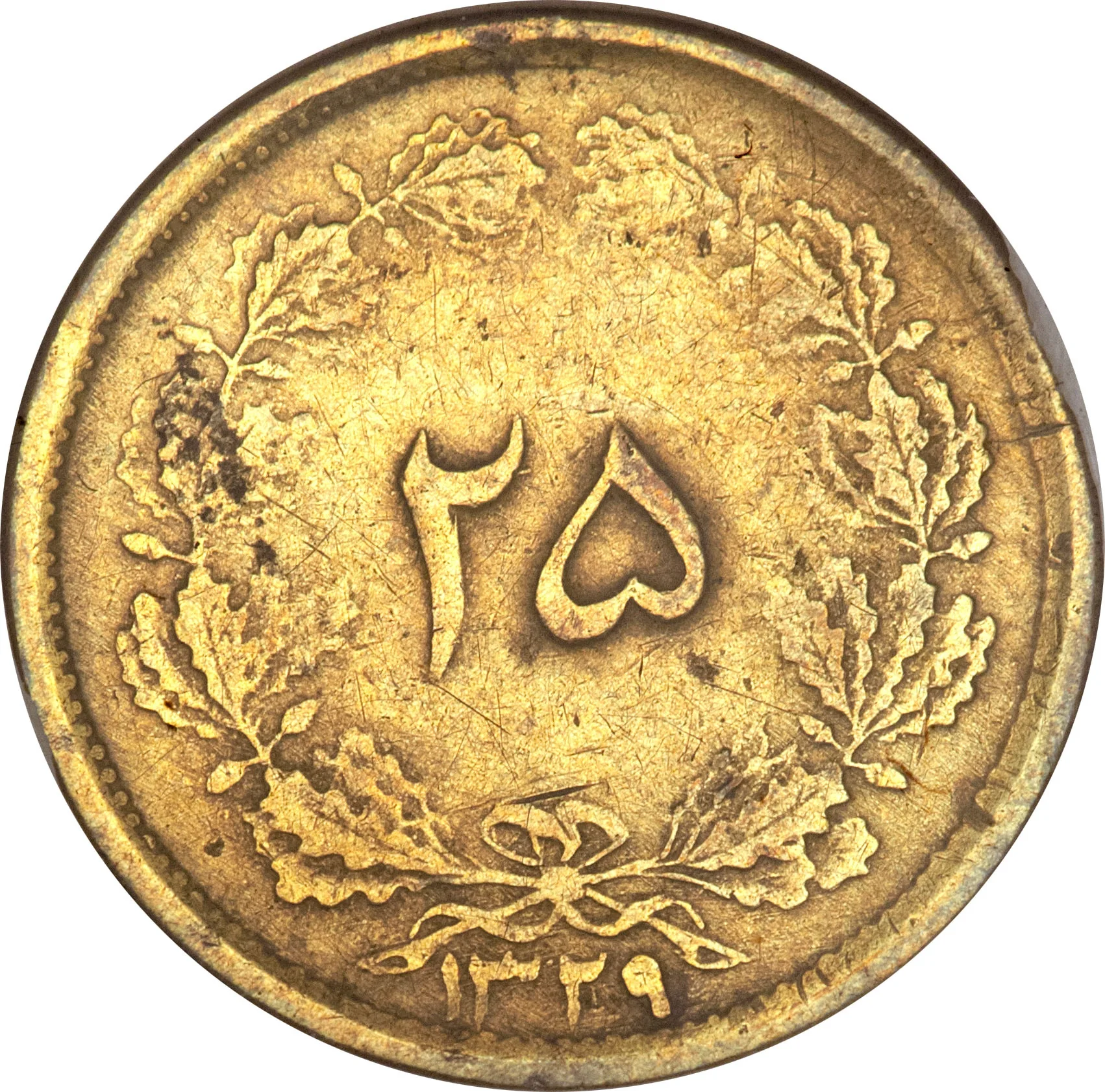
25 dīnār – Iran
Add to wishlist
Iran
Context
Year: 1950
Iranian - Persian Year:: 1329
Issuer: Iran
Ruler: Mohammad Reza
Currency:
(since 1932)
Demonetized: Yes
Material
Shape: Round
Composition: Aluminium bronze
Magnetic: No
Technique: Milled
Alignment: Coin alignment
flip
References
KM: #
Numista: #29152
Value
Exchange value: 0.25 IRR
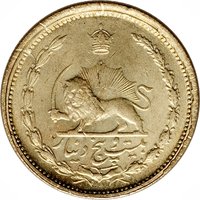
Obverse
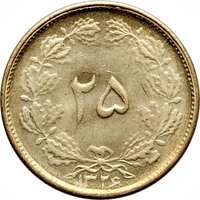
Reverse
Edge
Mintings
| Year | Mint Mark | Mintage | Quality | Collection |
|---|---|---|---|---|
| 1950 | — | — |
Historical background
In 1950, Iran's currency situation was characterized by the dominance of the rial, which was officially pegged to the British pound sterling as part of the country's integration into the sterling bloc. This monetary arrangement was a legacy of British economic and political influence, particularly following the Anglo-Persian Oil Company's (APOC) discovery and control of Iran's vast oil reserves. The rial's value and stability were therefore indirectly tied to the health of the British economy and the pound, making Iran's financial system vulnerable to external pressures and decisions made in London.
Economically, the period was one of growing tension and nationalist sentiment, centered on the nation's primary resource: oil. While oil revenues were increasing, a large portion was siphoned off by APOC, leading to widespread discontent over the terms of the concession. This fiscal imbalance meant that despite the country's resource wealth, the government's budget was constrained, limiting its ability to invest in development and diversify the economy beyond the oil sector and traditional agriculture. Inflation was a persistent concern, often driven by government budget deficits and supply chain issues rather than pure monetary policy.
The currency situation in 1950 was, in essence, on the brink of fundamental change. The existing monetary order was unsustainable amidst the rising political clamor for economic sovereignty. The stage was set for the dramatic events of 1951—the nationalization of the Iranian oil industry under Prime Minister Mohammad Mosaddegh—which would sever the direct British financial link, trigger an international crisis, and ultimately force Iran to navigate a new and challenging monetary path independent of the sterling bloc. Thus, 1950 represents the final year of an old financial system soon to be overturned by nationalism and geopolitical conflict.
Economically, the period was one of growing tension and nationalist sentiment, centered on the nation's primary resource: oil. While oil revenues were increasing, a large portion was siphoned off by APOC, leading to widespread discontent over the terms of the concession. This fiscal imbalance meant that despite the country's resource wealth, the government's budget was constrained, limiting its ability to invest in development and diversify the economy beyond the oil sector and traditional agriculture. Inflation was a persistent concern, often driven by government budget deficits and supply chain issues rather than pure monetary policy.
The currency situation in 1950 was, in essence, on the brink of fundamental change. The existing monetary order was unsustainable amidst the rising political clamor for economic sovereignty. The stage was set for the dramatic events of 1951—the nationalization of the Iranian oil industry under Prime Minister Mohammad Mosaddegh—which would sever the direct British financial link, trigger an international crisis, and ultimately force Iran to navigate a new and challenging monetary path independent of the sterling bloc. Thus, 1950 represents the final year of an old financial system soon to be overturned by nationalism and geopolitical conflict.
✨ Legendary