

50 francs – French Polynesia
Add to wishlist
France
Context
Years: 2006–2019
Country: France
Issuer: French Polynesia
Issuing organization: Overseas Institution of Issue
Period:
(since 2003)
Currency:
(since 1945)
Demonetization: 30 November 2022
Total mintage: 1,828,500
Material
Diameter: 33 mm
Weight: 15 g
Thickness: 2.35 mm
Shape: Round
Composition: Copper-nickel
Magnetic: No
Technique: Milled
Alignment: Coin alignment
flip
References
KM: #
Numista: #30254
Value
Exchange value: 50 XPF
Inflation-adjusted value: 70.07 XPF
Obverse
Description:
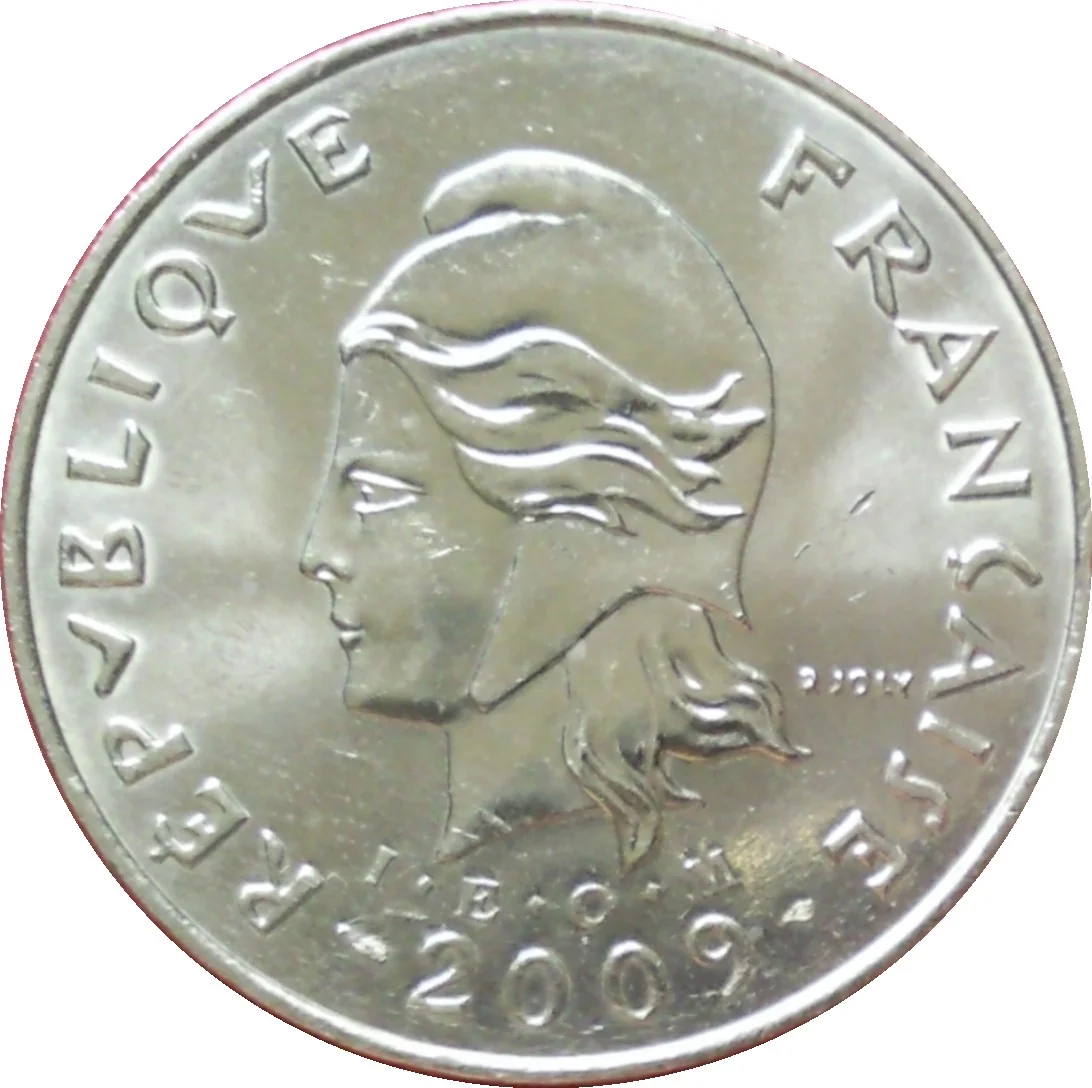
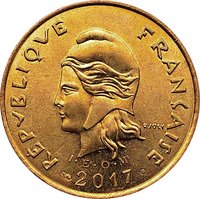
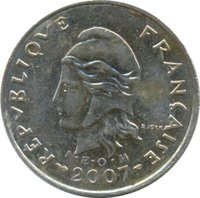
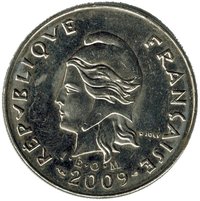
Marianne left, bust capped, date below.
Inscription:
RÉPUBLIQUE FRANÇAISE
R. JOLY
I·E·O·M
2009
R. JOLY
I·E·O·M
2009
Translation:
FRENCH REPUBLIC
R. JOLY
INSTITUTE OF OVERSEAS ISSUE AND METALLURGY
2009
R. JOLY
INSTITUTE OF OVERSEAS ISSUE AND METALLURGY
2009
Script: Latin
Engraver: Raymond Joly
Reverse
Description:
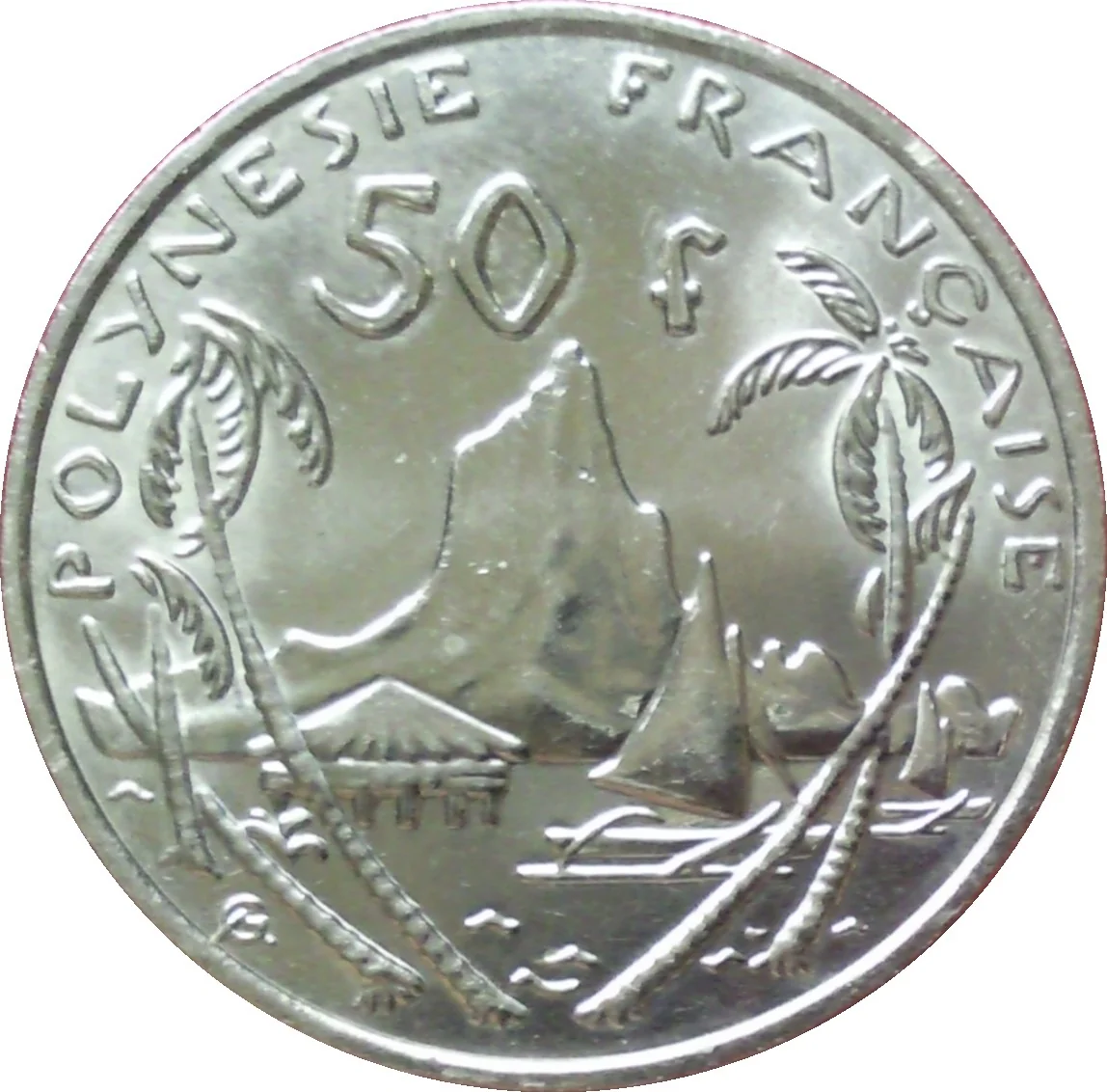
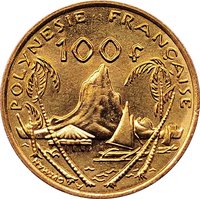
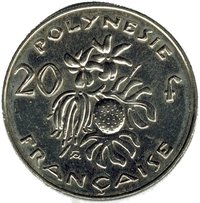
Moorea harbor, French Polynesia.
Inscription:
POLYNESIE FRANCAISE
50 f
GA
50 f
GA
Translation:
French Polynesia
50 francs
GA
50 francs
GA
Script: Latin
Language: French
Engraver: Aleth Guzman-Nageotte
Edge
Milled
Categories
| Plant> Tree |
| Symbol> Allegory |
| Geography> Mountain |
| Symbol> Phrygian cap |
| Transportation> Watercraft |
Mints
| Name | Mark |
|---|---|
| Monnaie de Paris | — |
Mintings
| Year | Mint Mark | Mintage | Quality | Collection |
|---|---|---|---|---|
| 2006 | — | 15,000 | ||
| 2007 | — | 315,000 | ||
| 2008 | — | 202,500 | ||
| 2009 | — | 300,000 | ||
| 2010 | — | 120,000 | ||
| 2011 | — | 132,000 | ||
| 2012 | — | 48,000 | ||
| 2013 | — | — | ||
| 2014 | — | 192,000 | ||
| 2015 | — | 120,000 | ||
| 2016 | — | 24,000 | ||
| 2017 | — | 240,000 | ||
| 2018 | — | 120,000 | ||
| 2019 | — | — |
Historical background
In 2006, French Polynesia's currency situation was defined by its status as an overseas collectivity of France, utilizing the CFP franc (XPF) as its legal tender. This currency, created in 1945, was pegged to the French franc and, following France's adoption of the euro, was irrevocably fixed to the euro in 1999 at an exchange rate of 1,000 XPF = 8.38 euros. This arrangement provided significant monetary stability, shielding the territory from local inflation shocks and currency volatility, which was crucial for an economy heavily dependent on tourism and imports.
The period was marked by political and economic turbulence, with debates over the currency's suitability simmering in the background. Pro-independence movements occasionally criticized the CFP franc as a symbol of continued French colonial influence, advocating for a national currency. However, the overwhelming consensus in 2006, particularly within the business and governmental sectors, was in favor of maintaining the peg. The fixed link to the euro facilitated predictable trade, investment, and access to European markets, which were vital for the territory's economic security.
Ultimately, the currency situation in 2006 reflected a pragmatic choice for stability over sovereignty in monetary affairs. The benefits of low inflation, guaranteed convertibility, and the financial backing of the French Treasury through the Institut d'émission d'outre-mer (IEOM) outweighed the political arguments for change. This stability was deemed essential as the territory navigated a challenging economic climate, ensuring that the monetary system itself was not a source of additional uncertainty.
The period was marked by political and economic turbulence, with debates over the currency's suitability simmering in the background. Pro-independence movements occasionally criticized the CFP franc as a symbol of continued French colonial influence, advocating for a national currency. However, the overwhelming consensus in 2006, particularly within the business and governmental sectors, was in favor of maintaining the peg. The fixed link to the euro facilitated predictable trade, investment, and access to European markets, which were vital for the territory's economic security.
Ultimately, the currency situation in 2006 reflected a pragmatic choice for stability over sovereignty in monetary affairs. The benefits of low inflation, guaranteed convertibility, and the financial backing of the French Treasury through the Institut d'émission d'outre-mer (IEOM) outweighed the political arguments for change. This stability was deemed essential as the territory navigated a challenging economic climate, ensuring that the monetary system itself was not a source of additional uncertainty.
🌱 Common