

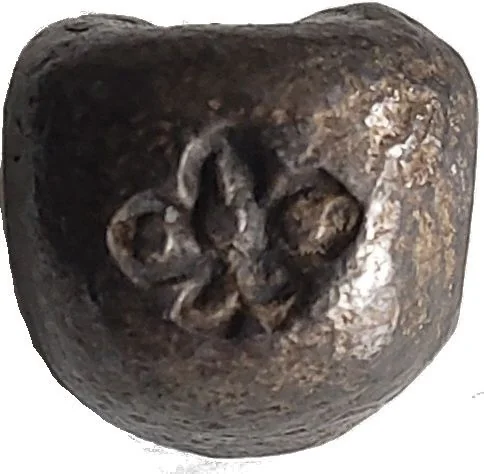
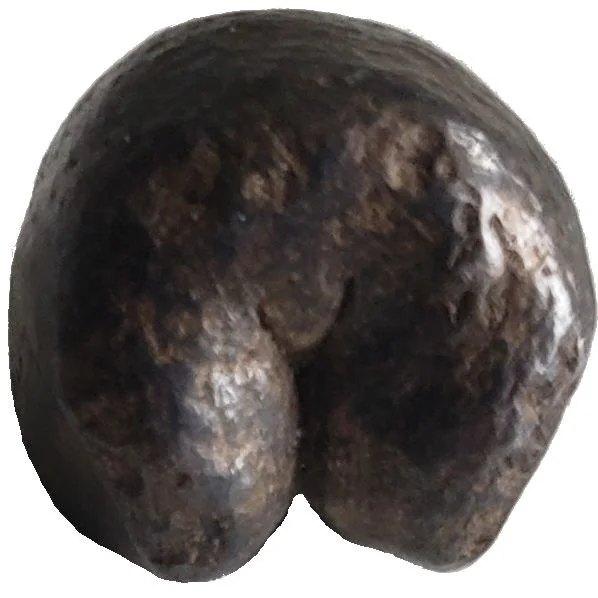
1 salung – Thailand
Add to wishlist
Standard circulation coins
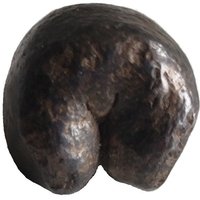
Series: Bai Matum
Thailand
Context
Material
References
Numista: #302475
Value
Bullion value: $8.60
Obverse
Description:
Bai Matum stamp
Reverse
Edge
© Micheal Linke
Mintings
| Year | Mint Mark | Mintage | Quality | Collection |
|---|---|---|---|---|
| 1838 | — | — |
Historical background
In 1838, Thailand, then known as Siam, operated under a complex pre-modern monetary system during the reign of King Rama III (r. 1824–1851). The economy was not yet monetized in a uniform sense; instead, it functioned on a multi-currency basis where barter, particularly for rice and other staples, remained common in rural areas. The official state currency consisted of bullet coins made of silver, known as pod duang. These distinctive, hand-stamped, bullet-shaped coins were valued by their weight in baht (a unit of weight), with fractions like the salung and fuang also in circulation. Their production was a royal monopoly, and they served as both a medium for taxation and large-scale trade.
Alongside this, a critical currency situation was the widespread use of foreign coinage, especially in international trade. Chinese copper cash coins with square holes, strung together on cords, were extensively used for smaller everyday transactions. Furthermore, the growth of trade with European powers and neighboring regions led to the circulation of Spanish and Mexican silver dollars (8 Reales), Indian rupees, and other regional coins. This created a dynamic but unstable exchange environment, as the value of these foreign coins fluctuated against the silver bullet coins based on metallic purity and market demand.
The period was one of increasing monetary pressure. King Rama III's reign saw significant state expenditure on warfare and temple building, while growing international trade, particularly with China and the West, exposed the limitations of the traditional bullet coin system. The system was cumbersome for large commercial transactions and vulnerable to shortages. Although a full currency reform would not occur until the reigns of Kings Mongkut (Rama IV) and Chulalongkorn (Rama V) later in the century, the year 1838 sits within a pivotal era of transition, where the pressures of a globalizing economy were beginning to strain Siam's ancient and insular monetary traditions.
Alongside this, a critical currency situation was the widespread use of foreign coinage, especially in international trade. Chinese copper cash coins with square holes, strung together on cords, were extensively used for smaller everyday transactions. Furthermore, the growth of trade with European powers and neighboring regions led to the circulation of Spanish and Mexican silver dollars (8 Reales), Indian rupees, and other regional coins. This created a dynamic but unstable exchange environment, as the value of these foreign coins fluctuated against the silver bullet coins based on metallic purity and market demand.
The period was one of increasing monetary pressure. King Rama III's reign saw significant state expenditure on warfare and temple building, while growing international trade, particularly with China and the West, exposed the limitations of the traditional bullet coin system. The system was cumbersome for large commercial transactions and vulnerable to shortages. Although a full currency reform would not occur until the reigns of Kings Mongkut (Rama IV) and Chulalongkorn (Rama V) later in the century, the year 1838 sits within a pivotal era of transition, where the pressures of a globalizing economy were beginning to strain Siam's ancient and insular monetary traditions.
Series: Bai Matum


✨ Legendary