

5 francs – New Hebrides
Add to wishlist
Vanuatu
Context
Year: 1970
Country: Vanuatu
Issuer: New Hebrides
Period:
(1906—1980)
Currency:
(1921—1982)
Demonetized: Yes
Total mintage: 375,000
Material
References
KM: #
Numista: #3016
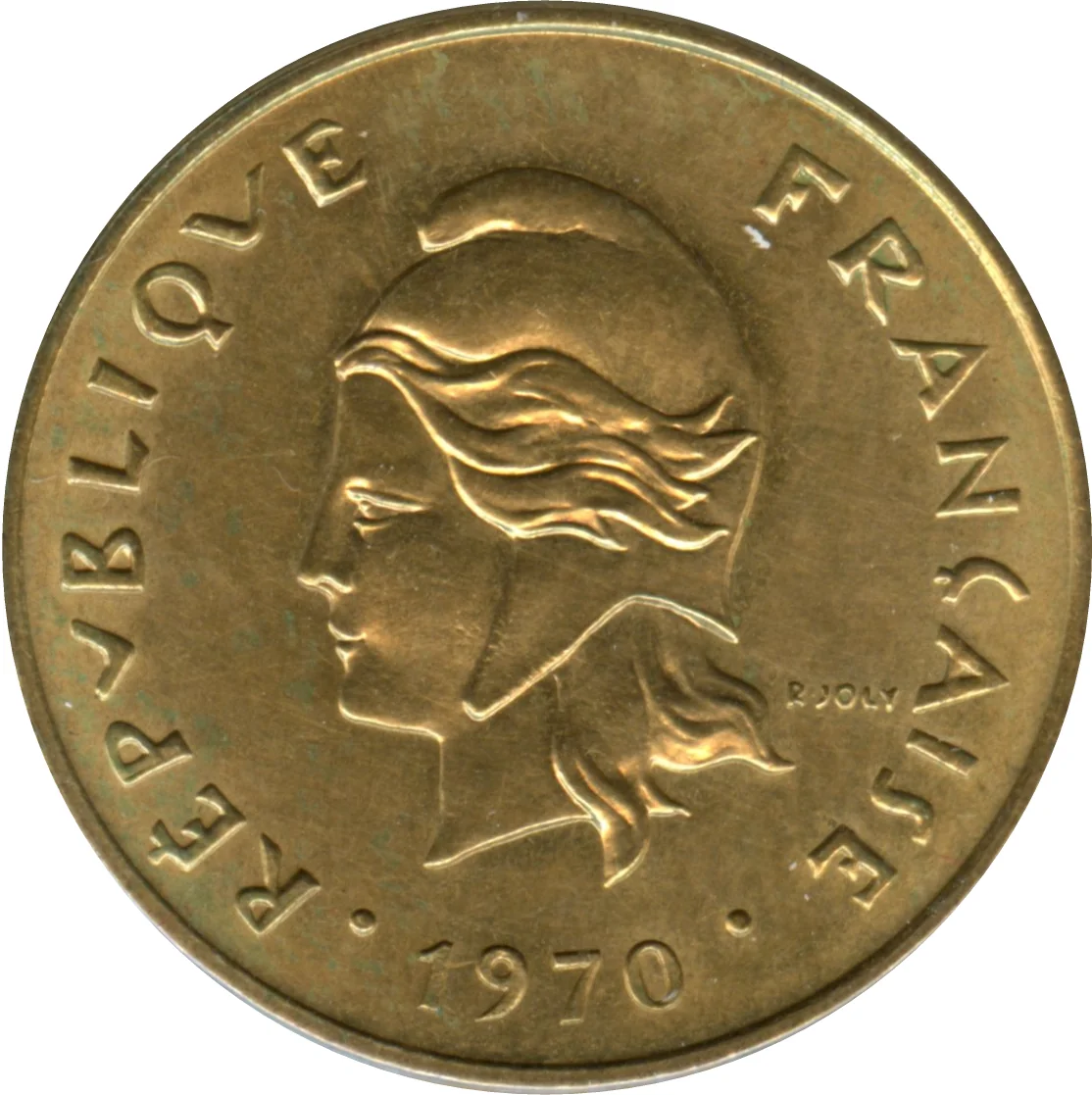
Obverse
Description:
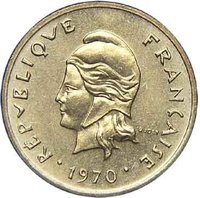
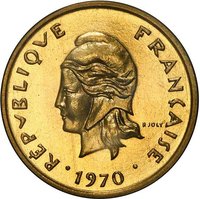
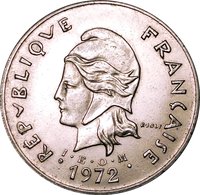
Marianne in profile left, wearing a Phrygian cap.
Inscription:
RÉPVBLIQVE FRANÇAISE
R·JOLY
1970
R·JOLY
1970
Translation:
French Republic
R. Joly
1970
R. Joly
1970
Script: Latin
Language: French
Engraver: Raymond Joly
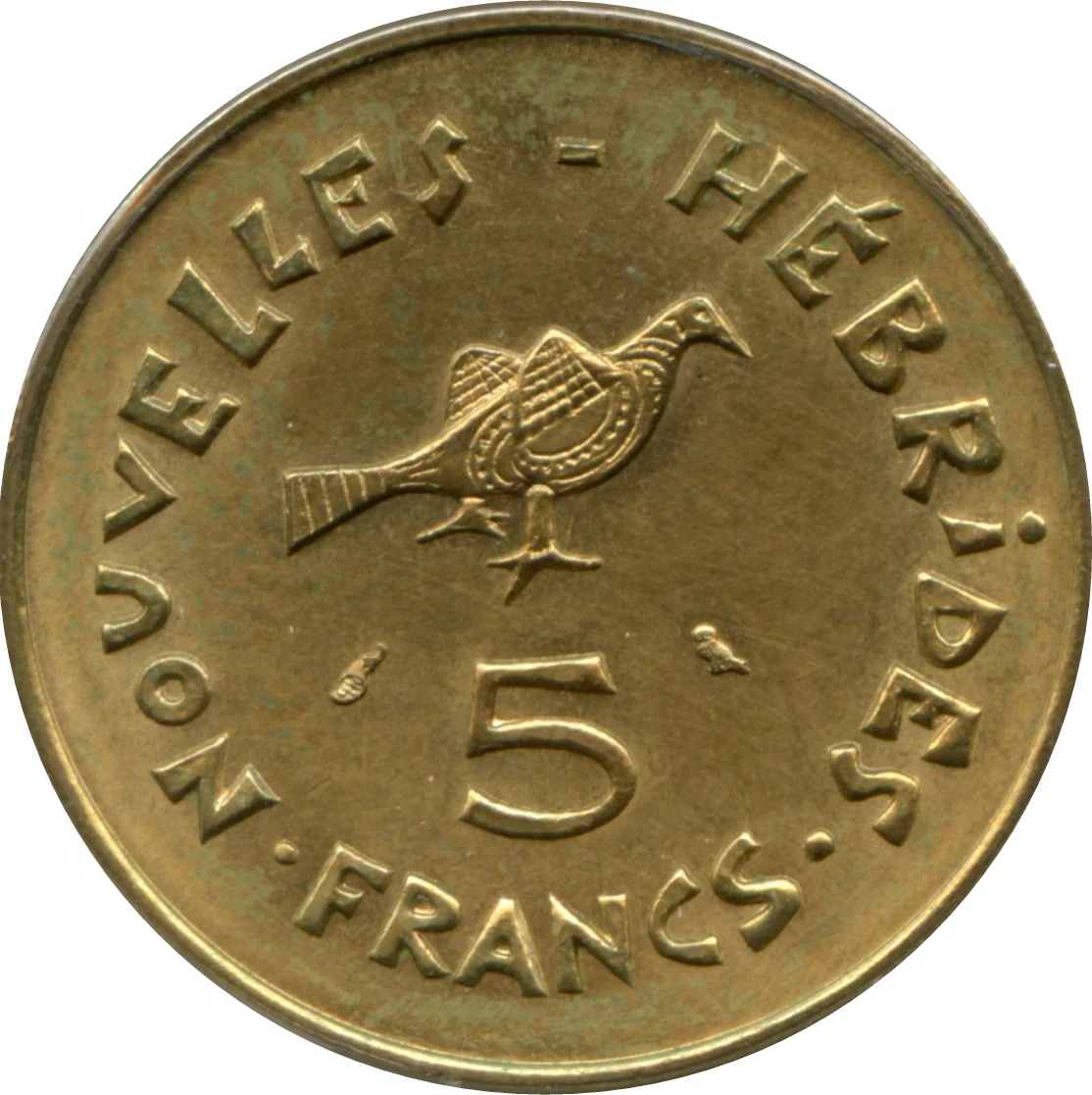
Reverse
Description:
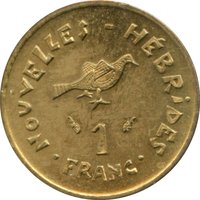
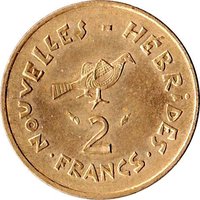
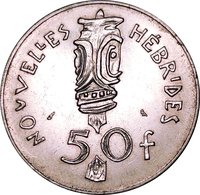
Frigate bird. Privy marks: cornucopia and owl.
Inscription:
NOUVELLES - HÉBRIDES
5
FRANCS
5
FRANCS
Translation:
New Hebrides
5
Francs
5
Francs
Script: Latin
Language: French
Engraver: Raymond Joly
Edge
Plain
Mints
| Name | Mark |
|---|---|
| Monnaie de Paris | — |
Mintings
| Year | Mint Mark | Mintage | Quality | Collection |
|---|---|---|---|---|
| 1970 | — | 375,000 |
Historical background
In 1970, the New Hebrides condominium presented a unique and complex currency situation, a direct reflection of its unusual Anglo-French joint administration. The archipelago did not have its own independent currency. Instead, two official currencies circulated simultaneously and enjoyed equal legal tender status: the Australian pound (A£) and the New Caledonian franc (CFP franc). This dual-currency system was a practical manifestation of the condominium's "Pandemonium" structure, where both British and French interests operated parallel systems of government, law, education, and public services.
The system functioned with a fixed exchange rate pegged between the two currencies, which simplified transactions in the mixed economy. However, it inherently favoured the economic sphere of influence of each colonial power. British-affiliated planters, businesses, and the administration paid wages and conducted trade primarily in Australian pounds, while French interests used the CFP franc. This often forced the indigenous Ni-Vanuatu population and Chinese merchant community to navigate both currencies, leading to occasional confusion and exchange inconveniences, though the fixed rate provided stability.
This monetary arrangement underscored the territory's lack of economic sovereignty and was a source of increasing debate as the movement towards independence gained momentum in the following decade. The dual circulation was seen as cumbersome and symbolic of colonial division. Ultimately, it was resolved only after independence in 1980, when Vanuatu introduced its own national currency, the vatu, unifying the monetary system and asserting its financial autonomy.
The system functioned with a fixed exchange rate pegged between the two currencies, which simplified transactions in the mixed economy. However, it inherently favoured the economic sphere of influence of each colonial power. British-affiliated planters, businesses, and the administration paid wages and conducted trade primarily in Australian pounds, while French interests used the CFP franc. This often forced the indigenous Ni-Vanuatu population and Chinese merchant community to navigate both currencies, leading to occasional confusion and exchange inconveniences, though the fixed rate provided stability.
This monetary arrangement underscored the territory's lack of economic sovereignty and was a source of increasing debate as the movement towards independence gained momentum in the following decade. The dual circulation was seen as cumbersome and symbolic of colonial division. Ultimately, it was resolved only after independence in 1980, when Vanuatu introduced its own national currency, the vatu, unifying the monetary system and asserting its financial autonomy.
🌱 Common