

50 francs – New Hebrides
Add to wishlist
Vanuatu
Context
Year: 1972
Country: Vanuatu
Issuer: New Hebrides
Issuing organization: Overseas Institution of Issue
Period:
(1906—1980)
Currency:
(1921—1982)
Demonetized: Yes
Total mintage: 200,000
Material
References
KM: #
Numista: #7204
Obverse
Description:
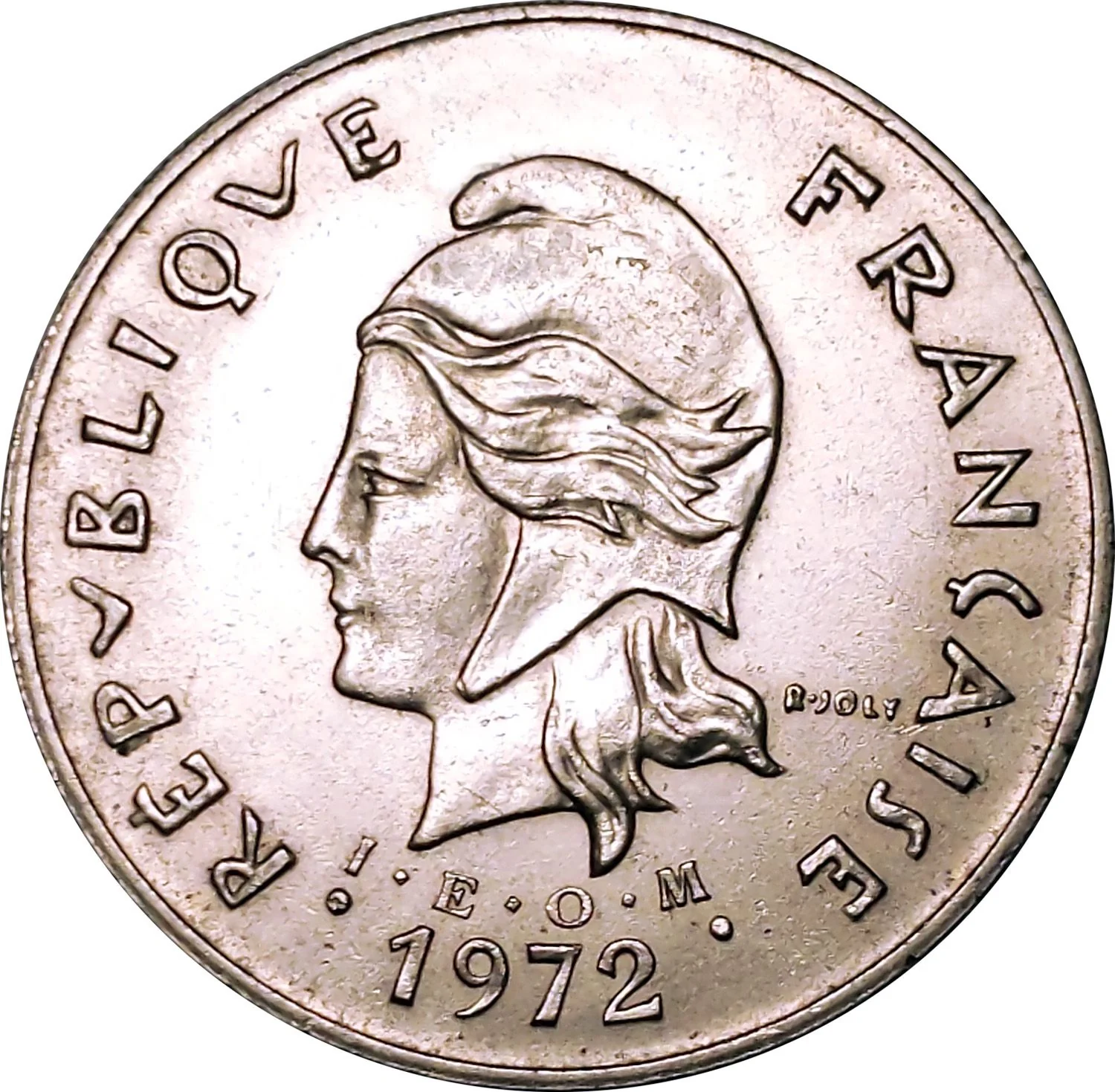
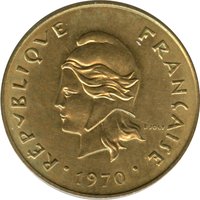
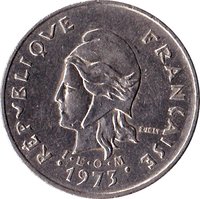
Marianne in profile left, wearing a Phrygian cap.
Inscription:
RÉPVBLIQVE FRANÇAISE
R·JOLY
I·E·O·M
1972
R·JOLY
I·E·O·M
1972
Translation:
FRENCH REPUBLIC
R. JOLY
I.E.O.M.
1972
R. JOLY
I.E.O.M.
1972
Script: Latin
Language: French
Engraver: Raymond Joly
Reverse
Description:
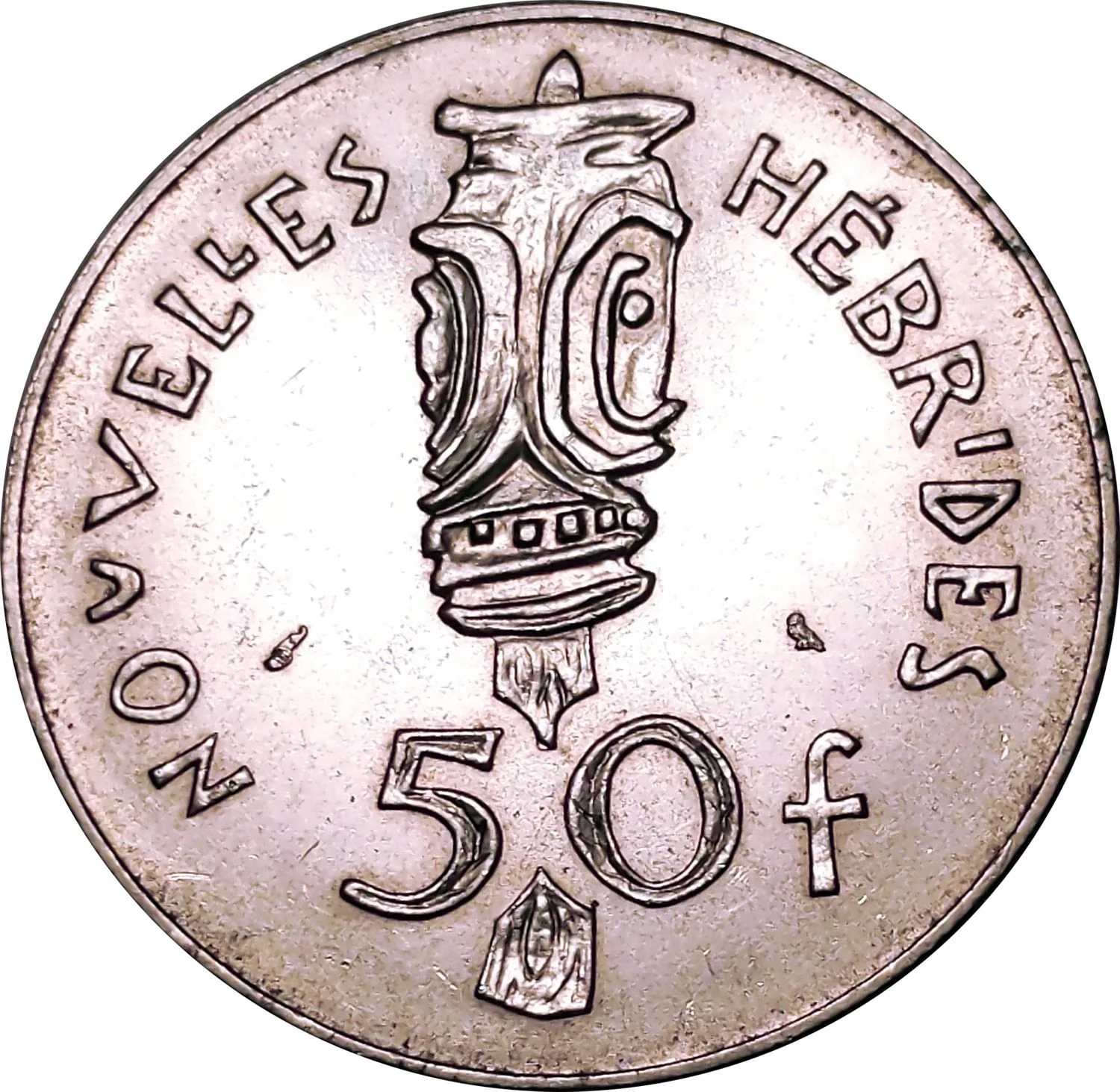
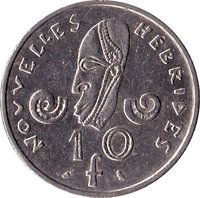
Bisj (or totem) pole: a ritual wooden carving of animals or human faces.
Inscription:
NOUVELLES HÉBRIDES
50f
50f
Translation:
New Hebrides
50 Francs
50 Francs
Script: Latin
Language: French
Engraver: Raymond Joly
Edge
Reeded
Mints
| Name | Mark |
|---|---|
| Monnaie de Paris | — |
Mintings
| Year | Mint Mark | Mintage | Quality | Collection |
|---|---|---|---|---|
| 1972 | — | 200,000 |
Historical background
In 1972, the New Hebrides condominium was in a unique and complex monetary situation, a direct reflection of its unusual political status as a territory jointly administered by Britain and France. The archipelago did not have a central bank or its own independent currency. Instead, it operated under a dual-currency system where both British sterling and the French franc (and their respective subsidiary coins) were legal tender and circulated simultaneously. This meant shops might price goods in both currencies, and residents had to navigate constant exchange calculations, as the two currencies fluctuated against each other on the international market.
The practical administration of this system was managed by two separate issuers: British coinage and banknotes were supplied by the Eastern Caribbean Currency Authority, while French currency was supplied directly from France. There were no fixed exchange rates imposed locally between sterling and francs; their value was determined by the prevailing international market rate, leading to occasional arbitrage opportunities and minor economic inefficiencies. This arrangement underscored the condominium's "joint but separate" administrative principle, where each power managed its own nationals and economic interests, resulting in parallel systems for almost everything, including money.
This dual-currency regime was a daily symbol of the colonial division and complexity that characterized New Hebrides society. It persisted until the approach of independence in the late 1970s, when planning began for a unified national currency. This led to the establishment of the Central Bank of Vanuatu and the introduction of the Vanuatu vatu in 1982, finally replacing the cumbersome sterling/franc system with a single monetary authority for the newly independent nation.
The practical administration of this system was managed by two separate issuers: British coinage and banknotes were supplied by the Eastern Caribbean Currency Authority, while French currency was supplied directly from France. There were no fixed exchange rates imposed locally between sterling and francs; their value was determined by the prevailing international market rate, leading to occasional arbitrage opportunities and minor economic inefficiencies. This arrangement underscored the condominium's "joint but separate" administrative principle, where each power managed its own nationals and economic interests, resulting in parallel systems for almost everything, including money.
This dual-currency regime was a daily symbol of the colonial division and complexity that characterized New Hebrides society. It persisted until the approach of independence in the late 1970s, when planning began for a unified national currency. This led to the establishment of the Central Bank of Vanuatu and the introduction of the Vanuatu vatu in 1982, finally replacing the cumbersome sterling/franc system with a single monetary authority for the newly independent nation.
🌱 Fairly Common