


Obverse
Description:
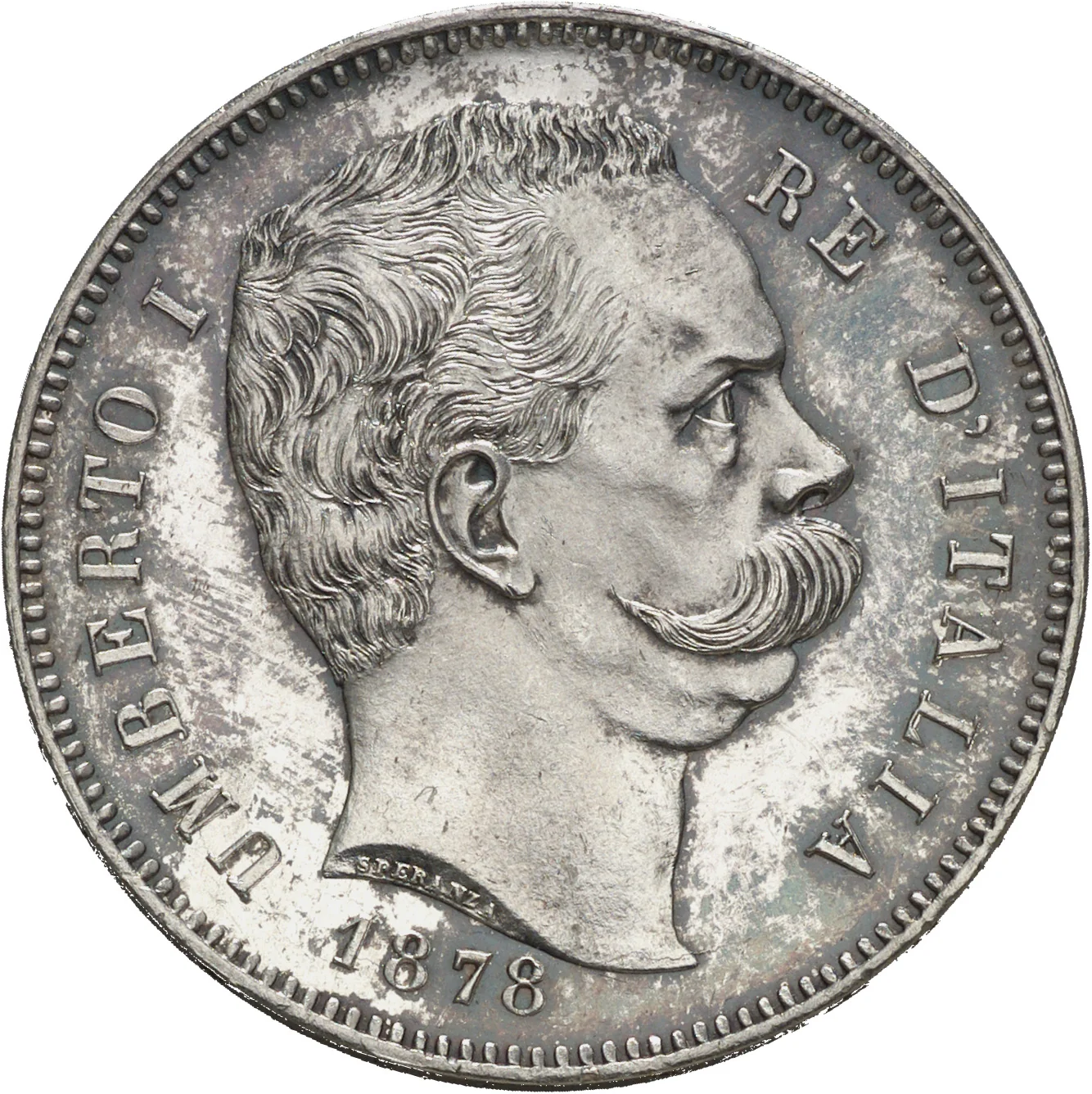
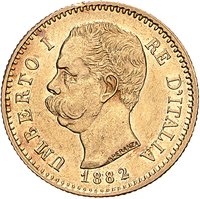
King Umberto I facing right, with date below neck and engraver's name in the truncation.
Inscription:
UMBERTO I RE D'ITALIA
1879
1879
Translation:
Umberto I King of Italy
1879
1879
Script: Latin
Language: Italian
Engraver: Filippo Speranza
Reverse
Description:
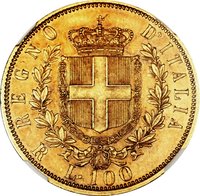
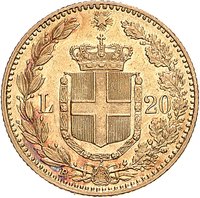
Crowned Savoy arms with the Annunziata Collar divides the value, encircled by laurel and oak branches. The Star of Italy is above, and the mintmark is below the wreath to the right.
Inscription:
L 5
R
R
Translation:
Five Lire.
Script: Latin
Language: Latin
Engraver: Filippo Speranza
Edge
Lettering incuse with Guilloche and rosettes
Legend:
FERT * * FERT * * FERT * *
Mints
| Name | Mark |
|---|---|
| Rome | R |
Historical background
In 1878, Italy found itself in a precarious monetary situation, characterized by the persistent and politically contentious issue of corso forzoso (forced circulation). Since 1866, the government had suspended the convertibility of paper banknotes into gold or silver, making the lira a purely fiduciary currency. This measure, initially a temporary wartime expedient to finance the Third War of Italian Independence, had become entrenched. The result was a dual system where a depreciated paper lira circulated alongside older, more valuable silver coins, causing economic distortions, exchange rate instability, and widespread inflation that eroded public savings and international confidence.
The year 1878 was a critical juncture as intense political debates raged between the "two schools" of monetary policy. On one side, the monometallisti (often bimetallists in practice), led by Prime Minister Agostino Depretis and supported by agricultural and industrial interests in the North, advocated for a return to convertibility based on a bimetallic (gold and silver) standard. They argued this would stimulate trade and investment by stabilizing the currency. On the other side, the papalisti, influenced by Quintino Sella, favored a strict gold standard (monometallismo aureo), believing it was essential for fiscal discipline, long-term stability, and aligning Italy with major powers like Britain.
Ultimately, the international shift toward gold, notably with the Latin Monetary Union effectively moving to a gold standard in 1878, decisively influenced Italy's path. Although immediate resumption of convertibility was deemed too risky for the fragile state finances, 1878 marked the point where the policy consensus solidified around eventually joining the gold standard. This commitment would lead to the hard and deflationary policies of the 1880s and 1890s, as Italy struggled to accumulate sufficient gold reserves, a process that culminated in the eventual stabilization of the lira in the early 1900s.
The year 1878 was a critical juncture as intense political debates raged between the "two schools" of monetary policy. On one side, the monometallisti (often bimetallists in practice), led by Prime Minister Agostino Depretis and supported by agricultural and industrial interests in the North, advocated for a return to convertibility based on a bimetallic (gold and silver) standard. They argued this would stimulate trade and investment by stabilizing the currency. On the other side, the papalisti, influenced by Quintino Sella, favored a strict gold standard (monometallismo aureo), believing it was essential for fiscal discipline, long-term stability, and aligning Italy with major powers like Britain.
Ultimately, the international shift toward gold, notably with the Latin Monetary Union effectively moving to a gold standard in 1878, decisively influenced Italy's path. Although immediate resumption of convertibility was deemed too risky for the fragile state finances, 1878 marked the point where the policy consensus solidified around eventually joining the gold standard. This commitment would lead to the hard and deflationary policies of the 1880s and 1890s, as Italy struggled to accumulate sufficient gold reserves, a process that culminated in the eventual stabilization of the lira in the early 1900s.
🌱 Common