

100 Lire – Italy
Italy
Context
Years: 1864–1878
Issuer: Italy 
Ruler: Vittorio Emanuele II
Currency:
(1861—2001)
Demonetized: Yes
Total mintage: 1,534
Material
References
KM: #Click to copy to clipboard19
Numista: #46692
Value
Exchange value: 100 ITL
Bullion value: $4832.07
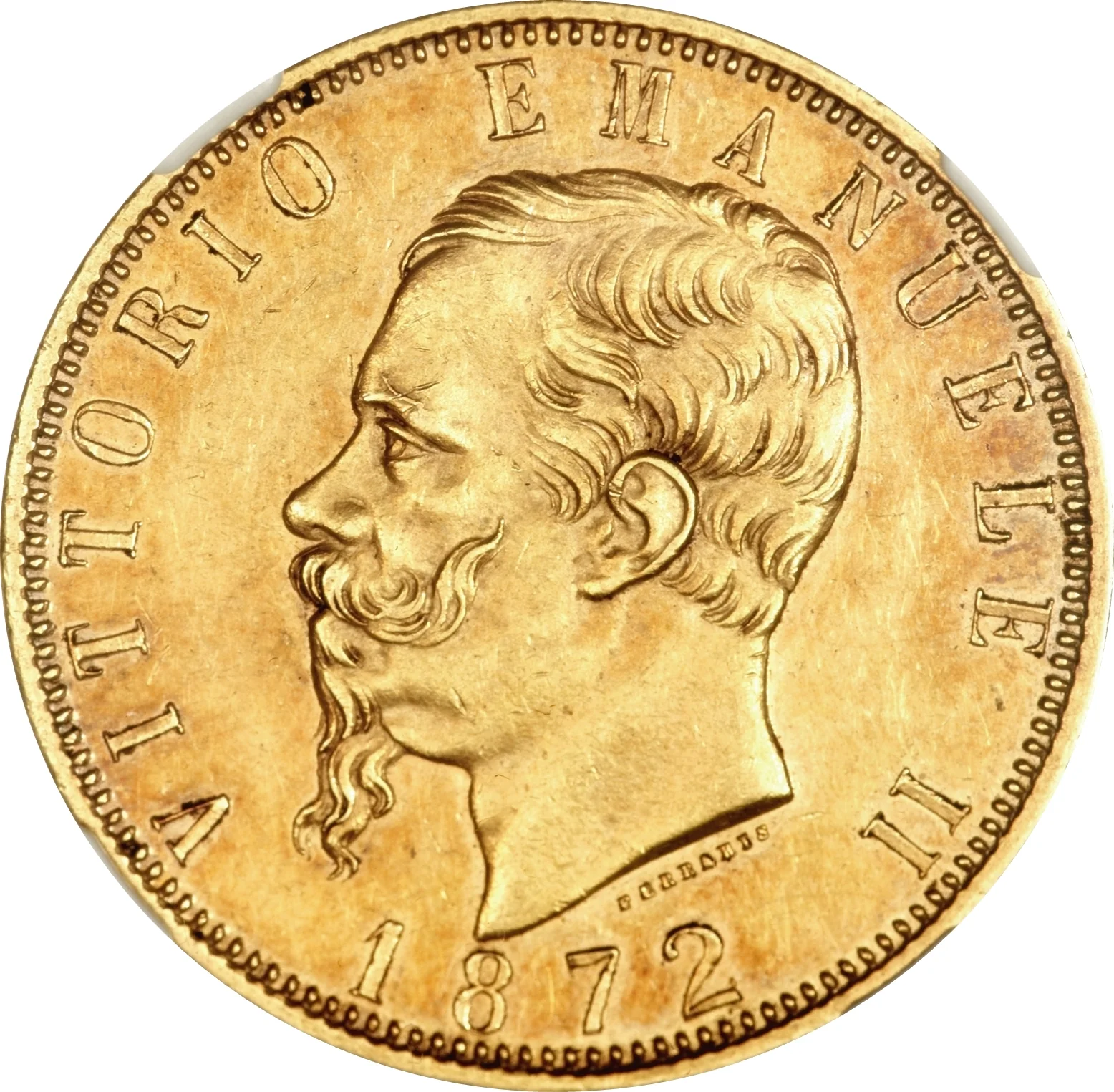
Obverse
Description:
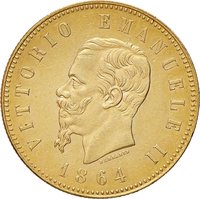
Head of King Vittorio Emanuele II; engraver's name below.
Inscription:
VITTORIO EMANUELE II
FERRARIS
1872
FERRARIS
1872
Script: Latin
Engraver: Giuseppe Ferraris
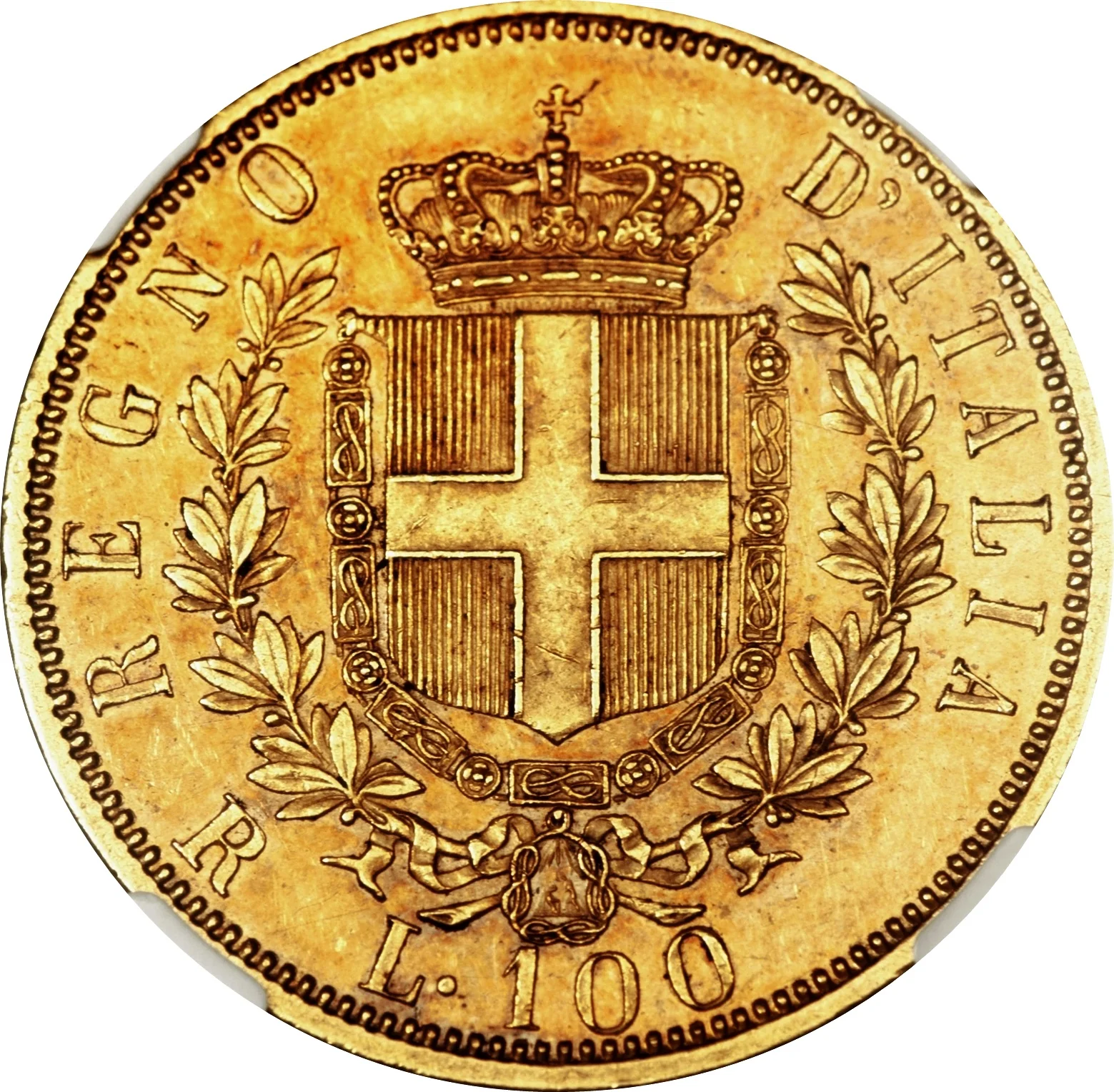
Reverse
Description:
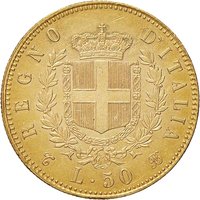
Savoia coat of arms with the Collare dell'Annunziata, within a laurel wreath. Value and mintmark below. Mintmarks: T/BN monogram (Turin) or R (Rome).
Inscription:
REGNO D'ITALIA
R L. 100
R L. 100
Translation:
Kingdom of Italy
100 Lire
100 Lire
Script: Latin
Engraver: Giuseppe Ferraris
Edge
Reeded
Historical background
In 1864, Italy was in the midst of a complex and fragmented currency situation, a direct legacy of its recent unification. The peninsula was still a mosaic of former states—the Kingdom of Sardinia (Piedmont), the Kingdom of the Two Sicilies, Lombardy-Venetia, the Papal States, and others—each with its own monetary system, coins, and banknotes. The lira of Piedmont, the piastra of Naples, the Tuscan fiorino, and the Roman scudo all circulated with varying values and metallic standards (silver and gold), creating significant obstacles to internal trade, state finance, and economic integration.
The driving force for change was the government of the newly proclaimed Kingdom of Italy, which sought monetary unification as a critical step toward building a modern nation-state. The foundational law was the Monetary Law of 1862, which established a bimetallic system based on the lira italiana, defined as 4.5 grams of pure silver or 290.322 milligrams of pure gold, aligning it with the French franc and thus the Latin Monetary Union. This move was strategically designed to integrate Italy into the wider European economic sphere. By 1864, the process of minting new national coins and withdrawing old currencies was underway, but it was a massive logistical and political undertaking that progressed slowly and unevenly across the country.
Consequently, the situation in 1864 was one of transition and strain. While the legal framework was in place, old regional currencies remained in widespread circulation, and public trust in the new paper money issued by the Banca Nazionale nel Regno d'Italia was limited. The government's severe financial difficulties, stemming from the costs of unification and military campaigns, also led to the controversial practice of "forced circulation" (corso forzoso), making paper legal tender without full convertibility to gold. Thus, 1864 represents a pivotal moment where Italy had a defined monetary target but was still grappling with the practical and economic challenges of replacing centuries of diverse monetary history with a single, stable national currency.
The driving force for change was the government of the newly proclaimed Kingdom of Italy, which sought monetary unification as a critical step toward building a modern nation-state. The foundational law was the Monetary Law of 1862, which established a bimetallic system based on the lira italiana, defined as 4.5 grams of pure silver or 290.322 milligrams of pure gold, aligning it with the French franc and thus the Latin Monetary Union. This move was strategically designed to integrate Italy into the wider European economic sphere. By 1864, the process of minting new national coins and withdrawing old currencies was underway, but it was a massive logistical and political undertaking that progressed slowly and unevenly across the country.
Consequently, the situation in 1864 was one of transition and strain. While the legal framework was in place, old regional currencies remained in widespread circulation, and public trust in the new paper money issued by the Banca Nazionale nel Regno d'Italia was limited. The government's severe financial difficulties, stemming from the costs of unification and military campaigns, also led to the controversial practice of "forced circulation" (corso forzoso), making paper legal tender without full convertibility to gold. Thus, 1864 represents a pivotal moment where Italy had a defined monetary target but was still grappling with the practical and economic challenges of replacing centuries of diverse monetary history with a single, stable national currency.

💎 Extremely Rare