

5 centavos – Ecuador
Add to wishlist
Ecuador
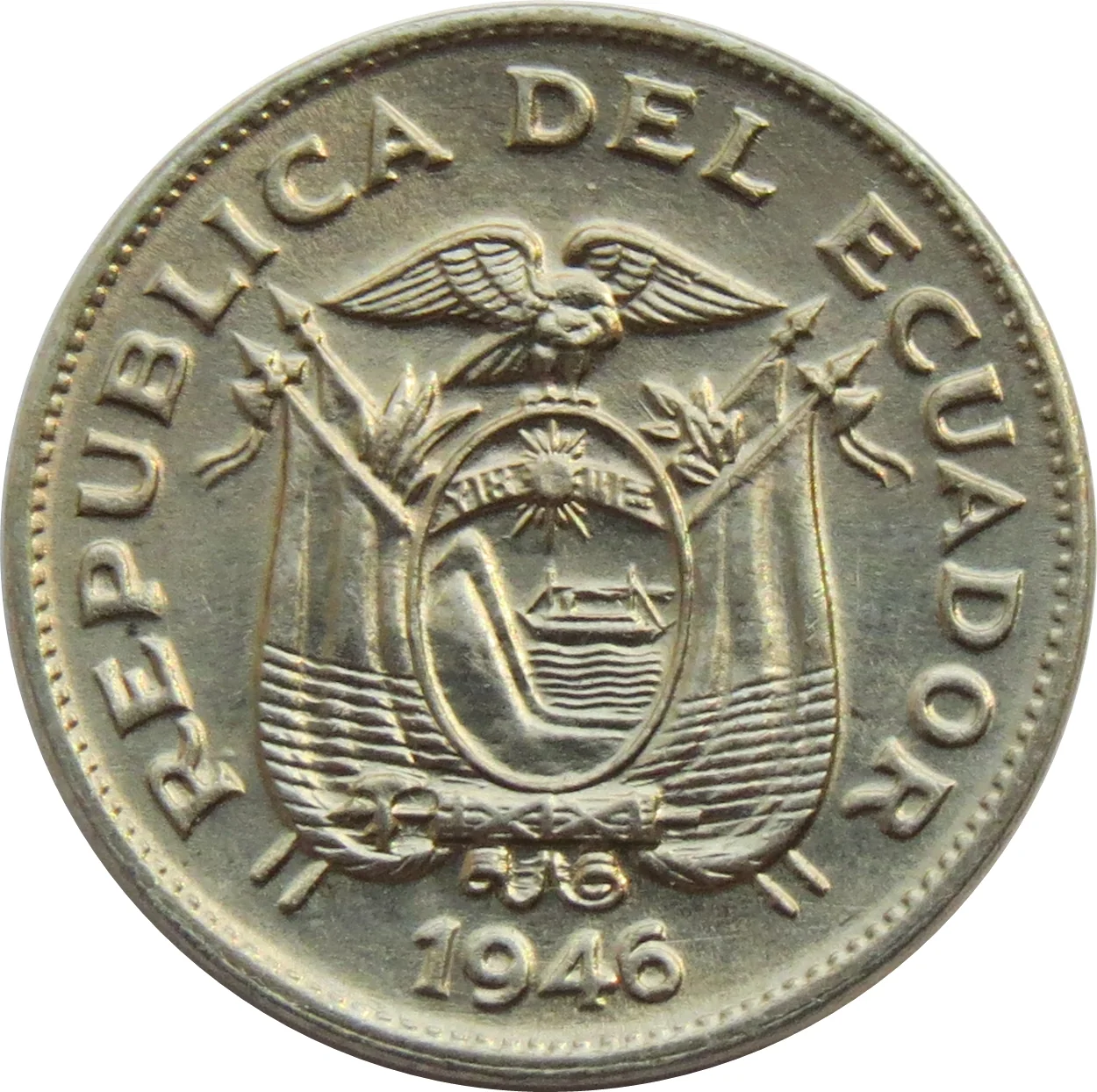
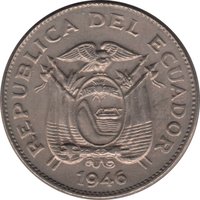
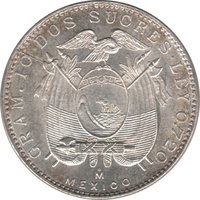
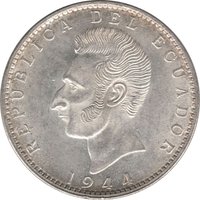
Obverse
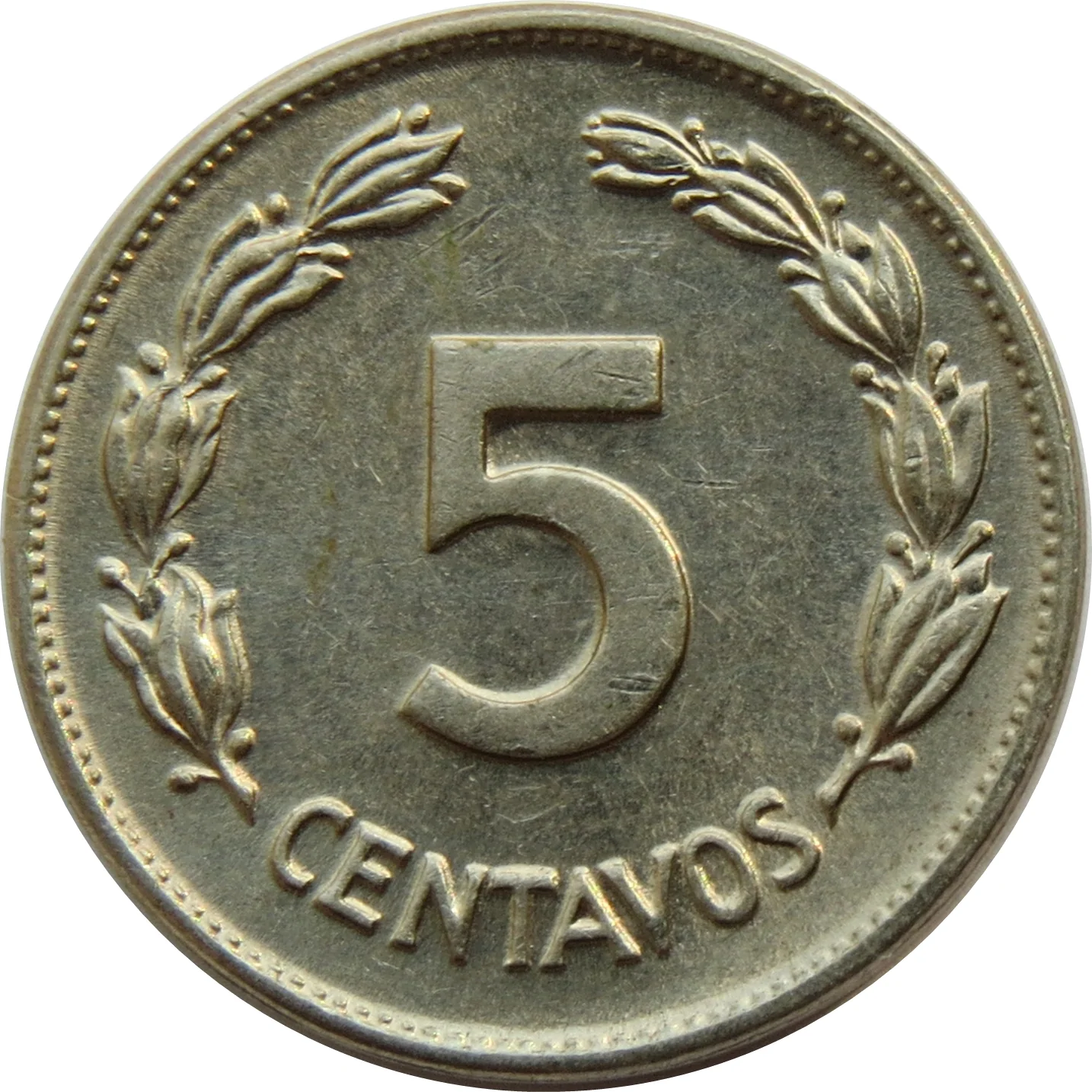
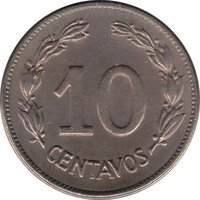
Reverse
Edge
Plain
Categories
| Symbols> Coat of Arms |
| Symbol> Wreath |
Mints
| Name | Mark |
|---|---|
| United States Mint of Philadelphia | — |
Mintings
| Year | Mint Mark | Mintage | Quality | Collection |
|---|---|---|---|---|
| 1946 | — | 40,000,000 |
Historical background
In 1946, Ecuador's currency situation was characterized by the continued use of the Ecuadorian sucre, which had been the national currency since 1884. The sucre was officially on a silver standard, but in practice, the global economic disruptions of World War II (which had just ended) and preceding decades had severely impacted its stability. The country's economy was heavily dependent on agricultural exports, primarily cacao, which had suffered from plant disease and market fluctuations, and emerging banana exports. This reliance on a narrow range of commodities made the sucre vulnerable to external shocks and trade imbalances, contributing to underlying inflationary pressures.
The immediate post-war period saw Ecuador, like many Latin American nations, grappling with dollar shortages and a growing demand for imported manufactured goods that had been scarce during the conflict. This put significant strain on foreign exchange reserves. While not in a hyperinflationary crisis in 1946 itself, the sucre was on a deteriorating trajectory. The Central Bank of Ecuador (founded in 1927) managed monetary policy, but its tools were limited by the nation's economic structure and its commitment to a fixed exchange rate, which was becoming increasingly difficult to defend.
Consequently, 1946 represents a point of gathering instability within a longer period of decline. The economic challenges of the war's aftermath exposed the structural weaknesses in Ecuador's export model and its currency management. This precarious situation would culminate just three years later, in 1949, with a major devaluation and the beginning of a long-term pattern of inflation and successive devaluations of the sucre throughout the latter half of the 20th century.
The immediate post-war period saw Ecuador, like many Latin American nations, grappling with dollar shortages and a growing demand for imported manufactured goods that had been scarce during the conflict. This put significant strain on foreign exchange reserves. While not in a hyperinflationary crisis in 1946 itself, the sucre was on a deteriorating trajectory. The Central Bank of Ecuador (founded in 1927) managed monetary policy, but its tools were limited by the nation's economic structure and its commitment to a fixed exchange rate, which was becoming increasingly difficult to defend.
Consequently, 1946 represents a point of gathering instability within a longer period of decline. The economic challenges of the war's aftermath exposed the structural weaknesses in Ecuador's export model and its currency management. This precarious situation would culminate just three years later, in 1949, with a major devaluation and the beginning of a long-term pattern of inflation and successive devaluations of the sucre throughout the latter half of the 20th century.
🌱 Very Common