

1 centavo – Honduras
Add to wishlist
Honduras
Context
Years: 1954–1957
Issuer: Honduras
Issuing organization: Central Bank of Honduras
Period:
(since 1862)
Currency:
(since 1931)
Total mintage: 33,500,000
Material
References
KM: #
Numista: #2961
Value
Exchange value: 0.01 HNL
Obverse
Description:
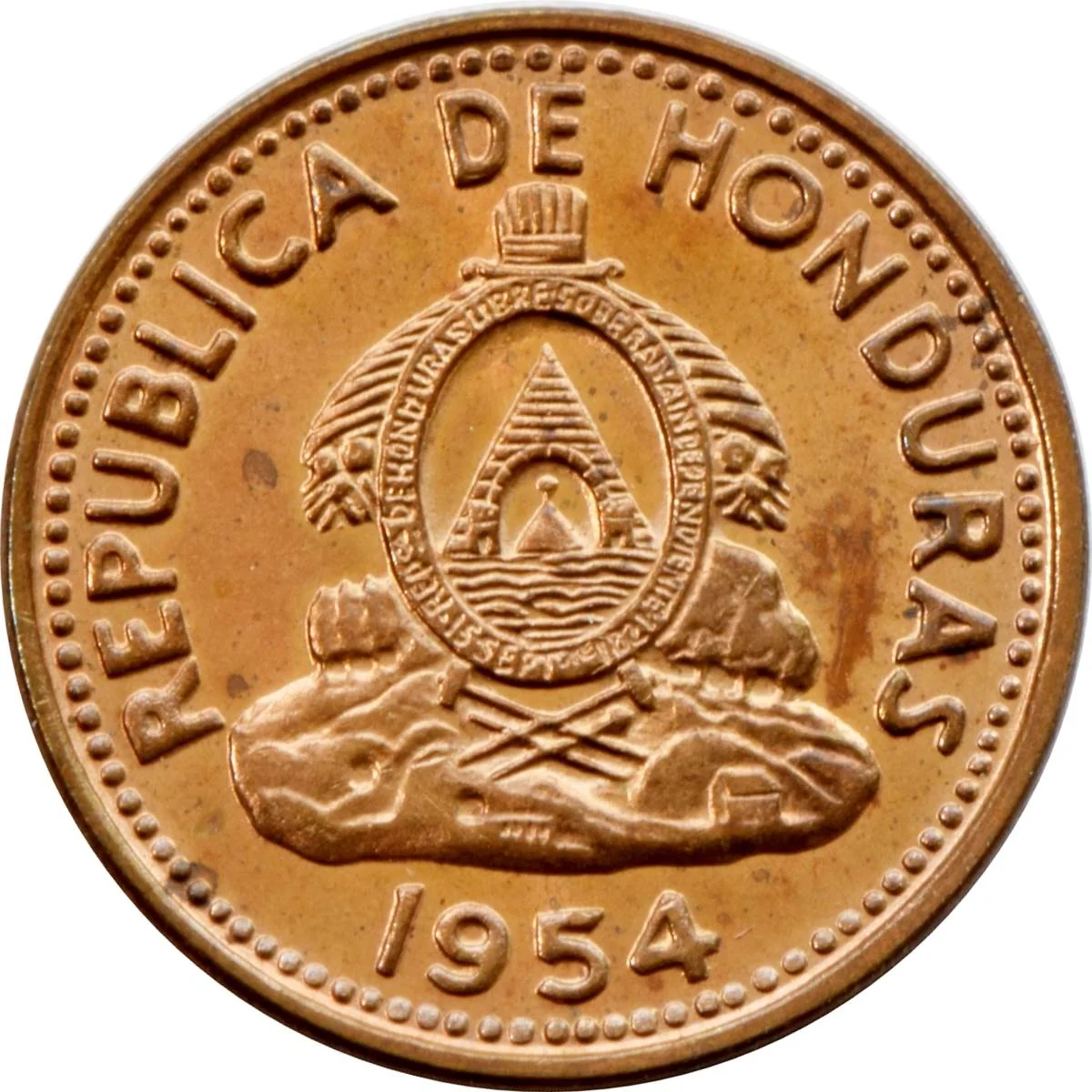
Coat of Arms (pyramid, no clouds) with date beneath.
Inscription:
REPUBLICA DE HONDURAS
REP CA DE · HONDURAS · LIBRE · SOBERANA · INDEPENDIENTE
· 15 SEPT BRE 1821 ·
1954
REP CA DE · HONDURAS · LIBRE · SOBERANA · INDEPENDIENTE
· 15 SEPT BRE 1821 ·
1954
Translation:
REPUBLIC OF HONDURAS
REPUBLIC OF HONDURAS, FREE, SOVEREIGN, INDEPENDENT
15 SEPTEMBER 1821
1954
REPUBLIC OF HONDURAS, FREE, SOVEREIGN, INDEPENDENT
15 SEPTEMBER 1821
1954
Script: Latin
Language: Spanish
Reverse
Edge
Plain
Categories
| Symbols> Coat of Arms |
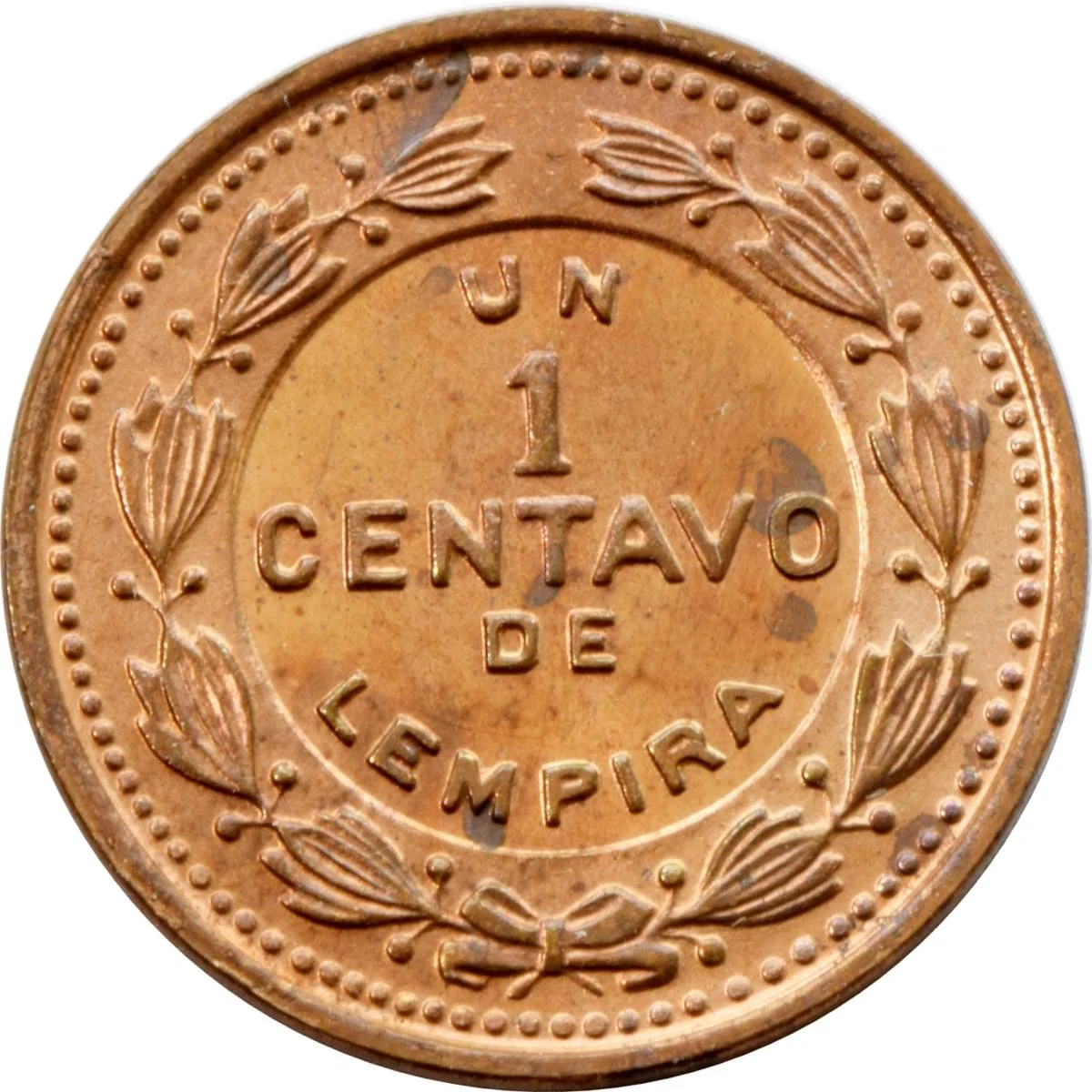
| Symbol> Wreath |
Mintings
| Year | Mint Mark | Mintage | Quality | Collection |
|---|---|---|---|---|
| 1954 | — | 3,500,000 | ||
| 1956 | — | 2,000,000 | ||
| 1957 | — | 28,000,000 |
Historical background
In 1954, the currency situation in Honduras was defined by the stability and dominance of the Honduran Lempira (HNL), which had been introduced in 1931 to replace the Honduran Peso. The Lempira was firmly pegged to the US dollar at a fixed rate of 2 Lempiras = 1 US Dollar, an exchange regime established in 1931 and maintained for decades. This peg provided a crucial anchor for the economy, fostering predictability in foreign trade and investment, which was vital for a country whose economic health was heavily dependent on the export of a few key commodities, notably bananas, controlled by foreign corporations like the United Fruit Company.
The year 1954 itself was politically turbulent, marked by a major strike by banana plantation workers that paralyzed the key export sector and challenged the political establishment. Despite this significant social and economic disruption, the currency peg itself remained intact and was not a direct point of crisis. The Central Bank of Honduras (Banco Central de Honduras), founded in 1950, was responsible for maintaining the fixed exchange rate and managing monetary reserves, which were backed substantially by holdings of US dollars from export revenues. This institutional framework helped insulate the currency from the immediate political shocks.
Consequently, while the national economy faced pressure from the strike and social unrest, the Lempira's exchange rate stability was not in question in 1954. The primary economic vulnerabilities lay in the extreme dependence on a single agricultural sector and foreign capital, rather than in monetary instability. The fixed peg to the dollar would remain a cornerstone of Honduran financial policy for years to come, enduring long after the political events of 1954 had passed, and was not abandoned until 1990.
The year 1954 itself was politically turbulent, marked by a major strike by banana plantation workers that paralyzed the key export sector and challenged the political establishment. Despite this significant social and economic disruption, the currency peg itself remained intact and was not a direct point of crisis. The Central Bank of Honduras (Banco Central de Honduras), founded in 1950, was responsible for maintaining the fixed exchange rate and managing monetary reserves, which were backed substantially by holdings of US dollars from export revenues. This institutional framework helped insulate the currency from the immediate political shocks.
Consequently, while the national economy faced pressure from the strike and social unrest, the Lempira's exchange rate stability was not in question in 1954. The primary economic vulnerabilities lay in the extreme dependence on a single agricultural sector and foreign capital, rather than in monetary instability. The fixed peg to the dollar would remain a cornerstone of Honduran financial policy for years to come, enduring long after the political events of 1954 had passed, and was not abandoned until 1990.
🌱 Very Common