

5 scudi – Papal States
Add to wishlist
Vatican City
Context
Year: 1846
Country: Vatican City
Issuer: Papal States
Currency:
(1835—1866)
Subdivision: 5 scudi = 500 Baiocchi
Demonetized: Yes
Total mintage: 400
Material
References
KM: #
Numista: #29279
Value
Bullion value: $1195.61
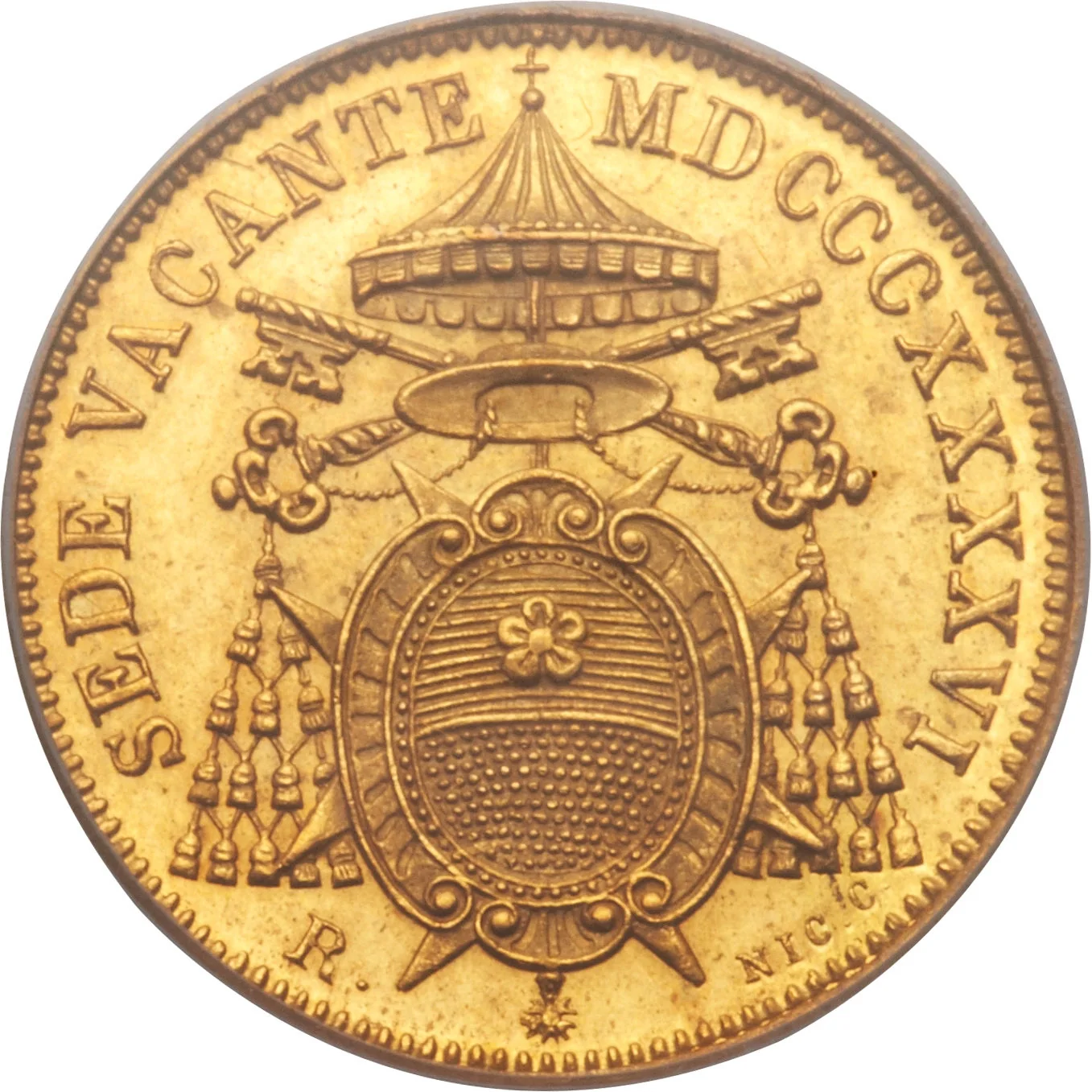
Obverse
Description:
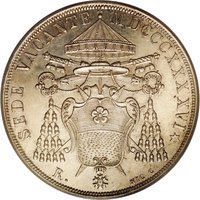
Cardinal's coat of arms
Inscription:
SEDE VACANTE MDCCCXXXXVI
R
NIC C
R
NIC C
Translation:
During the vacant see 1846
NIC C
NIC C
Script: Latin
Language: Latin
Engraver: Niccolò Cerbara
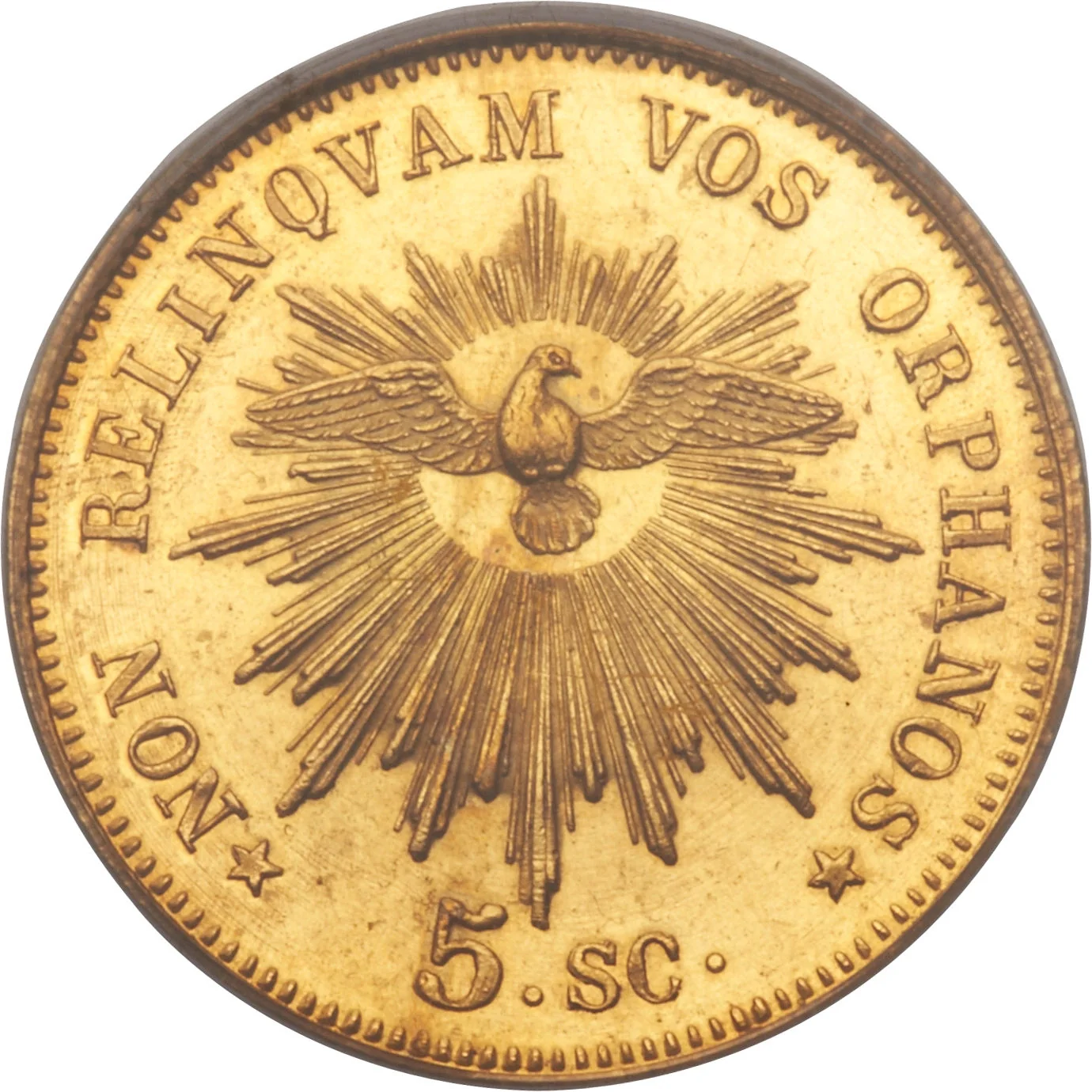
Reverse
Description:
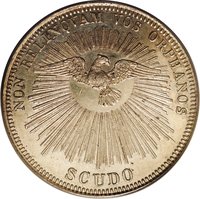
Radiant dove beyond price.
Inscription:
NON RELINQVAM VOS ORPHANOS
5 SC
5 SC
Translation:
I will not leave you orphans.
Script: Latin
Language: Latin
Engraver: Niccolò Cerbara
Edge
Mintings
| Year | Mint Mark | Mintage | Quality | Collection |
|---|---|---|---|---|
| 1846 | R | 400 |
Historical background
In 1846, the Papal States found itself in a precarious and complex monetary situation, characteristic of the fragmented pre-unification Italian peninsula. The territory lacked a unified, modern currency system. While the official unit of account was the Papal Scudo, divided into 100 Baiocchi, the reality was a chaotic circulation of numerous physical coins from various eras and origins. These included not only older Papal issues but also coins from other Italian states, Austrian currency (due to Habsburg influence in the north), and even French coins, leading to confusion and inefficiency in commerce.
This monetary disarray was symptomatic of the broader economic and administrative stagnation under the conservative governance of Pope Gregory XVI (1831-1846). The state’s finances were strained, relying heavily on debt, monopolies, and inefficient taxes, while failing to invest in infrastructure or industry. The lack of a trusted, uniform currency hindered trade and economic development, frustrating the emerging merchant and professional classes. The system was not only cumbersome but also seen as a symbol of the Papal States' resistance to the modernizing reforms sweeping across Europe.
The election of the perceived liberal reformer, Cardinal Giovanni Maria Mastai-Ferretti, as Pope Pius IX in June 1846, therefore ignited immediate hopes for change. His early promises of political amnesty and discussions of economic modernization led many to anticipate concrete financial and monetary reforms. Consequently, the currency situation in 1846 stood at a critical juncture—a legacy of outdated practices that was now under scrutiny, with growing pressure from both internal subjects and external European powers to stabilize and unify the monetary system as part of a wider project of modernization.
This monetary disarray was symptomatic of the broader economic and administrative stagnation under the conservative governance of Pope Gregory XVI (1831-1846). The state’s finances were strained, relying heavily on debt, monopolies, and inefficient taxes, while failing to invest in infrastructure or industry. The lack of a trusted, uniform currency hindered trade and economic development, frustrating the emerging merchant and professional classes. The system was not only cumbersome but also seen as a symbol of the Papal States' resistance to the modernizing reforms sweeping across Europe.
The election of the perceived liberal reformer, Cardinal Giovanni Maria Mastai-Ferretti, as Pope Pius IX in June 1846, therefore ignited immediate hopes for change. His early promises of political amnesty and discussions of economic modernization led many to anticipate concrete financial and monetary reforms. Consequently, the currency situation in 1846 stood at a critical juncture—a legacy of outdated practices that was now under scrutiny, with growing pressure from both internal subjects and external European powers to stabilize and unify the monetary system as part of a wider project of modernization.
✨ Legendary