

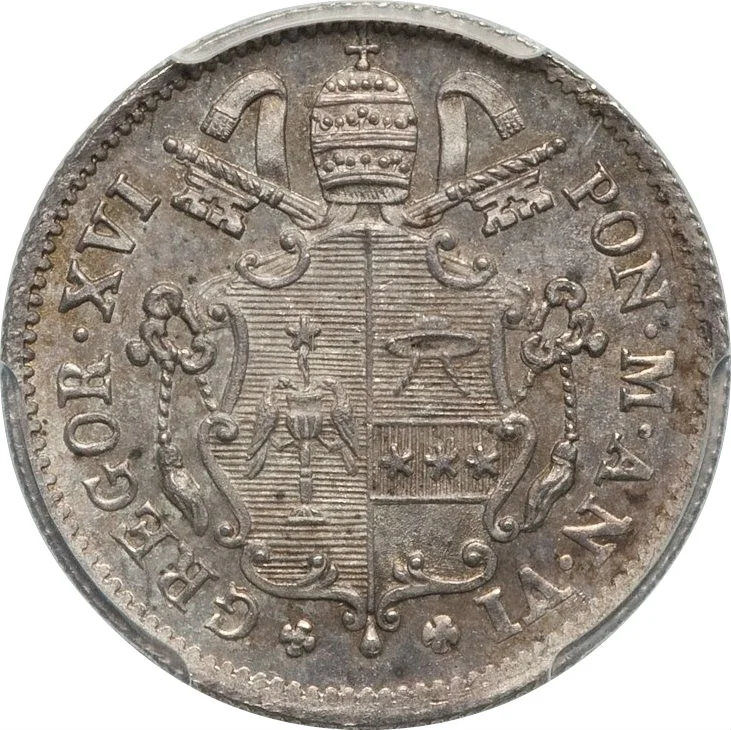
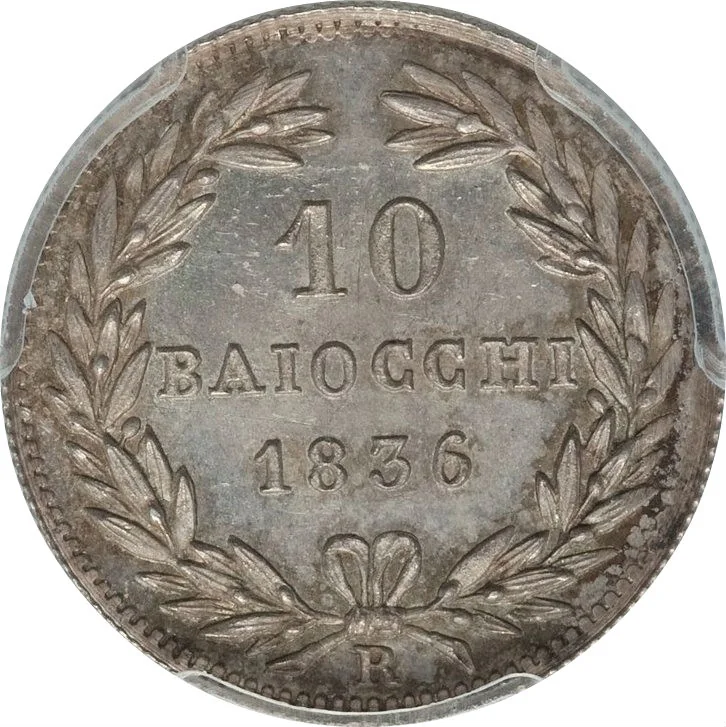
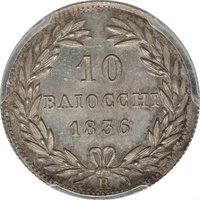
10 Baiocchi – Papal States
Vatican City
Context
Years: 1836–1846
Country: Vatican City 
Issuer: Papal States
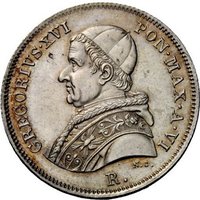
Ruler: Gregory XVI
Currency:
(1835—1866)
Subdivision: 10 Baiocchi = 1 Giulio/Paolo
Demonetized: Yes
Material
References
KM: #Click to copy to clipboard1325
Numista: #89357
Value
Bullion value: $6.81
Obverse
Reverse
Edge
Reeded
Mintings
| Year | Mint Mark | Mintage | Quality | Collection |
|---|---|---|---|---|
| 1836 | R | — | ||
| 1836 | B | — | ||
| 1839 | B | — | ||
| 1839 | R | — | ||
| 1841 | B | — | ||
| 1841 | R | — | ||
| 1842 | B | — | ||
| 1842 | R | — | ||
| 1843 | B | — | ||
| 1844 | B | — | ||
| 1846 | R | — |
Historical background
In 1836, the Papal States faced a complex and fragmented monetary situation, a direct legacy of its decentralized political and administrative history. There was no single, unified Papal currency in circulation. Instead, the territory used a bewildering array of coins from various eras and issuing authorities. These included older papal coinage from previous pontificates, coins from the individual legations and provinces within the Papal States, and a significant quantity of foreign currencies, particularly French, Tuscan, and Neapolitan coins, which circulated freely due to trade and proximity. This lack of standardization created chronic confusion in commerce and hindered economic integration across the regions.
The theoretical basis for the currency was the scudo (plural: scudi), divided into 100 baiocchi, with each baiocco further divided into 5 quattrini. However, the actual value and metal content of coins denominated in these units could vary. The situation was further complicated by the existence of two parallel systems: a silver-based scudo for everyday trade and a gold-based scudo for larger transactions and international exchange, with an unstable fluctuating rate between them. This bimetallic system was under strain from global shifts in the relative value of gold and silver, leading to arbitrage and the hoarding or export of one metal.
Recognizing the economic inefficiency and the need for modernization, Pope Gregory XVI’s government was actively working on reform. In 1835, plans were set in motion for a comprehensive monetary reorganization, which would culminate in the issuance of a new, standardized coinage the following year. Therefore, 1836 represents a pivotal transitional year, marked by the persistent chaos of the old system but on the cusp of introducing a new decimal-based currency—the scudo romano—in an attempt to centralize monetary authority and simplify commerce within the Papal States.
The theoretical basis for the currency was the scudo (plural: scudi), divided into 100 baiocchi, with each baiocco further divided into 5 quattrini. However, the actual value and metal content of coins denominated in these units could vary. The situation was further complicated by the existence of two parallel systems: a silver-based scudo for everyday trade and a gold-based scudo for larger transactions and international exchange, with an unstable fluctuating rate between them. This bimetallic system was under strain from global shifts in the relative value of gold and silver, leading to arbitrage and the hoarding or export of one metal.
Recognizing the economic inefficiency and the need for modernization, Pope Gregory XVI’s government was actively working on reform. In 1835, plans were set in motion for a comprehensive monetary reorganization, which would culminate in the issuance of a new, standardized coinage the following year. Therefore, 1836 represents a pivotal transitional year, marked by the persistent chaos of the old system but on the cusp of introducing a new decimal-based currency—the scudo romano—in an attempt to centralize monetary authority and simplify commerce within the Papal States.
💎 Extremely Rare