

5 kuruş – Ottoman Empire
Add to wishlist
Turkey
Context
Years: 1810–1818
Country: Turkey
Issuer: Ottoman Empire
Ruler: Mahmud II
Currency:
(1688—1844)
Demonetized: Yes
Material
References
KM: #
Numista: #29068
Value
Bullion value: $48.04
Obverse
Description:
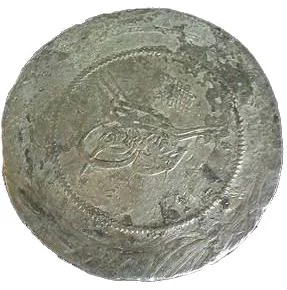
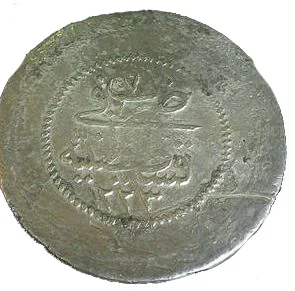
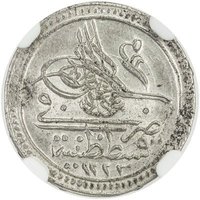
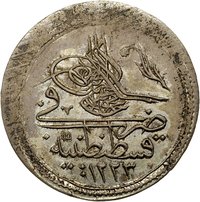
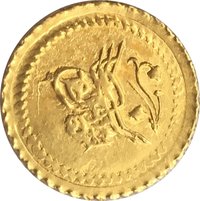
24.00–26.00g. Central toughra and flower in a beaded circle, with a continuous rim pattern.
Script: Arabic
Reverse
Edge
Plain
Mints
| Name | Mark |
|---|---|
| Constantinople | — |
Mintings
| Year | Mint Mark | Mintage | Quality | Collection |
|---|---|---|---|---|
| 1810 | — | — | ||
| 1811 | — | — | ||
| 1812 | — | — | ||
| 1813 | — | — | ||
| 1814 | — | — | ||
| 1815 | — | — | ||
| 1816 | — | — | ||
| 1817 | — | — | ||
| 1818 | — | — |
Historical background
In 1810, the Ottoman Empire’s currency system was in a state of profound crisis and transition, reflecting the broader political and military pressures of the era. The empire was engaged in costly wars, most notably with Russia, while simultaneously facing internal fragmentation and the erosion of central authority. To finance these conflicts, the Imperial Mint in Constantinople resorted to severe debasement of the primary silver coin, the kuruş (piastre). By repeatedly reducing its silver content, the state generated short-term revenue but triggered rampant inflation, a loss of public confidence, and a chaotic multiplicity of coins in circulation, including older, purer coins hoarded for their intrinsic value.
This monetary instability was exacerbated by the widespread circulation of foreign currencies, which dominated key commercial sectors. In major port cities and trade centers, the Spanish silver dollar (and its Ottoman imitation, the riyal guruş), the Dutch lion dollar, and other European coins were often preferred for their reliable silver content. This effectively created a dual monetary system: a debased official currency for state payments and local transactions, and a more stable foreign currency for international trade and savings. The empire’s inability to control its own monetary space highlighted its increasing integration into—and dependence on—the global economy on unfavorable terms.
Consequently, the period around 1810 represents a critical juncture where traditional Ottoman monetary autonomy was collapsing. The sultan’s prerogative to control the coinage, a key symbol of sovereignty, was being undermined by market forces, foreign economic pressure, and fiscal desperation. These currency disorders contributed to social unrest, complicated tax collection, and further weakened the economic foundations of the state, setting the stage for the more comprehensive reforms (Tanzimat) that would follow in the coming decades in a belated attempt to stabilize the empire’s finances and administration.
This monetary instability was exacerbated by the widespread circulation of foreign currencies, which dominated key commercial sectors. In major port cities and trade centers, the Spanish silver dollar (and its Ottoman imitation, the riyal guruş), the Dutch lion dollar, and other European coins were often preferred for their reliable silver content. This effectively created a dual monetary system: a debased official currency for state payments and local transactions, and a more stable foreign currency for international trade and savings. The empire’s inability to control its own monetary space highlighted its increasing integration into—and dependence on—the global economy on unfavorable terms.
Consequently, the period around 1810 represents a critical juncture where traditional Ottoman monetary autonomy was collapsing. The sultan’s prerogative to control the coinage, a key symbol of sovereignty, was being undermined by market forces, foreign economic pressure, and fiscal desperation. These currency disorders contributed to social unrest, complicated tax collection, and further weakened the economic foundations of the state, setting the stage for the more comprehensive reforms (Tanzimat) that would follow in the coming decades in a belated attempt to stabilize the empire’s finances and administration.
💎 Very Rare