

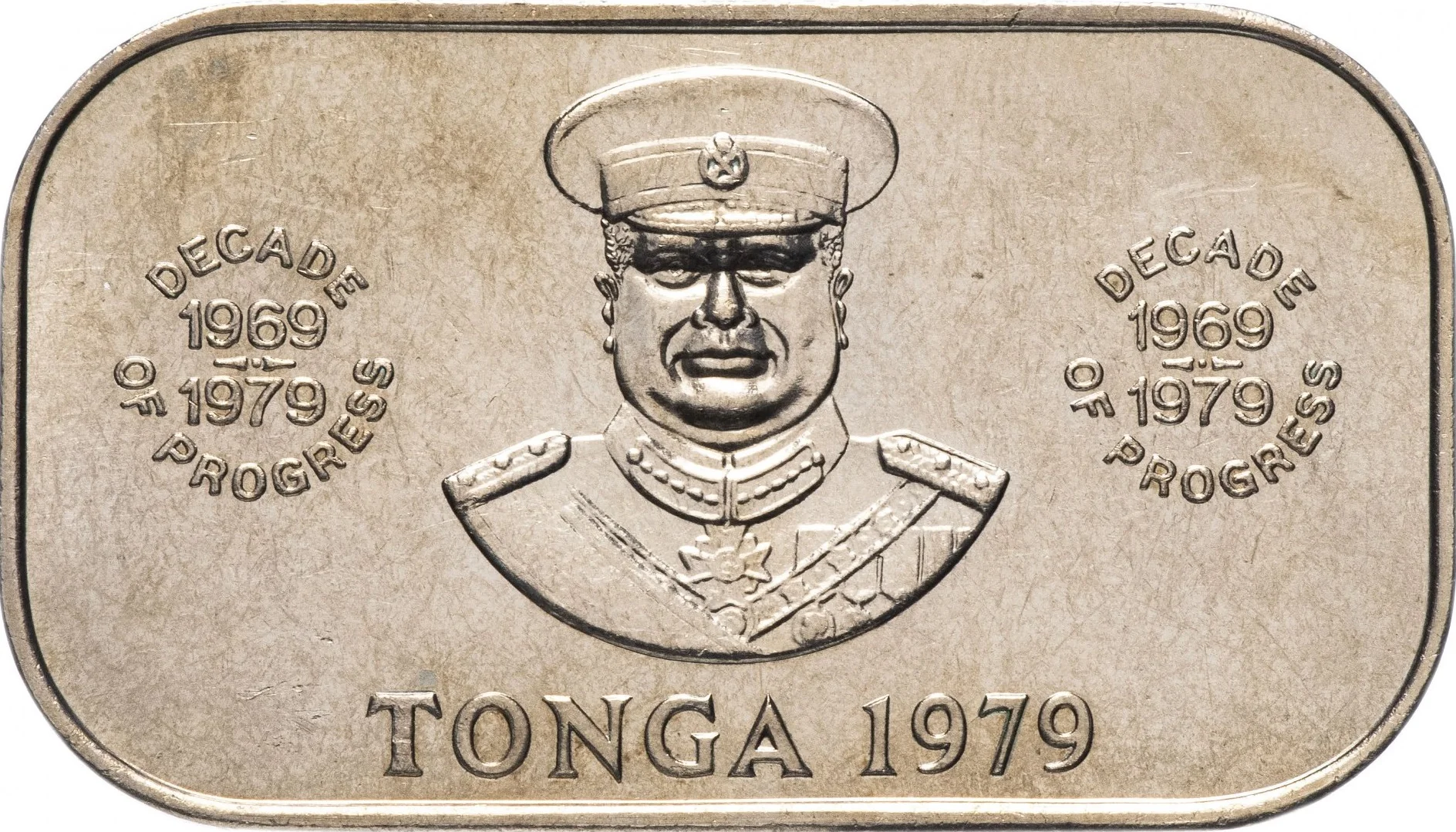
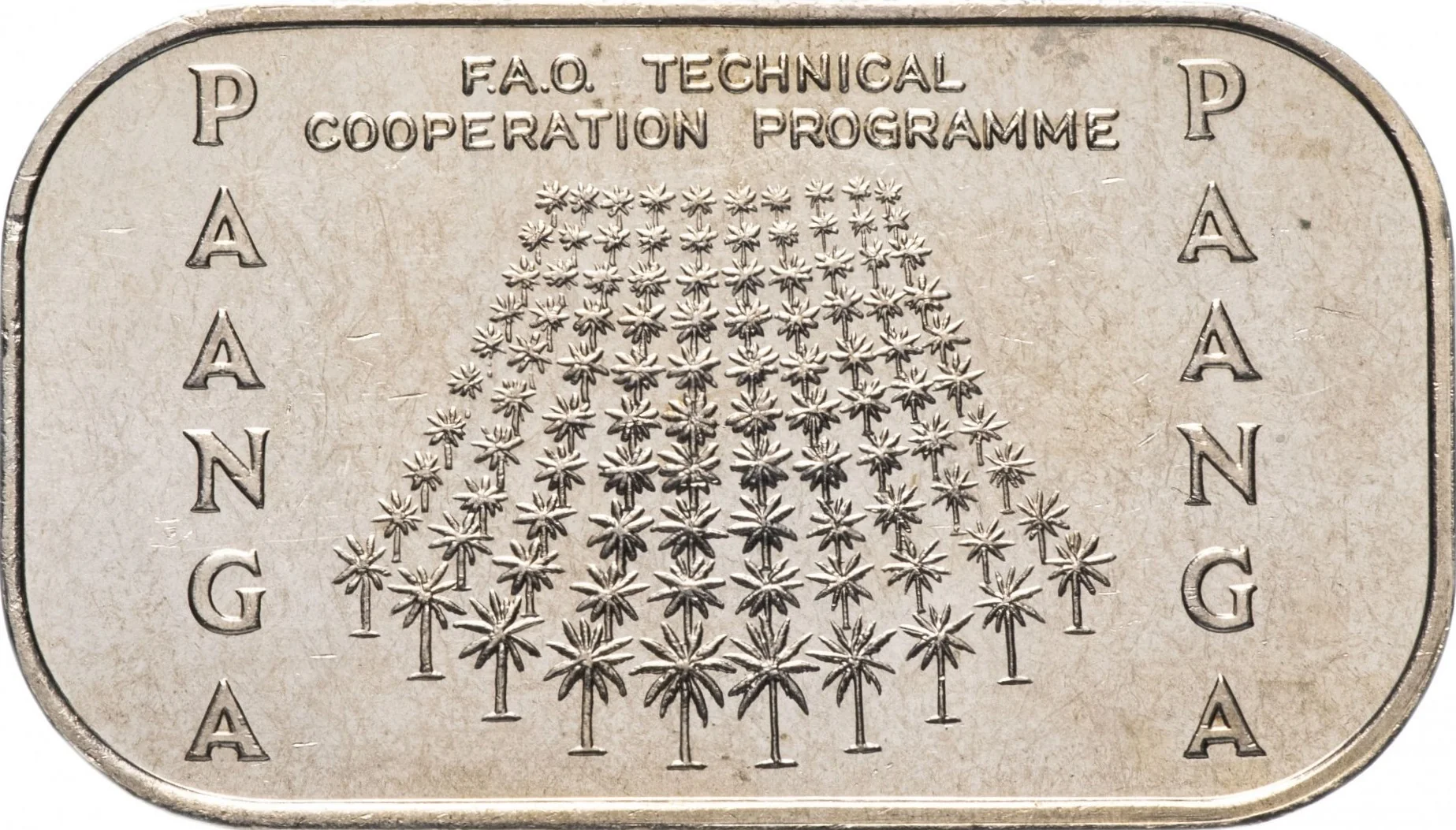
1 paʻanga – Tonga
Add to wishlist
Circulating commemorative coins
Commemoration: FAO - Technical Cooperation Program - Decade of Progress
Tonga
Context
Year: 1979
Issuer: Tonga
Ruler: Tāufaʻāhau Tupou IV
Currency:
(since 1967)
Demonetization: 1 October 2015
Total mintage: 25,900
Material
Weight: 16.2 g
Thickness: 1.9 mm
Shape: Rectangular
Composition: Copper-nickel
Technique: Milled
Alignment: Medal alignment
flip
References
KM: #
Numista: #29065
Value
Exchange value: 1 TOP
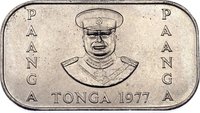
Obverse
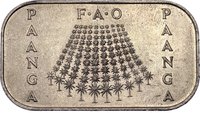
Reverse
Inscription:
PAANGA
F.A.O. TECHNICAL
COOPERATION PROGRAMME
PAANGA
F.A.O. TECHNICAL
COOPERATION PROGRAMME
PAANGA
Script: Latin
Edge
Plain
Categories
| Organization> FAO |
Mints
| Name | Mark |
|---|---|
| Royal Australian Mint | — |
Mintings
| Year | Mint Mark | Mintage | Quality | Collection |
|---|---|---|---|---|
| 1979 | — | 25,900 |
Historical background
In 1979, the Kingdom of Tonga operated under a unique and relatively stable currency system, with the Pa'anga as its national currency. Introduced in 1967 to replace the Tongan pound, the Pa'anga was not freely convertible and its value was pegged to a basket of currencies, heavily weighted towards the Australian dollar. This peg provided a crucial anchor for the small, import-dependent island economy, shielding it from the worst of the volatile exchange rate fluctuations experienced globally during the 1970s. Monetary policy and currency issuance were managed by the Tonga Board of Commissioners of Currency, under the authority of the Minister of Finance, rather than by a central bank.
Economically, 1979 fell within a period of transition and development for Tonga. The decade had seen significant infrastructure projects and a growth in agricultural exports, particularly squash pumpkins to Japan. However, the country faced persistent trade deficits and relied heavily on remittances from Tongans working abroad, as well as foreign aid. The fixed exchange rate regime helped maintain price stability for essential imports but also meant that Tonga's competitiveness in export markets was indirectly influenced by the economic performance and monetary policy of Australia, its major trading partner at the time.
There were no major currency crises or devaluations in Tonga in 1979. The system's primary challenge was one of management and maintaining sufficient foreign reserves to back the currency peg, a common concern for small island states. The relative calm of 1979 stands in contrast to the later establishment of the National Reserve Bank of Tonga in 1989, which took over monetary authority. Thus, the currency situation in 1979 can be characterized as one of deliberate insulation, with the Pa'anga's managed peg serving as a key tool for economic stability during a period of gradual modernization.
Economically, 1979 fell within a period of transition and development for Tonga. The decade had seen significant infrastructure projects and a growth in agricultural exports, particularly squash pumpkins to Japan. However, the country faced persistent trade deficits and relied heavily on remittances from Tongans working abroad, as well as foreign aid. The fixed exchange rate regime helped maintain price stability for essential imports but also meant that Tonga's competitiveness in export markets was indirectly influenced by the economic performance and monetary policy of Australia, its major trading partner at the time.
There were no major currency crises or devaluations in Tonga in 1979. The system's primary challenge was one of management and maintaining sufficient foreign reserves to back the currency peg, a common concern for small island states. The relative calm of 1979 stands in contrast to the later establishment of the National Reserve Bank of Tonga in 1989, which took over monetary authority. Thus, the currency situation in 1979 can be characterized as one of deliberate insulation, with the Pa'anga's managed peg serving as a key tool for economic stability during a period of gradual modernization.
🌟 Uncommon