

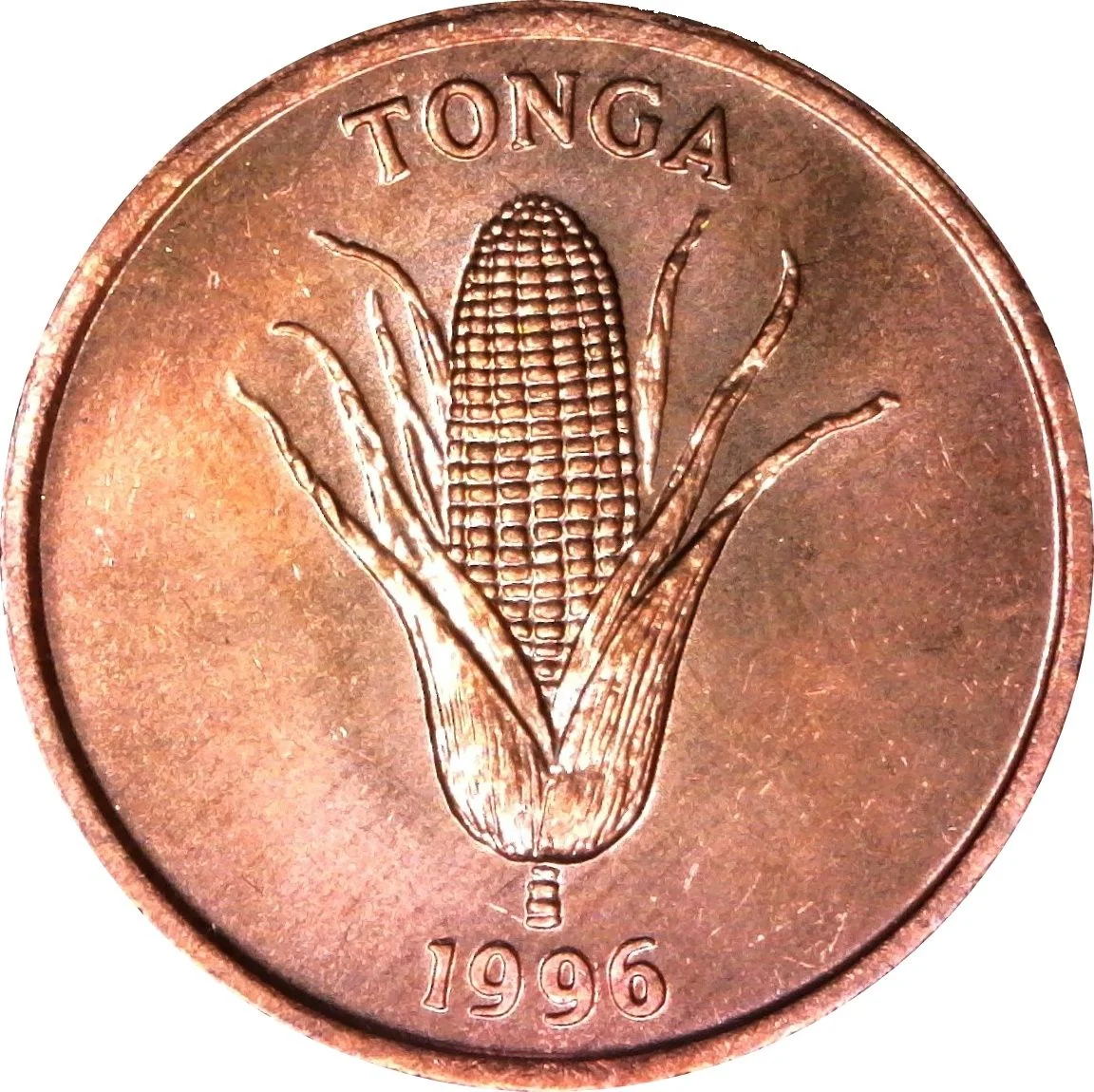
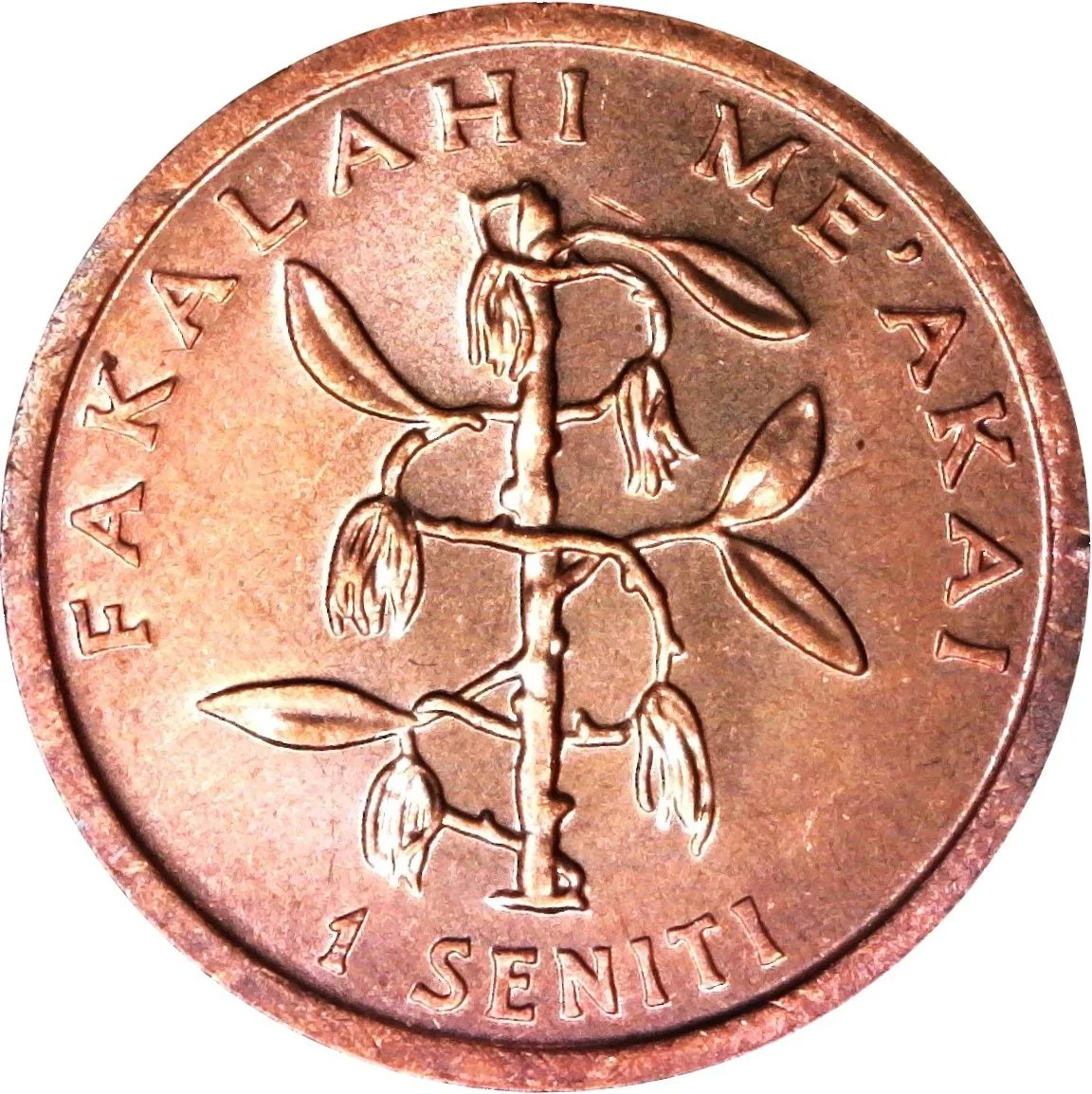
1 seniti – Tonga
Add to wishlist
Circulating commemorative coins
Commemoration: FAO - World Food Day
Tonga
Context
Years: 1981–1996
Issuer: Tonga
Ruler: Tāufaʻāhau Tupou IV
Currency:
(since 1967)
Demonetization: 1 October 2015
Total mintage: 3,044,000
Material
References
KM: #
Numista: #1512
Value
Exchange value: 0.01 TOP
Obverse
Reverse
Edge
Plain
Categories
| Organization> FAO |
Mints
| Name | Mark |
|---|---|
| Royal Australian Mint | — |
| Royal Mint | — |
Mintings
| Year | Mint Mark | Mintage | Quality | Collection |
|---|---|---|---|---|
| 1981 | — | 1,544,000 | ||
| 1990 | — | 500,000 | ||
| 1991 | — | 500,000 | ||
| 1994 | — | 500,000 | ||
| 1996 | — | — |
Historical background
In 1981, the Kingdom of Tonga operated under a unique and long-established currency system. The national currency was (and remains) the Pa'anga (TOP), which was introduced in 1967 to replace the Tongan pound. However, its value was not pegged to a major international currency like the US dollar or the British pound. Instead, the Pa'anga was pegged at par to the Australian dollar (AUD). This meant that one Pa'anga was officially equal to one Australian dollar, a linkage that provided stability and simplified trade with Tonga's largest economic partner.
This peg, managed by the Tongan government and the Board of Commissioners of Currency, was a cornerstone of monetary policy. The economy in the early 1980s was heavily reliant on agriculture, particularly coconut and banana exports, and remittances from Tongans working abroad. The fixed exchange rate with the Australian dollar helped control inflation and provided a predictable environment for the limited but growing commercial sector. However, it also meant Tonga's monetary policy was effectively tied to Australia's, leaving the local currency vulnerable to economic shocks originating in Australia.
The system in 1981 was relatively stable but faced underlying pressures. Tonga's small, import-dependent economy had limited foreign exchange reserves, and maintaining the fixed parity required careful management. While there was no currency crisis in 1981, the structure's inherent rigidity would later be tested. Significant devaluations of the Pa'anga eventually occurred in the 1990s and 2000s as the government sought to address trade imbalances and boost export competitiveness, moving away from the one-to-one peg that characterized the currency situation in the early 1980s.
This peg, managed by the Tongan government and the Board of Commissioners of Currency, was a cornerstone of monetary policy. The economy in the early 1980s was heavily reliant on agriculture, particularly coconut and banana exports, and remittances from Tongans working abroad. The fixed exchange rate with the Australian dollar helped control inflation and provided a predictable environment for the limited but growing commercial sector. However, it also meant Tonga's monetary policy was effectively tied to Australia's, leaving the local currency vulnerable to economic shocks originating in Australia.
The system in 1981 was relatively stable but faced underlying pressures. Tonga's small, import-dependent economy had limited foreign exchange reserves, and maintaining the fixed parity required careful management. While there was no currency crisis in 1981, the structure's inherent rigidity would later be tested. Significant devaluations of the Pa'anga eventually occurred in the 1990s and 2000s as the government sought to address trade imbalances and boost export competitiveness, moving away from the one-to-one peg that characterized the currency situation in the early 1980s.
🌱 Very Common