

100 francs – New Caledonia
Add to wishlist
France
Context
Years: 1976–2005
Country: France
Issuer: New Caledonia
Issuing organization: Overseas Institution of Issue
Period:
(since 1958)
Currency:
(since 1945)
Demonetization: 30 November 2022
Total mintage: 8,000,200
Material
References
KM: #
Numista: #1348
Value
Exchange value: 100 XPF
Inflation-adjusted value: 553.15 XPF
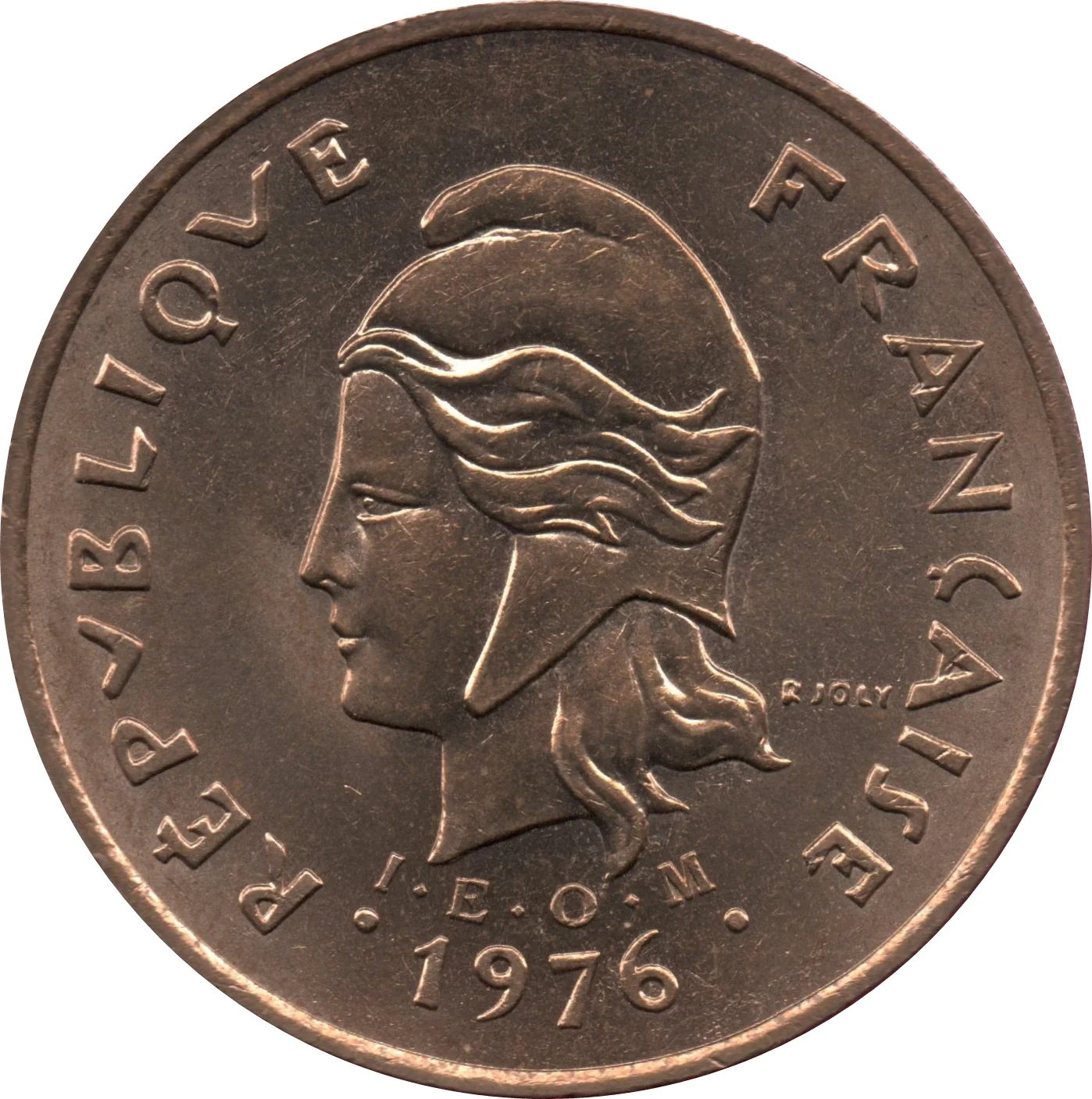
Obverse
Description:
Marianne left, date below, legend around.
Inscription:
RÉPUBLIQUE FRANÇAISE
R JOLY
I·E·O·M
1976
R JOLY
I·E·O·M
1976
Translation:
FRENCH REPUBLIC
R JOLY
I·E·O·M
1976
R JOLY
I·E·O·M
1976
Script: Latin
Language: French
Engraver: Raymond Joly
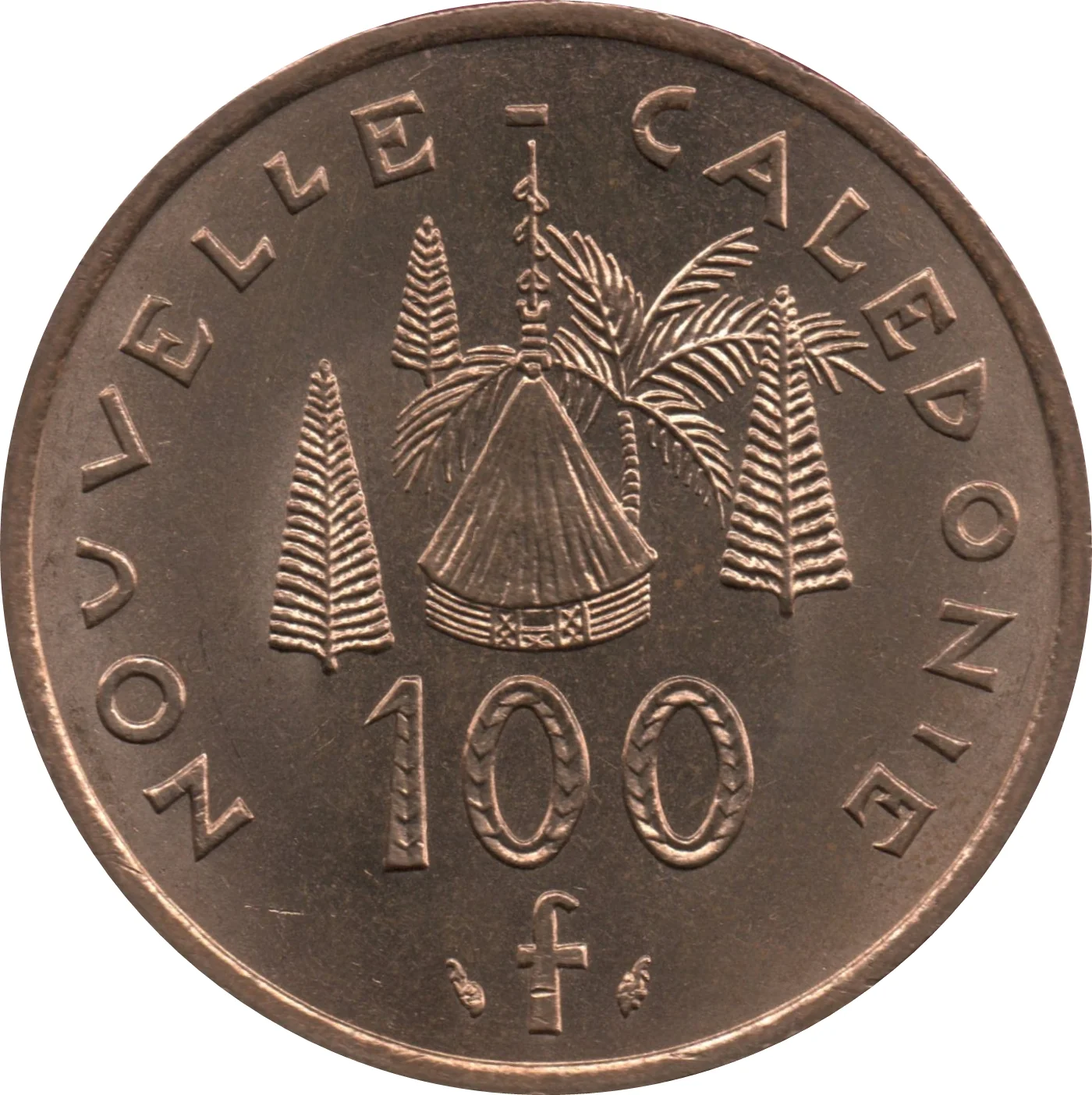
Reverse
Description:
Tribal hut amidst palms and pines.
Inscription:
NOUVELLE - CALEDONIE
100
f
100
f
Script: Latin
Engraver: Raymond Joly
Edge
Reeded
Mints
| Name | Mark |
|---|---|
| Monnaie de Paris | — |
Mintings
| Year | Mint Mark | Mintage | Quality | Collection |
|---|---|---|---|---|
| 1976 | — | 2,000,000 | ||
| 1984 | — | 600,200 | ||
| 1987 | — | 800,000 | ||
| 1991 | — | 500,000 | ||
| 1992 | — | 500,000 | ||
| 1994 | — | 250,000 | ||
| 1996 | — | 250,000 | ||
| 1997 | — | 190,000 | ||
| 1998 | — | 310,000 | ||
| 1999 | — | 400,000 | ||
| 2000 | — | 300,000 | ||
| 2001 | — | 100,000 | ||
| 2002 | — | 620,000 | ||
| 2003 | — | 500,000 | ||
| 2004 | — | 500,000 | ||
| 2005 | — | 180,000 |
Historical background
In 1976, New Caledonia remained under French administration and thus used the French franc as its official currency, a situation unchanged since the territory's colonial annexation in the 1850s. The currency was fully controlled by the French Treasury and the Banque de France, with no local issuing authority. This monetary integration meant that New Caledonia's economy was directly tied to France's monetary policy, inflation rates, and economic cycles, providing stability but also leaving it vulnerable to metropolitan decisions made without consideration for the specific needs of the South Pacific territory.
Economically, this period was marked by the tail end of the "Nickel Boom" of the late 1960s and early 1970s, which had brought significant wealth and migration. The currency framework facilitated the repatriation of profits from the dominant nickel mining industry, largely controlled by French and other foreign interests. However, by 1976, global nickel prices had fallen from their peak, leading to an economic slowdown and rising unemployment, which in turn fueled social tensions. The fixed use of the franc meant the territory had no independent monetary tools, such as devaluation, to respond to these external economic shocks.
Politically, the currency situation in 1976 existed within a growing debate over autonomy and independence. The first major pro-independence protests had occurred in the mid-1970s, setting the stage for the more turbulent 1980s. For loyalists, the franc was a tangible symbol of stability and permanent linkage to France. For the burgeoning Kanak independence movement, it represented economic dependence and colonial control, with calls for greater fiscal autonomy beginning to emerge. Thus, while not yet a central flashpoint, the currency issue in 1976 was embedded within the deeper constitutional and existential questions about the territory's future relationship with France.
Economically, this period was marked by the tail end of the "Nickel Boom" of the late 1960s and early 1970s, which had brought significant wealth and migration. The currency framework facilitated the repatriation of profits from the dominant nickel mining industry, largely controlled by French and other foreign interests. However, by 1976, global nickel prices had fallen from their peak, leading to an economic slowdown and rising unemployment, which in turn fueled social tensions. The fixed use of the franc meant the territory had no independent monetary tools, such as devaluation, to respond to these external economic shocks.
Politically, the currency situation in 1976 existed within a growing debate over autonomy and independence. The first major pro-independence protests had occurred in the mid-1970s, setting the stage for the more turbulent 1980s. For loyalists, the franc was a tangible symbol of stability and permanent linkage to France. For the burgeoning Kanak independence movement, it represented economic dependence and colonial control, with calls for greater fiscal autonomy beginning to emerge. Thus, while not yet a central flashpoint, the currency issue in 1976 was embedded within the deeper constitutional and existential questions about the territory's future relationship with France.
🌱 Very Common