

1 Mithqual – Sinkiang Province
China
Context

Material
References
Y: #Click to copy to clipboard16
Numista: #290453
Value
Bullion value: $10.12
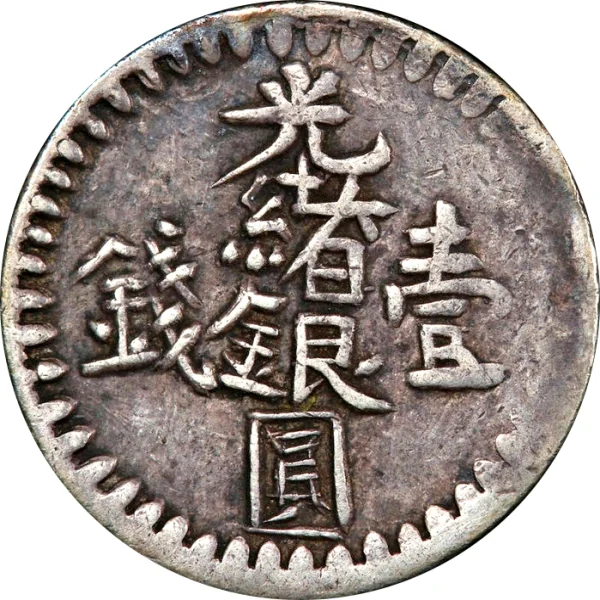
Obverse
Description:
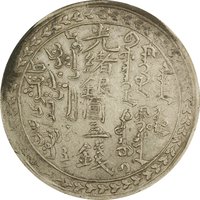
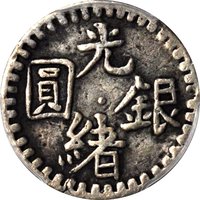
Six vertical Chinese characters.
Inscription:
光
錢緒壹
銀
圓
錢緒壹
銀
圓
Translation:
Guangxu First Year;
Silver Dollar.
Silver Dollar.
Language: Chinese
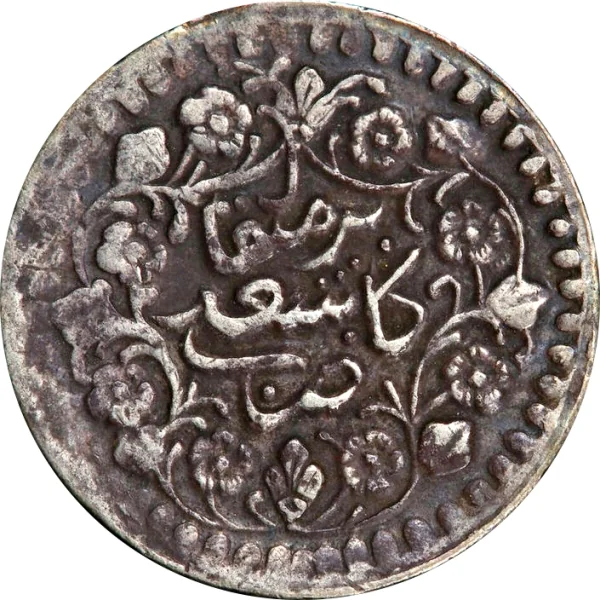
Reverse
Edge
Plain
Mintings
| Year | Mint Mark | Mintage | Quality | Collection |
|---|---|---|---|---|
| 1891 | — | — | ||
| 1892 | — | — | ||
| 1893 | — | — | ||
| 1894 | — | — |
Historical background
In 1891, the currency situation in Sinkiang (Xinjiang) was characterized by profound complexity and instability, reflecting the region's position as a contested frontier between the Qing Empire, Central Asian khanates, and Russian influence. The monetary system was not unified but a chaotic patchwork of multiple currencies circulating simultaneously. The primary official currency was the Xinjiang pūl coin, a small, debased copper coin minted locally in Kashgar and other centers, which suffered from severe inflation and counterfeiting. Alongside this, older Yarkand tanga silver coins and Chinese silver sycees (ingots) were used for larger transactions, while barter remained common in rural areas.
This monetary disorder was exacerbated by two major external forces. From the east, standard Qing cash coins and silver taels entered via trade and government stipends, but were often insufficient. More significantly, from the west, high-quality Russian Imperial silver rubles and gold coins flooded the region, particularly following the Treaty of St. Petersburg (1881), which granted Russian merchants extensive trading rights. These stable, trusted foreign coins began to dominate commerce in northern Xinjiang, effectively creating a dual currency zone that undermined Qing monetary sovereignty and highlighted the empire's weakening administrative grip.
The root causes of this situation lay in the recent reconquest of Xinjiang by Zuo Zongtang (completed in 1878), which left the Qing treasury depleted and the local economy shattered. The provincial authorities, under the first governor Liu Jintang, struggled to reassert control and standardize currency, but their efforts to mint new silver and copper coins were hampered by a lack of bullion, primitive minting technology, and ongoing regional unrest. Consequently, the currency chaos of 1891 was more than an economic nuisance; it was a direct symptom of the political and geopolitical struggles over the region, hindering tax collection, trade, and the Qing's project of fully integrating Xinjiang into the imperial administration.
This monetary disorder was exacerbated by two major external forces. From the east, standard Qing cash coins and silver taels entered via trade and government stipends, but were often insufficient. More significantly, from the west, high-quality Russian Imperial silver rubles and gold coins flooded the region, particularly following the Treaty of St. Petersburg (1881), which granted Russian merchants extensive trading rights. These stable, trusted foreign coins began to dominate commerce in northern Xinjiang, effectively creating a dual currency zone that undermined Qing monetary sovereignty and highlighted the empire's weakening administrative grip.
The root causes of this situation lay in the recent reconquest of Xinjiang by Zuo Zongtang (completed in 1878), which left the Qing treasury depleted and the local economy shattered. The provincial authorities, under the first governor Liu Jintang, struggled to reassert control and standardize currency, but their efforts to mint new silver and copper coins were hampered by a lack of bullion, primitive minting technology, and ongoing regional unrest. Consequently, the currency chaos of 1891 was more than an economic nuisance; it was a direct symptom of the political and geopolitical struggles over the region, hindering tax collection, trade, and the Qing's project of fully integrating Xinjiang into the imperial administration.
✨ Legendary