

1 Mithqual – Sinkiang Province
China
Context
Years: 1892–1893
Islamic (Hijri) Year: 1310
Country: China 
Issuer: Sinkiang Province
Ruler: Guangxu
Demonetized: Yes
Material
References
Y: #Click to copy to clipboardA16
Numista: #290456
Value
Bullion value: $10.15
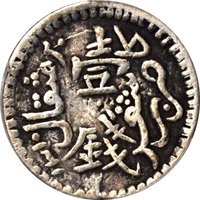
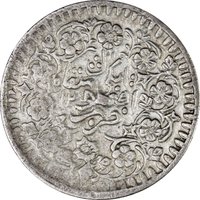
Obverse
Description:
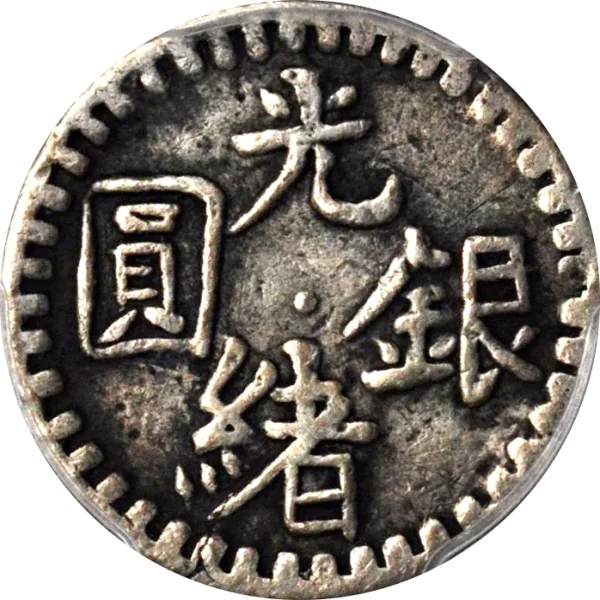
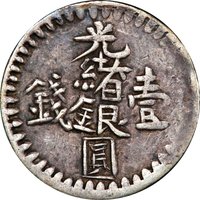
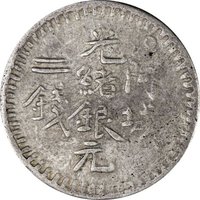
Four Chinese characters read vertically, right to left.
Inscription:
光
圓 銀
緒
圓 銀
緒
Translation:
Guangxu
Silver Coin
Silver Coin
Language: Chinese
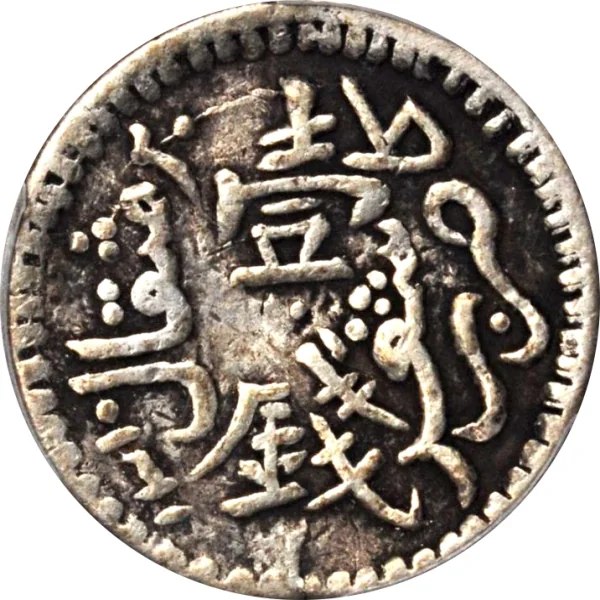
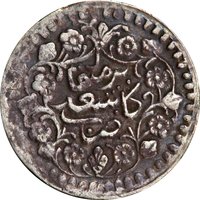
Reverse
Edge
Plain
Mintings
| Year | Mint Mark | Mintage | Quality | Collection |
|---|---|---|---|---|
| 1892 | — | — | ||
| 1893 | — | — |
Historical background
In 1892, the currency situation in Sinkiang (Xinjiang) Province was a complex and fragmented reflection of its position at the crossroads of empires. The region was under nominal Qing Dynasty control, but its economy was deeply influenced by both Russian Central Asia and the Chinese interior. Consequently, multiple currencies circulated simultaneously, creating a chaotic monetary environment. The official currency was the Xinjiang tangka, a large, silver-based coin minted locally in cities like Kashgar and Yarkand, often bearing inscriptions in both Chinese and the Arabic-script Chagatai language. However, its value and silver content were unstable, varying significantly between different regional mints and administrations.
Alongside the tangka, a plethora of other mediums of exchange were in daily use. Chinese silver sycee ingots (yuanbao) and copper cash coins from the interior were present, especially in areas with stronger Han Chinese settlement and military presence. More significantly, Russian Imperial trade had flooded northern Xinjiang with Russian gold rubles and silver tsarist rubles, which were often preferred for their consistent weight and purity, giving Russian merchants a commercial advantage. In southern Xinjiang, closer to British India, Indian rupees and even smaller local copper pul coins circulated widely, tied to the caravan trade routes.
This monetary fragmentation caused significant problems for trade and governance. Exchange rates between the various coins were fluctuating and locally negotiated, leading to confusion and exploitation. The Qing authorities struggled to impose a unified standard, as the debasement of local coinage and the popularity of stable foreign currencies undermined their monetary sovereignty. Thus, in 1892, Xinjiang's currency was less a unified system and more a tangible symptom of the region's contested geopolitical and economic loyalties, caught between the weakening grasp of the Qing and the expanding influence of Tsarist Russia.
Alongside the tangka, a plethora of other mediums of exchange were in daily use. Chinese silver sycee ingots (yuanbao) and copper cash coins from the interior were present, especially in areas with stronger Han Chinese settlement and military presence. More significantly, Russian Imperial trade had flooded northern Xinjiang with Russian gold rubles and silver tsarist rubles, which were often preferred for their consistent weight and purity, giving Russian merchants a commercial advantage. In southern Xinjiang, closer to British India, Indian rupees and even smaller local copper pul coins circulated widely, tied to the caravan trade routes.
This monetary fragmentation caused significant problems for trade and governance. Exchange rates between the various coins were fluctuating and locally negotiated, leading to confusion and exploitation. The Qing authorities struggled to impose a unified standard, as the debasement of local coinage and the popularity of stable foreign currencies undermined their monetary sovereignty. Thus, in 1892, Xinjiang's currency was less a unified system and more a tangible symptom of the region's contested geopolitical and economic loyalties, caught between the weakening grasp of the Qing and the expanding influence of Tsarist Russia.
✨ Legendary