

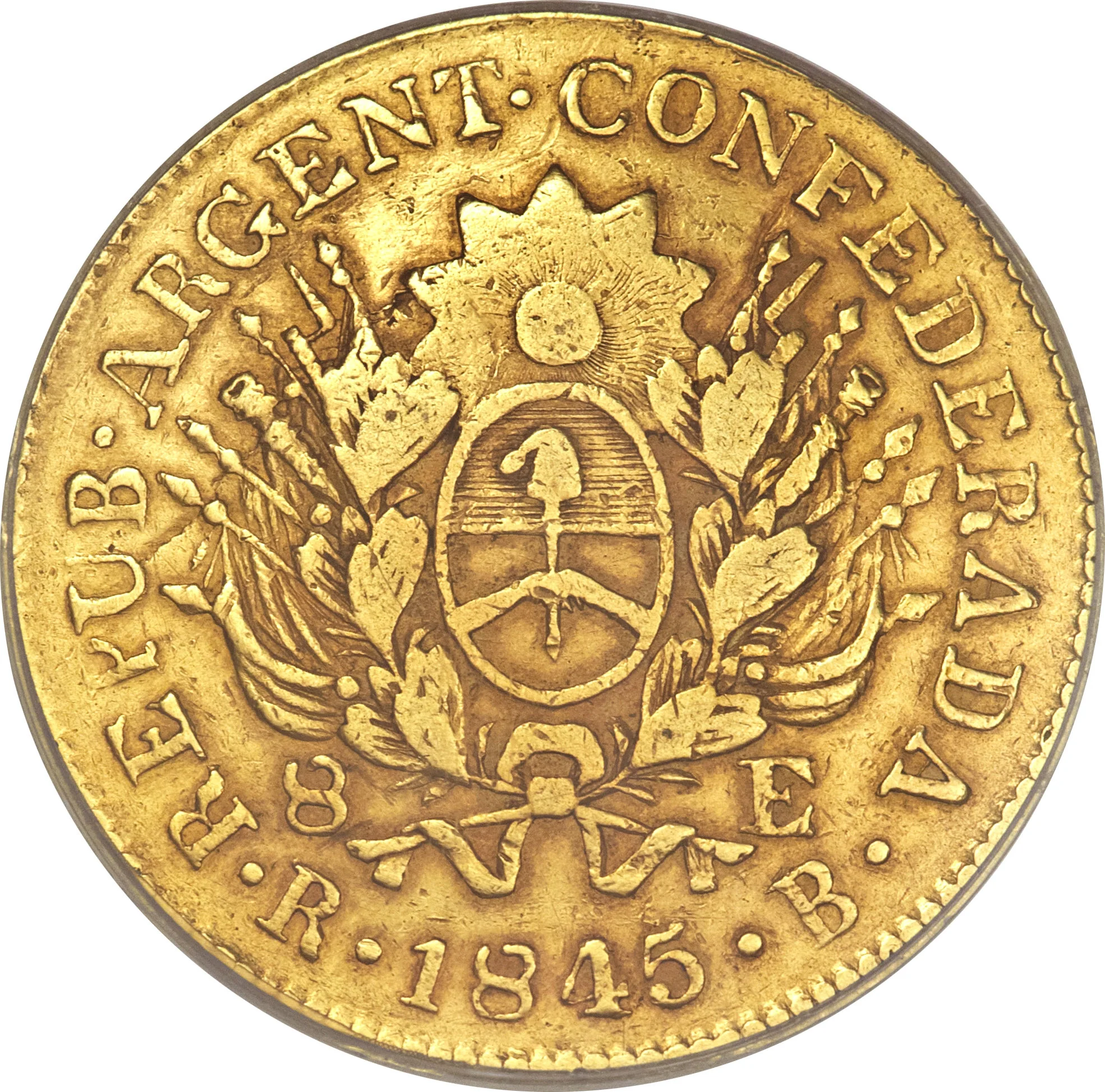
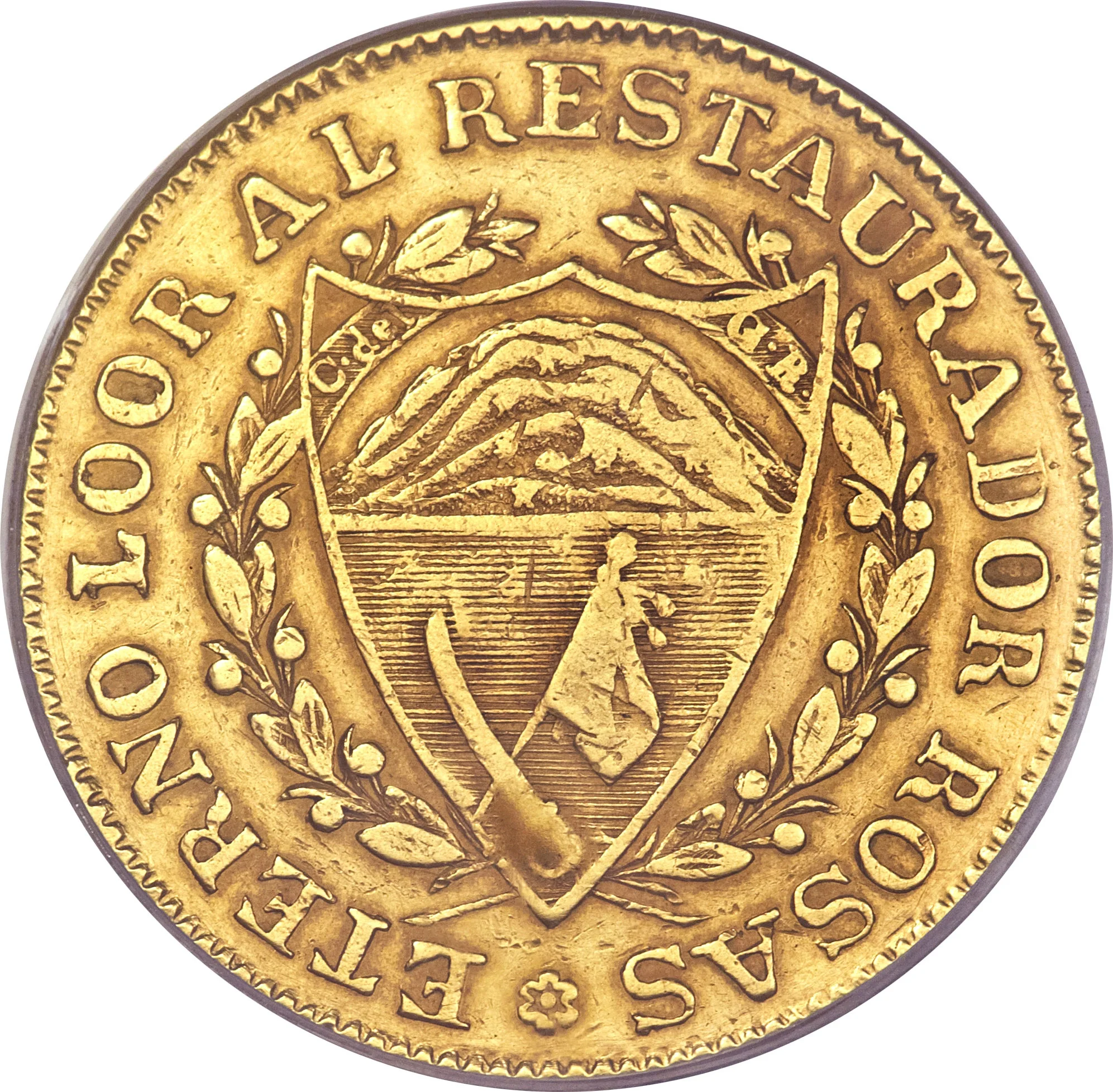
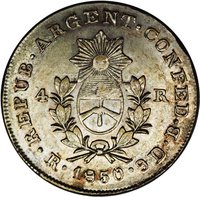
Obverse
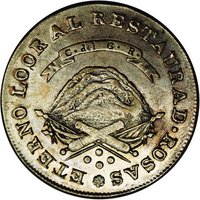
Reverse
Description:
Shield within a plant wreath, encircled by legend.
Inscription:
ETERNO LOOR AL RESTAURADOR ROSAS
Script: Latin
Edge
Categories
| Symbol> Sun |
| Symbol> Wreath |
| Object> Cold weapons |
| Symbol> Flag |
| Symbol> Hand |
| Geography> Mountain |
| Symbols> Coat of Arms |
| Symbol> Phrygian cap |
Mintings
| Year | Mint Mark | Mintage | Quality | Collection |
|---|---|---|---|---|
| 1845 | B | — |
Historical background
In 1845, La Rioja, a province in the interior of Argentina, was embroiled in the broader civil wars between the Federalist caudillos and the centralist Unitarians. Its economy was shattered by years of conflict, isolation, and the devastating military campaigns of the montoneras (irregular cavalry forces). Within this context, the provincial government, under the Federalist caudillo Juan Facundo Quiroga's successors, faced a critical shortage of circulating currency, as the nation lacked a unified monetary system and precious metals were scarce. This fiscal crisis severely hampered the government's ability to pay its militia and civil servants, fund its operations, and engage in commerce.
To address this acute shortage, the government of La Rioja, like several other interior provinces, resorted to issuing its own paper money. These were low-denomination promissory notes, often crudely printed and known as billetes de ley or billetes de curso forzoso (forced circulation notes). Their value was not backed by gold or silver but solely by the decree and perceived authority of the provincial government. This currency was primarily intended for local use, to facilitate small transactions and meet immediate payroll obligations, as the province was effectively cut off from the port-based economy of Buenos Aires.
The currency situation was inherently unstable and reflected La Rioja's profound political and economic fragility. The value of these notes fluctuated wildly based on the military fortunes of the ruling caudillo and the province's ability to enforce their acceptance. Outside La Rioja's immediate sphere of influence, the notes were largely worthless, hindering inter-provincial trade. This localized monetary emission was a symptom of a fractured nation, a stopgap measure by a weak provincial treasury struggling to sustain itself amidst ongoing warfare and economic isolation.
To address this acute shortage, the government of La Rioja, like several other interior provinces, resorted to issuing its own paper money. These were low-denomination promissory notes, often crudely printed and known as billetes de ley or billetes de curso forzoso (forced circulation notes). Their value was not backed by gold or silver but solely by the decree and perceived authority of the provincial government. This currency was primarily intended for local use, to facilitate small transactions and meet immediate payroll obligations, as the province was effectively cut off from the port-based economy of Buenos Aires.
The currency situation was inherently unstable and reflected La Rioja's profound political and economic fragility. The value of these notes fluctuated wildly based on the military fortunes of the ruling caudillo and the province's ability to enforce their acceptance. Outside La Rioja's immediate sphere of influence, the notes were largely worthless, hindering inter-provincial trade. This localized monetary emission was a symptom of a fractured nation, a stopgap measure by a weak provincial treasury struggling to sustain itself amidst ongoing warfare and economic isolation.
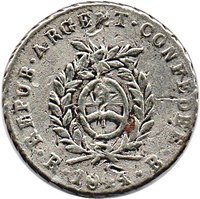
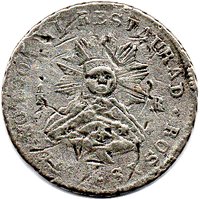
💎 Extremely Rare