

10 rupees – Sri Lanka
Add to wishlist
Circulating commemorative coins
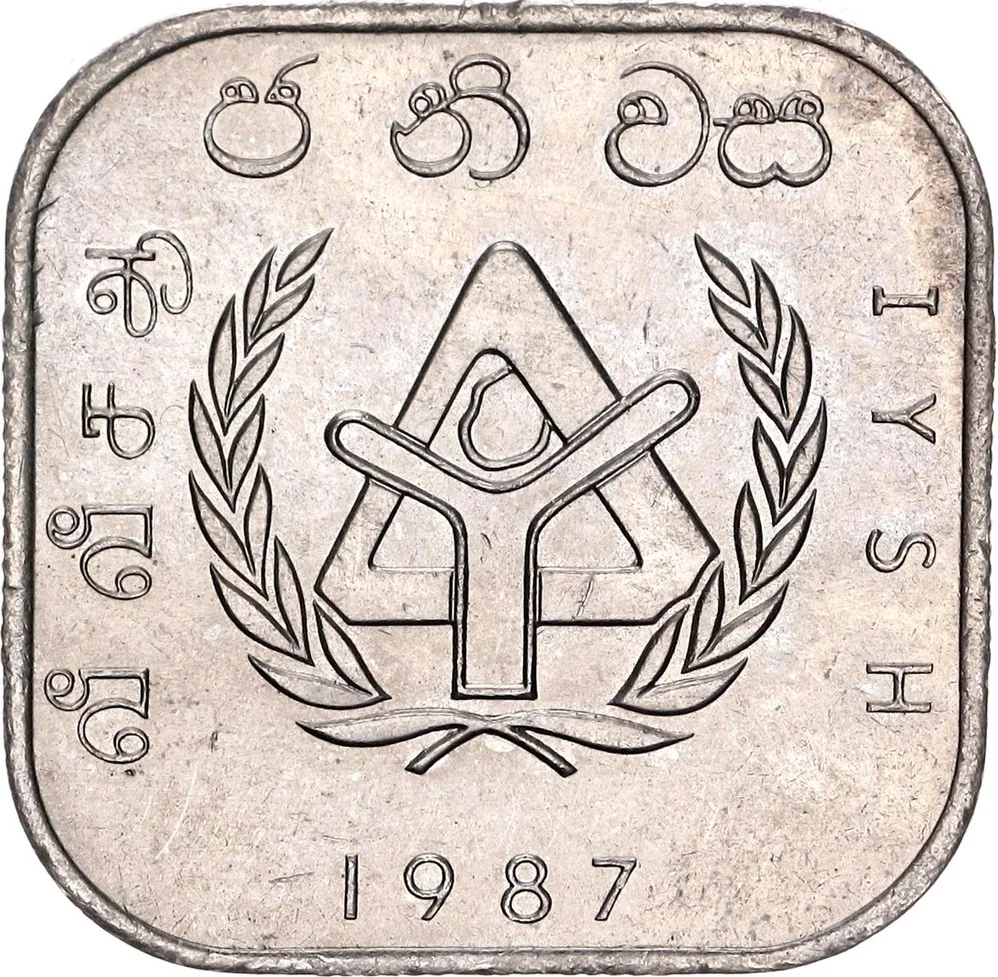
Commemoration: International Year of Shelter for Homeless
Sri Lanka
Context
Material
Weight: 11.5 g
Thickness: 2.5 mm
Shape: Square with rounded corners
Composition: Copper-nickel
Technique: Milled
Alignment: Medal alignment
flip
References
KM: #
Numista: #28859
Value
Exchange value: 10 LKR
Obverse
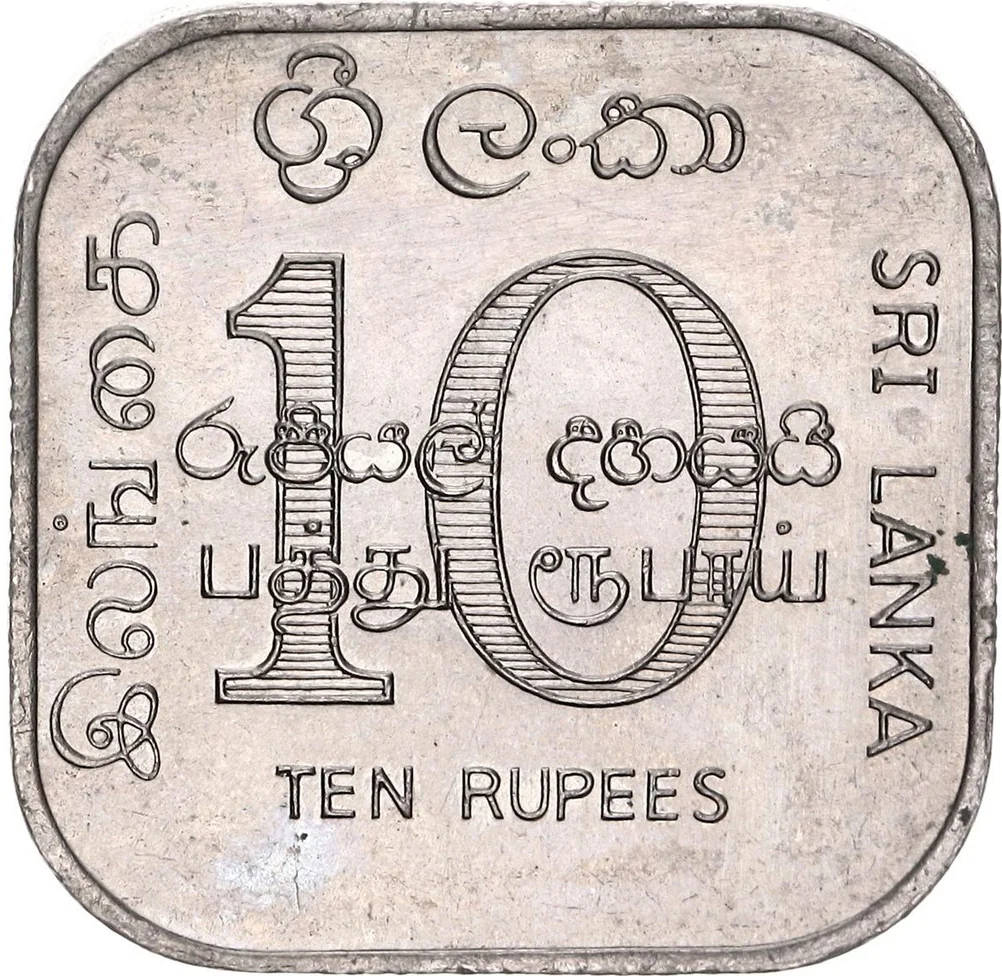
Reverse
Description:
Inscription value, border legend.
Inscription:
10
TEN RUPEES
SRI LANKA
TEN RUPEES
SRI LANKA
Edge
Plain corner and four reeded parts
Mintings
| Year | Mint Mark | Mintage | Quality | Collection |
|---|---|---|---|---|
| 1987 | — | 200 | Proof | |
| 1987 | — | 200 | BU | |
| 1987 | — | 2,000,000 |
Historical background
In 1987, Sri Lanka's currency situation was deeply strained by the escalating civil war and a deteriorating macroeconomic environment. The conflict, which had intensified since 1983, led to massive defense expenditures, draining foreign reserves and diverting funds from productive investment. This, combined with high inflation, a growing budget deficit, and a reliance on short-term commercial borrowing, placed severe downward pressure on the Sri Lankan Rupee (LKR). The government maintained a controlled exchange rate regime, but the disparity with black-market rates widened significantly, indicating an overvalued official currency.
A pivotal event that year was the signing of the Indo-Sri Lanka Accord in July, which aimed to resolve the ethnic conflict. While politically significant, the accord and the subsequent arrival of the Indian Peace Keeping Force (IPKF) did not bring immediate economic relief. Instead, the conflict entered a new, costly phase. Economic uncertainty persisted, discouraging foreign investment and tourism—a key source of foreign exchange. The government's ability to manage the currency was further hampered by the need to finance war costs and subsidize essential imports, leading to continued monetary expansion.
Consequently, 1987 represented a year of mounting imbalances preceding a major correction. The persistent overvaluation, dwindling reserves, and structural economic weaknesses set the stage for a significant policy shift. Just a year later, in 1988, the government was compelled to seek assistance from the International Monetary Fund (IMF) and implement a substantial devaluation of the rupee alongside broader economic reforms, marking the end of the rigid exchange rate policy that had become unsustainable under the weight of war and fiscal pressures.
A pivotal event that year was the signing of the Indo-Sri Lanka Accord in July, which aimed to resolve the ethnic conflict. While politically significant, the accord and the subsequent arrival of the Indian Peace Keeping Force (IPKF) did not bring immediate economic relief. Instead, the conflict entered a new, costly phase. Economic uncertainty persisted, discouraging foreign investment and tourism—a key source of foreign exchange. The government's ability to manage the currency was further hampered by the need to finance war costs and subsidize essential imports, leading to continued monetary expansion.
Consequently, 1987 represented a year of mounting imbalances preceding a major correction. The persistent overvaluation, dwindling reserves, and structural economic weaknesses set the stage for a significant policy shift. Just a year later, in 1988, the government was compelled to seek assistance from the International Monetary Fund (IMF) and implement a substantial devaluation of the rupee alongside broader economic reforms, marking the end of the rigid exchange rate policy that had become unsustainable under the weight of war and fiscal pressures.
🌱 Fairly Common