

1 rupee (Premadasa) – Sri Lanka
Add to wishlist
Circulating commemorative coins
Commemoration: 3rd Anniversary of 2nd Executive President Premadasa
Sri Lanka
Context
Material
Diameter: 25.4 mm
Weight: 7.1 g
Thickness: 1.9 mm
Shape: Round
Composition: Copper-nickel
Technique: Milled
Alignment: Medal alignment
flip
References
KM: #
Numista: #6413
Value
Exchange value: 1 LKR
Obverse
Description:
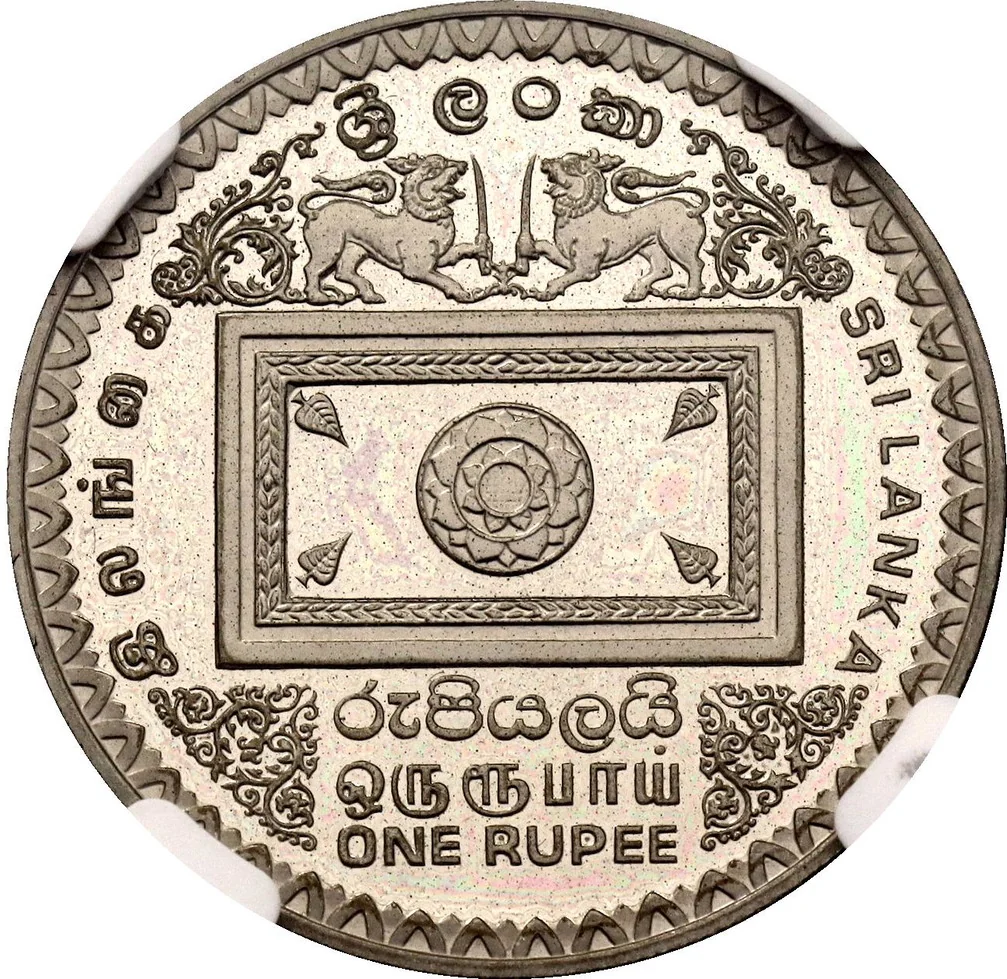
Two armed lions inward atop the R. Premadasa Standard. Encircled by "SRI LANKA" in Sinhala (top), Tamil (left), and English (right), with "ONE RUPEE" in all three below, linked by floral designs. Lotus petal border.
Inscription:
ශ්රී ලංකාව
இலங்கை SRI LANKA
රැපියලයි
ஒரு ரூபாய்
ONE RUPEE
இலங்கை SRI LANKA
රැපියලයි
ஒரு ரூபாய்
ONE RUPEE
Translation:
Sri Lanka
Sri Lanka Sri Lanka
Rupees
One Rupee
One Rupee
Sri Lanka Sri Lanka
Rupees
One Rupee
One Rupee
Reverse
Description:
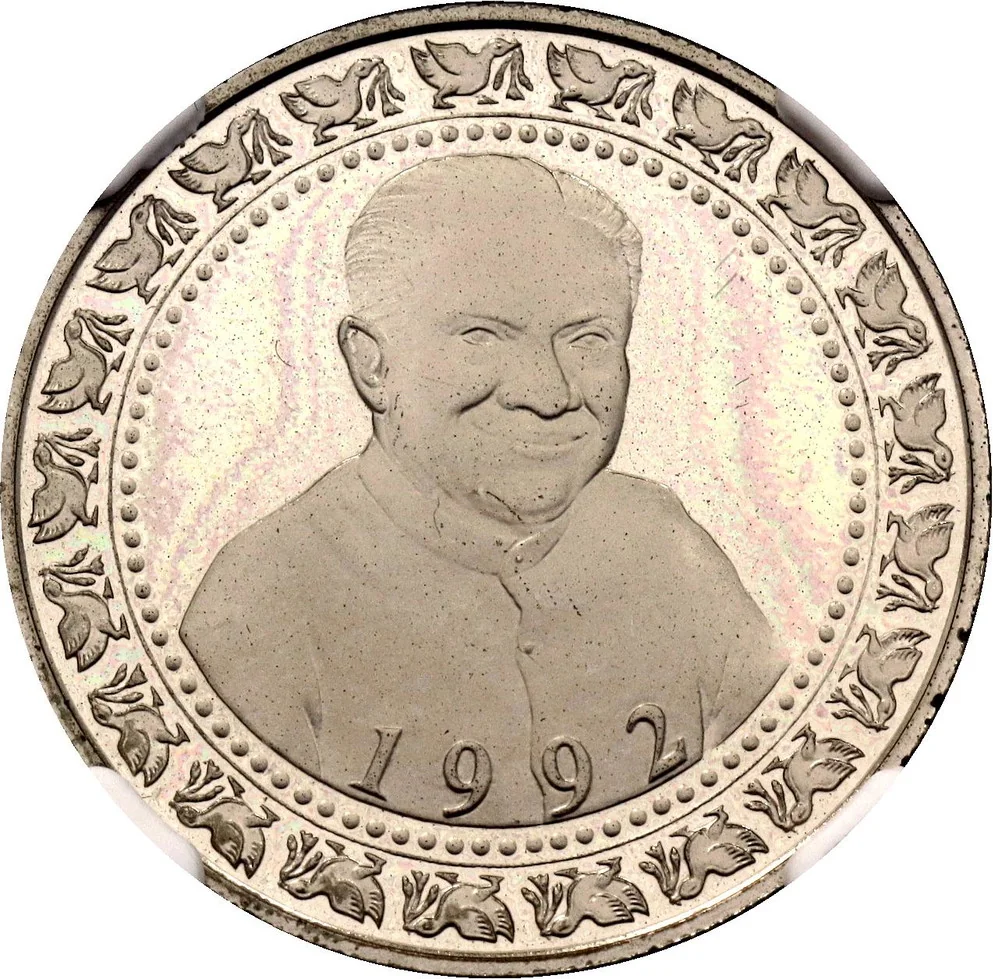
Portrait of Sri Lanka's second executive president, Ranasinghe Premadasa, within a dotted circle, dated below. Framed by a repeating traditional moonstone motif of a swan with three lotus blossoms.
Inscription:
1992
Edge
Reeded
Mints
| Name | Mark |
|---|---|
| Royal Mint | — |
Mintings
| Year | Mint Mark | Mintage | Quality | Collection |
|---|---|---|---|---|
| 1992 | — | 2,500 | Proof | |
| 1992 | — | 25,000,000 |
Historical background
In 1992, Sri Lanka's currency situation was characterized by a managed float within a dual exchange rate system, a legacy of economic liberalization begun in 1977. The Central Bank of Sri Lanka maintained an official rate for government transactions and essential imports, while a more market-driven secondary rate, known as the "guest rate," applied to most other foreign exchange dealings. This system aimed to conserve scarce foreign reserves, control inflationary pressures from imports, and provide a degree of stability, but it also created distortions and a active black market for foreign currency.
The economy was under significant strain from the ongoing civil war, which diverted substantial fiscal resources towards defence spending and disrupted key economic sectors like tourism. Consequently, the rupee faced persistent depreciation pressure. Inflation, though variable, remained a concern, eroding domestic purchasing power. The government, under President Ranasinghe Premadasa, pursued an export-oriented growth strategy and relied on external borrowing and IMF support, which came with conditionalities often pushing for further exchange rate unification and liberalization.
Overall, 1992 represented a period of transition and challenge. The dual exchange rate regime was an imperfect tool to balance macroeconomic stability with the demands of a war-time economy and a liberalizing trade framework. The persistent gap between the official and market rates highlighted the underlying economic pressures, setting the stage for further reforms later in the decade that would eventually move Sri Lanka towards a more unified, market-based exchange rate system.
The economy was under significant strain from the ongoing civil war, which diverted substantial fiscal resources towards defence spending and disrupted key economic sectors like tourism. Consequently, the rupee faced persistent depreciation pressure. Inflation, though variable, remained a concern, eroding domestic purchasing power. The government, under President Ranasinghe Premadasa, pursued an export-oriented growth strategy and relied on external borrowing and IMF support, which came with conditionalities often pushing for further exchange rate unification and liberalization.
Overall, 1992 represented a period of transition and challenge. The dual exchange rate regime was an imperfect tool to balance macroeconomic stability with the demands of a war-time economy and a liberalizing trade framework. The persistent gap between the official and market rates highlighted the underlying economic pressures, setting the stage for further reforms later in the decade that would eventually move Sri Lanka towards a more unified, market-based exchange rate system.
🌱 Very Common