

50 Pesos (Independence from Spain) – Mexico
Circulating commemorative coins
Commemoration: 100th Anniversary of Independence from Spain
Mexico
Obverse
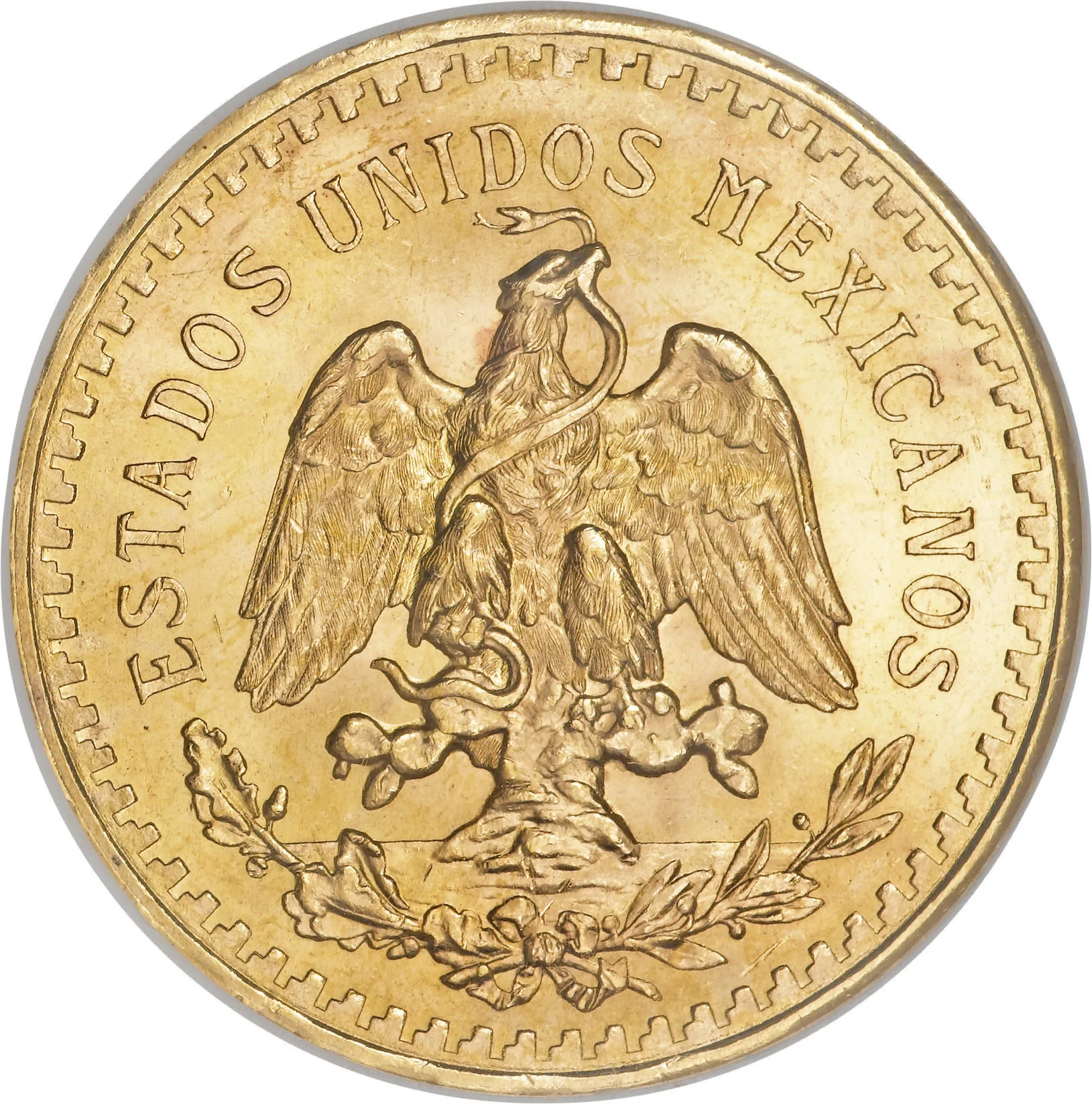
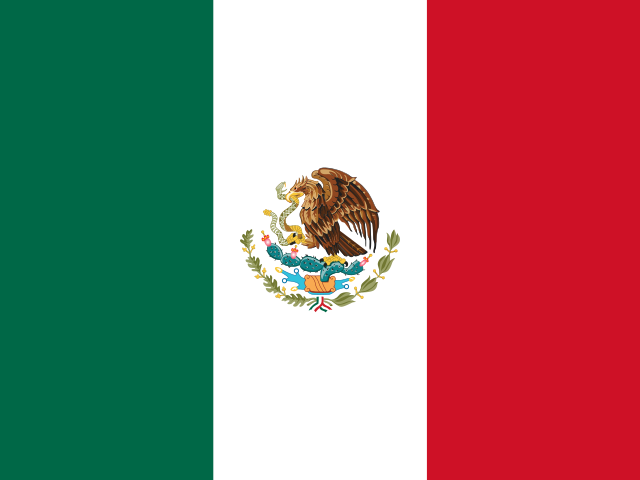
Description:
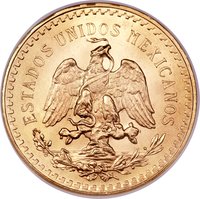
National arms, eagle dexter.
Inscription:
ESTADOS UNIDOS MEXICANOS
Translation:
United Mexican States
Script: Latin
Language: Spanish
Engraver: Emilio Del Moral
Reverse
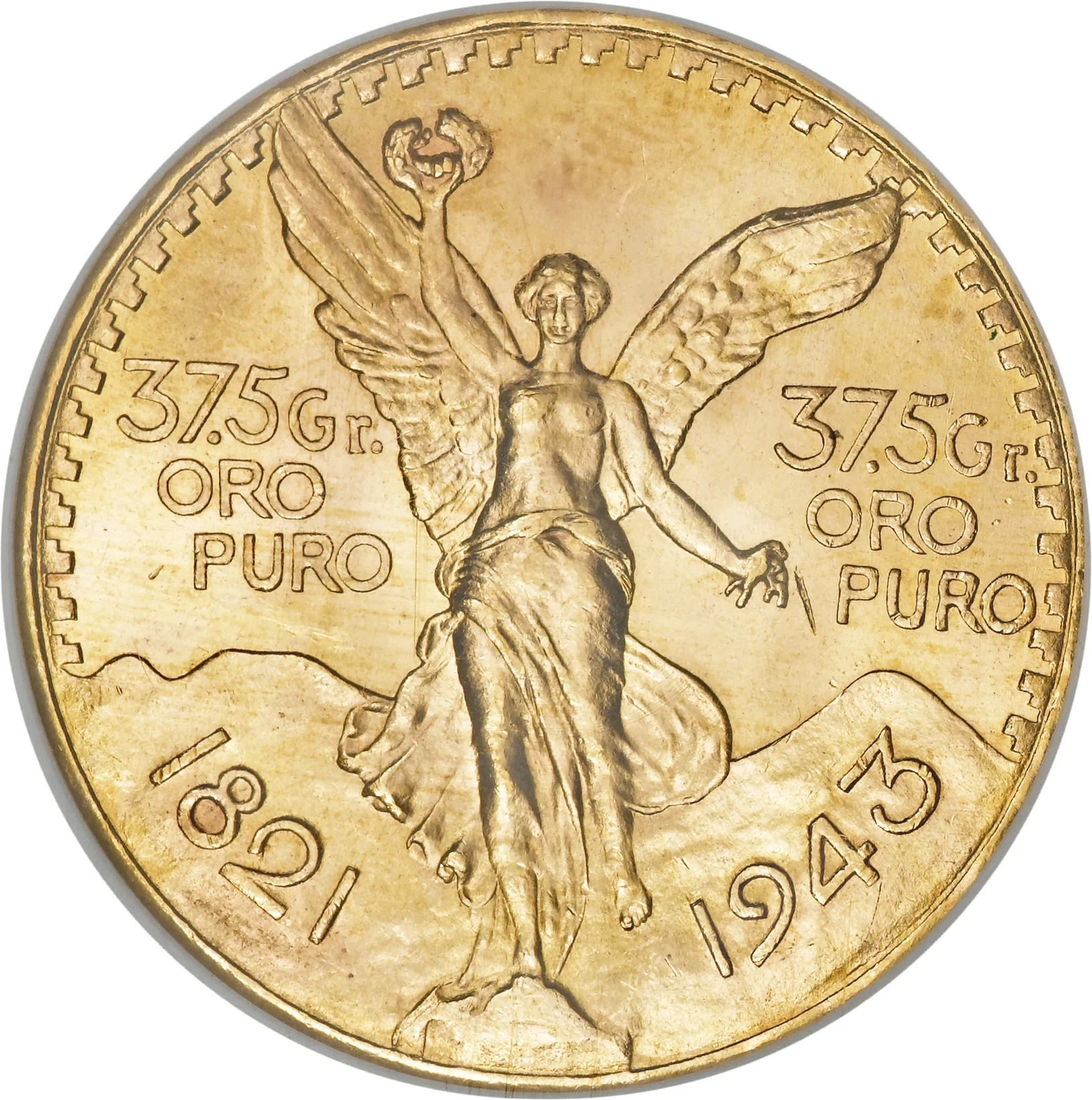
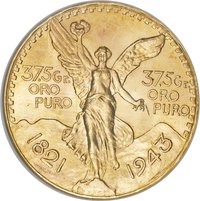
Description:
Victory in flight.
Inscription:
37,5 Gr.
ORO
PURO
37,5 Gr.
ORO
PURO
1821 1943
ORO
PURO
37,5 Gr.
ORO
PURO
1821 1943
Script: Latin
Engraver: Emilio del Moral
Edge
Mintings
| Year | Mint Mark | Mintage | Quality | Collection |
|---|---|---|---|---|
| 1943 | — | 89,400 |
Historical background
In 1943, Mexico's currency situation was defined by wartime stability and strategic alignment with the Allied powers. The peso, which had experienced significant devaluation and volatility following the 1910 Revolution, was now under a managed regime by the Banco de México. The central bank, established in 1925, maintained a fixed exchange rate pegged to the U.S. dollar at approximately 4.85 pesos, a rate established in 1938 and held firmly throughout the war years. This stability was not a reflection of a robust, autonomous economy but was artificially sustained through capital controls, trade restrictions, and the strategic use of foreign reserves.
This monetary stability was largely a byproduct of Mexico's deep economic integration with the United States during World War II. The 1942 Bracero Agreement and the 1943 Comisión México-Americana para la Producción Industrial spurred massive exports of labor, raw materials, and manufactured goods northward, generating crucial inflows of U.S. dollars. Furthermore, the settlement of the long-standing dispute over foreign-owned oil properties in 1942 unlocked U.S. financial support and investment. These dollar reserves provided the essential backing for the fixed peso, making Mexico's currency policy dependent on continued Allied wartime demand and U.S. economic cooperation.
Consequently, the currency picture in 1943 was one of surface-level calm masking underlying pressures and dependency. While the fixed rate facilitated predictable trade and curbed inflation in the short term, it was maintained through administrative controls rather than organic market strength. The economy was increasingly dollarized in key sectors, and the peso's value was effectively a function of U.S. policy and wartime expenditures. This set the stage for future challenges, as the post-war transition would eventually force a reckoning with the structural imbalances and inflationary pressures building beneath the managed wartime equilibrium.
This monetary stability was largely a byproduct of Mexico's deep economic integration with the United States during World War II. The 1942 Bracero Agreement and the 1943 Comisión México-Americana para la Producción Industrial spurred massive exports of labor, raw materials, and manufactured goods northward, generating crucial inflows of U.S. dollars. Furthermore, the settlement of the long-standing dispute over foreign-owned oil properties in 1942 unlocked U.S. financial support and investment. These dollar reserves provided the essential backing for the fixed peso, making Mexico's currency policy dependent on continued Allied wartime demand and U.S. economic cooperation.
Consequently, the currency picture in 1943 was one of surface-level calm masking underlying pressures and dependency. While the fixed rate facilitated predictable trade and curbed inflation in the short term, it was maintained through administrative controls rather than organic market strength. The economy was increasingly dollarized in key sectors, and the peso's value was effectively a function of U.S. policy and wartime expenditures. This set the stage for future challenges, as the post-war transition would eventually force a reckoning with the structural imbalances and inflationary pressures building beneath the managed wartime equilibrium.
⭐ Rare