

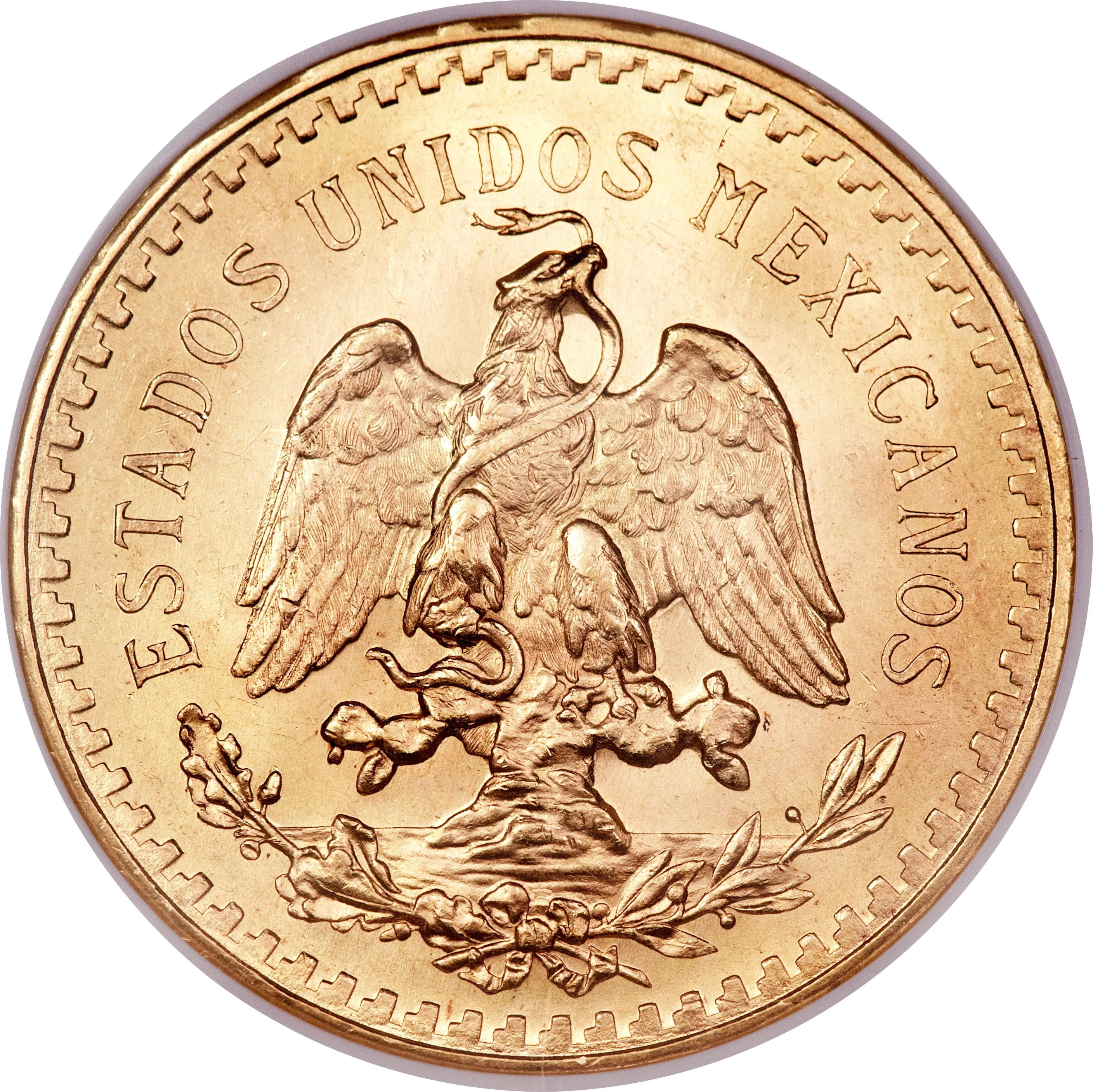
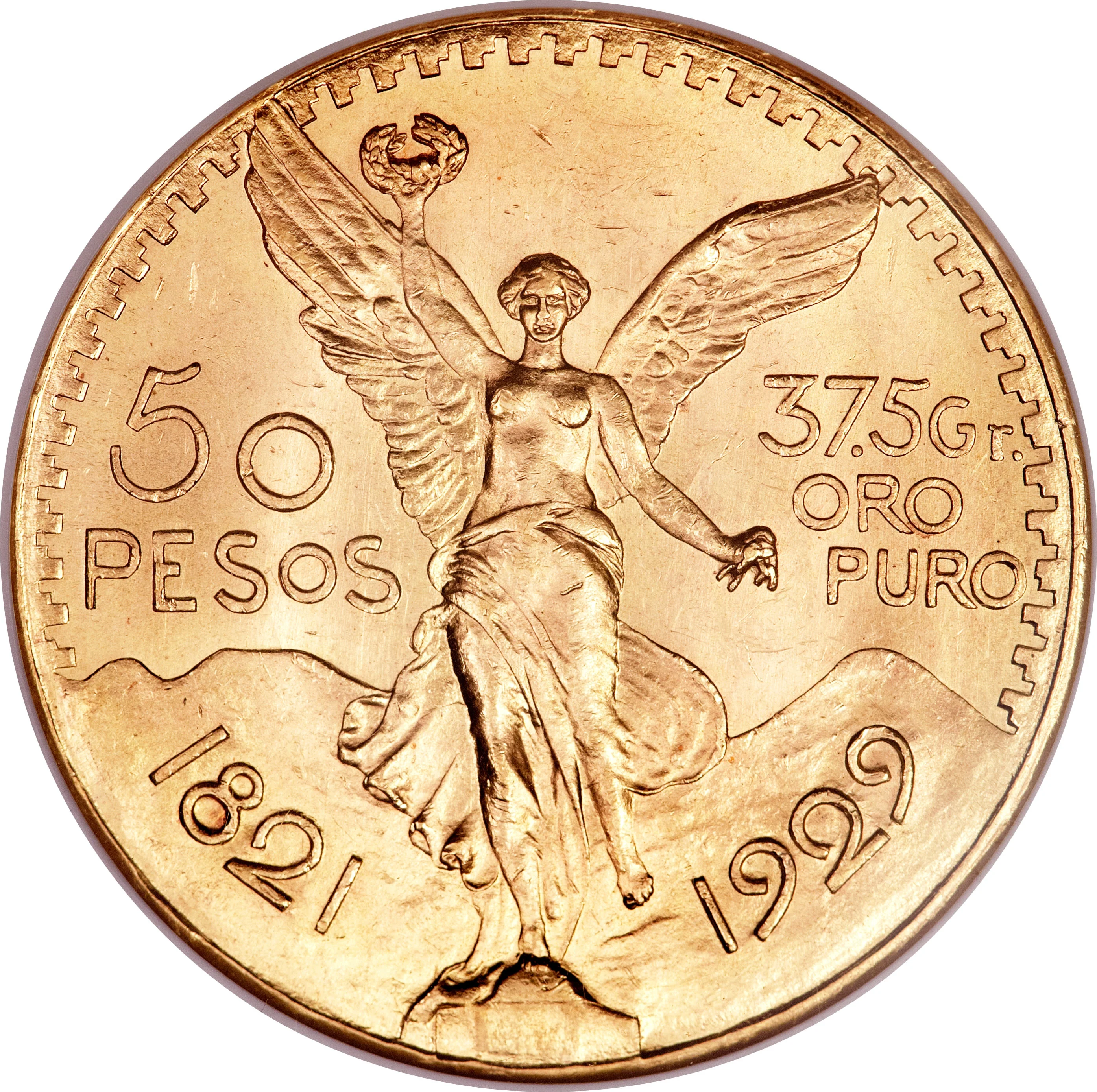
50 Pesos (Independence from Spain) – Mexico
Circulating commemorative coins
Commemoration: 100th Anniversary of Independence from Spain
Mexico
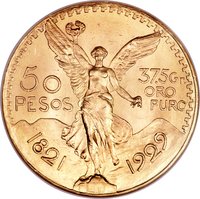
Obverse
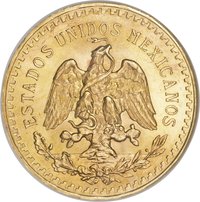
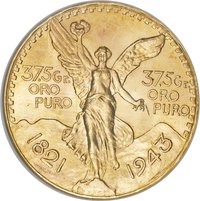
Reverse
Edge
Lettered (Krause says reeded)
Legend:
INDEPENDENCIA Y LIBERTAD
Translation:
Independence and Liberty
Language: Spanish
Mints
| Name | Mark |
|---|---|
| Mexican Mint | — |
Mintings
| Year | Mint Mark | Mintage | Quality | Collection |
|---|---|---|---|---|
| 1921 | — | 180,000 | ||
| 1922 | — | 463,000 | ||
| 1923 | — | 432,000 | ||
| 1924 | — | 439,000 | ||
| 1925 | — | 716,000 | ||
| 1926 | — | 600,000 | ||
| 1927 | — | 606,000 | ||
| 1928 | — | 538,000 | ||
| 1929 | — | 458,000 | ||
| 1930 | — | 372,000 | ||
| 1931 | — | 137,000 | ||
| 1944 | — | 593,000 | ||
| 1945 | — | 1,012,000 | ||
| 1946 | — | 1,588,000 | ||
| 1947 | — | 309,000 |
Historical background
In 1921, Mexico's currency situation was characterized by instability and transition following the decade-long Mexican Revolution (1910-1920). The revolutionary conflict had devastated the economy, destroying infrastructure, disrupting silver mining—a key export—and causing massive capital flight. The government, led by President Álvaro Obregón, faced a severe fiscal crisis with depleted reserves and a heavily devalued paper peso. The monetary system was a complex and chaotic mix of various banknotes issued by different revolutionary factions, alongside the more trusted silver coins, which had largely disappeared from circulation due to hoarding.
The fundamental currency of the period was the peso, but its value was highly volatile. While the gold peso remained a theoretical unit of account, the circulating medium was primarily the bilimbique—a derogatory term for the various low-value, unbacked paper money issued by revolutionary forces. Confidence in this paper was extremely low, leading to widespread use of U.S. dollars in border regions and for significant transactions. The Obregón administration, seeking international recognition and economic stability, took steps toward reform by establishing the Bank of Mexico (Banco de México) in 1925, but in 1921, the immediate priority was simply to assert central control over money issuance and begin restoring basic fiscal order.
Therefore, the currency situation in 1921 was one of fragmentation and depreciation, serving as a direct reflection of the country's political and economic fragility. The government lacked the resources to implement an immediate monetary reform, so it operated within a context of a de facto silver standard for external trade and a discredited paper system domestically. This instability hindered economic recovery and investment, setting the stage for the monetary centralization and stabilization efforts that would define the rest of the 1920s.
The fundamental currency of the period was the peso, but its value was highly volatile. While the gold peso remained a theoretical unit of account, the circulating medium was primarily the bilimbique—a derogatory term for the various low-value, unbacked paper money issued by revolutionary forces. Confidence in this paper was extremely low, leading to widespread use of U.S. dollars in border regions and for significant transactions. The Obregón administration, seeking international recognition and economic stability, took steps toward reform by establishing the Bank of Mexico (Banco de México) in 1925, but in 1921, the immediate priority was simply to assert central control over money issuance and begin restoring basic fiscal order.
Therefore, the currency situation in 1921 was one of fragmentation and depreciation, serving as a direct reflection of the country's political and economic fragility. The government lacked the resources to implement an immediate monetary reform, so it operated within a context of a de facto silver standard for external trade and a discredited paper system domestically. This instability hindered economic recovery and investment, setting the stage for the monetary centralization and stabilization efforts that would define the rest of the 1920s.
🌱 Fairly Common