

1 shilingi – Tanzania
Add to wishlist
Tanzania
Obverse
Description:
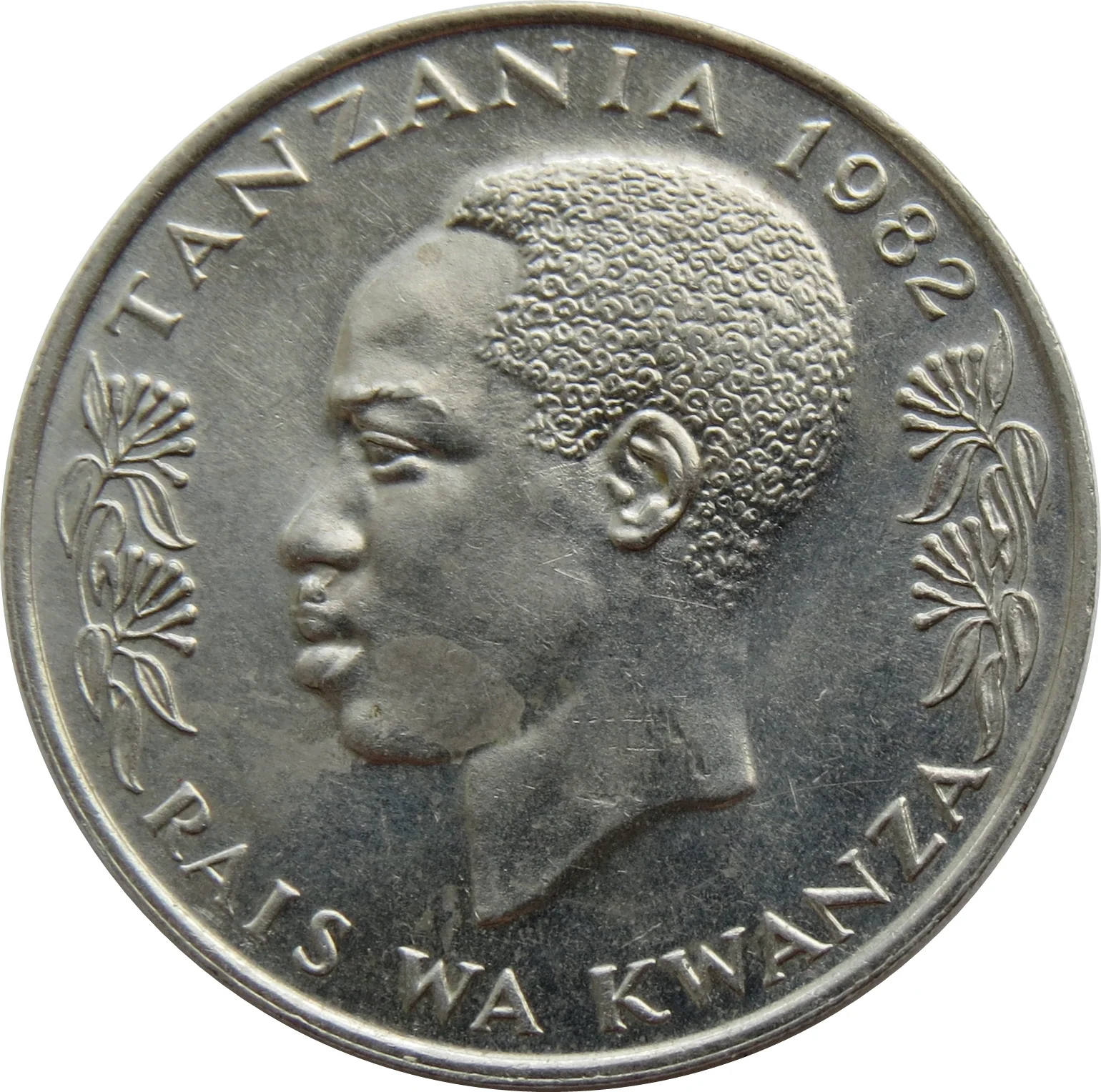
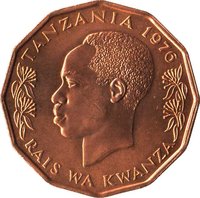
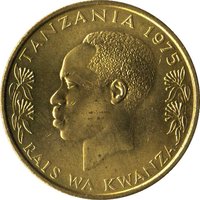
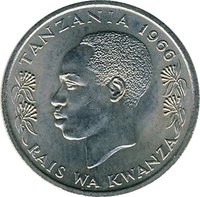
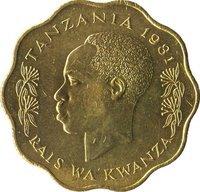
President J. K. Nyerere facing left, with flowers and the country name to the left of the date.
Inscription:
TANZANIA 1982
RAIS WA KWANZA
RAIS WA KWANZA
Translation:
FIRST PRESIDENT
Script: Latin
Language: Swahili
Engraver: Christopher Ironside
Reverse
Description:
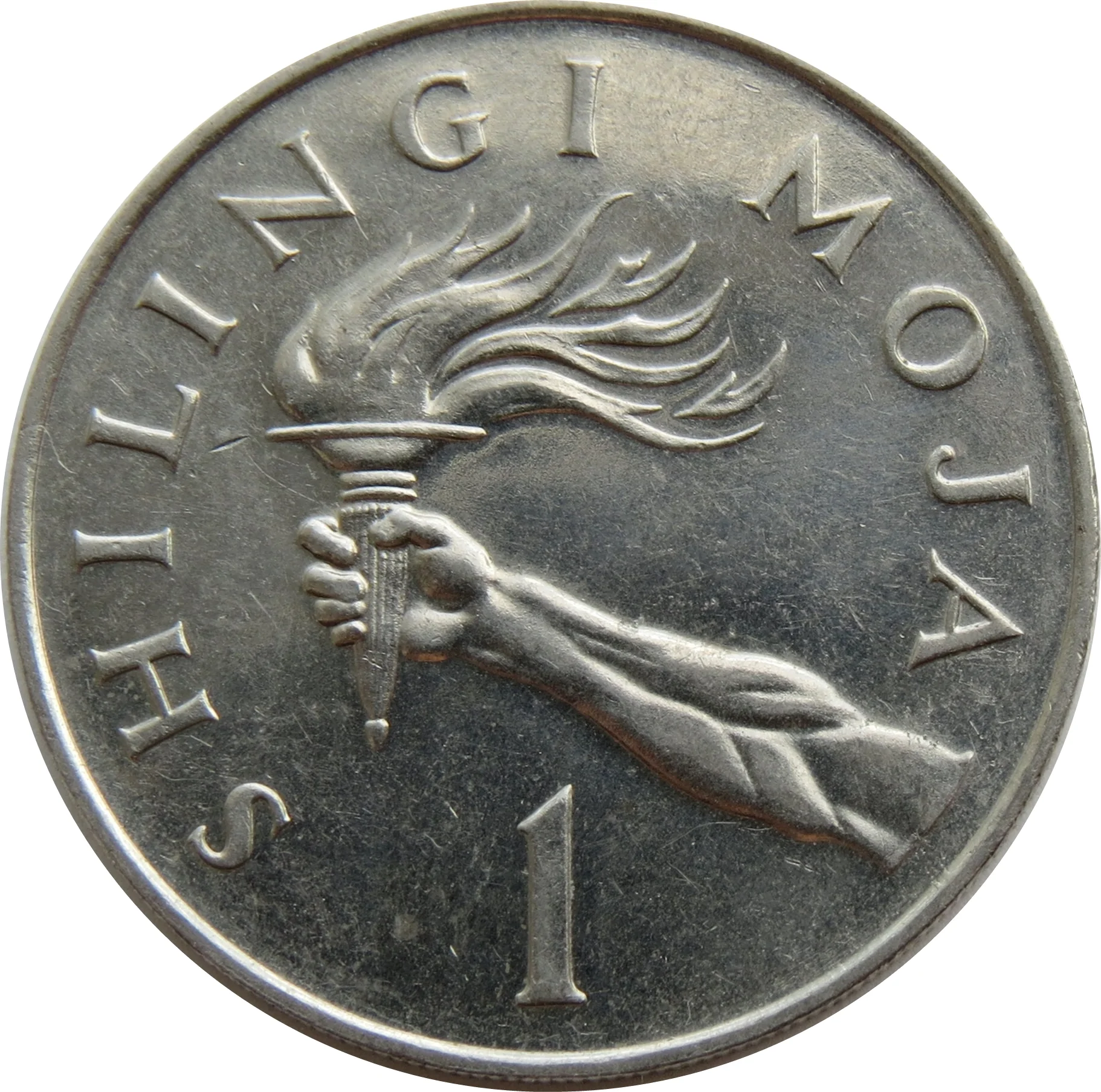
Torch left, denomination in words above and numerals below.
Inscription:
SHILINGI MOJA
1
1
Translation:
One Shilling
Script: Latin
Language: Swahili
Engraver: Christopher Ironside
Edge
Reeded
Categories
| Person> Politician |
| Symbol> Hand |
Mints
| Name | Mark |
|---|---|
| Royal Mint (Tower Hill) | — |
| Royal Mint | — |
Mintings
| Year | Mint Mark | Mintage | Quality | Collection |
|---|---|---|---|---|
| 1966 | — | 48,000,000 | ||
| 1966 | — | 5,500 | Proof | |
| 1972 | — | 10,000,000 | ||
| 1974 | — | 10,000,000 | ||
| 1975 | — | 5,000,000 | ||
| 1977 | — | 5,000,000 | ||
| 1980 | — | 10,000,000 | ||
| 1981 | — | — | ||
| 1982 | — | 10,000,000 | ||
| 1983 | — | 10,000,000 | ||
| 1984 | — | 10,000,000 |
Historical background
In 1966, Tanzania's currency situation was fundamentally shaped by the political and economic vision of President Julius Nyerere and the ruling Tanganyika African National Union (TANU). Following the union with Zanzibar in 1964 to form the United Republic of Tanzania, a key step was the creation of a unified national currency. Consequently, on June 14, 1966, the Tanzanian shilling was introduced, replacing the East African shilling at par. This move severed the colonial-era currency board system and marked a decisive step toward monetary sovereignty, allowing Dar es Salaam direct control over its monetary policy.
The change was more than a symbolic assertion of independence; it was a practical tool for implementing Ujamaa, Nyerere's African socialist policy. The new central bank, the Bank of Tanzania, established in 1965, could now direct credit toward state-led development projects and cooperative villages, insulating the economy from external financial pressures. The notes and coins themselves featured distinctly Tanzanian imagery, promoting national identity and moving away from the pan-East African currency that had served Kenya, Uganda, and Tanganyika.
However, this transition occurred within a challenging economic context. The government faced the ongoing costs of nationalization and ambitious social programs, while relying heavily on volatile agricultural exports like sisal and cotton. While the new currency provided policy autonomy, it also concentrated the management of inflation and foreign exchange reserves squarely on the nascent Bank of Tanzania. Thus, the 1966 currency reform set the stage for both the possibilities of self-directed development and the fiscal constraints that would challenge Tanzania in the coming decades.
The change was more than a symbolic assertion of independence; it was a practical tool for implementing Ujamaa, Nyerere's African socialist policy. The new central bank, the Bank of Tanzania, established in 1965, could now direct credit toward state-led development projects and cooperative villages, insulating the economy from external financial pressures. The notes and coins themselves featured distinctly Tanzanian imagery, promoting national identity and moving away from the pan-East African currency that had served Kenya, Uganda, and Tanganyika.
However, this transition occurred within a challenging economic context. The government faced the ongoing costs of nationalization and ambitious social programs, while relying heavily on volatile agricultural exports like sisal and cotton. While the new currency provided policy autonomy, it also concentrated the management of inflation and foreign exchange reserves squarely on the nascent Bank of Tanzania. Thus, the 1966 currency reform set the stage for both the possibilities of self-directed development and the fiscal constraints that would challenge Tanzania in the coming decades.
Series: 1966 Tanzania circulation coins

🌱 Very Common