

1 Toman – Iran
Iran
Context
Year: 1803
Islamic (Hijri) Year: 1217
Issuer: Iran 
Ruler: Fath-Ali Shah
Currency:
(1798—1825)
Demonetized: Yes
Material
Weight: 6.09 g
Gold weight: 6.09 g
Shape: Irregular round
Composition: Gold
Magnetic: No
Alignment: Coin alignment
flip
References
Numista: #285751
Value
Bullion value: $1014.19
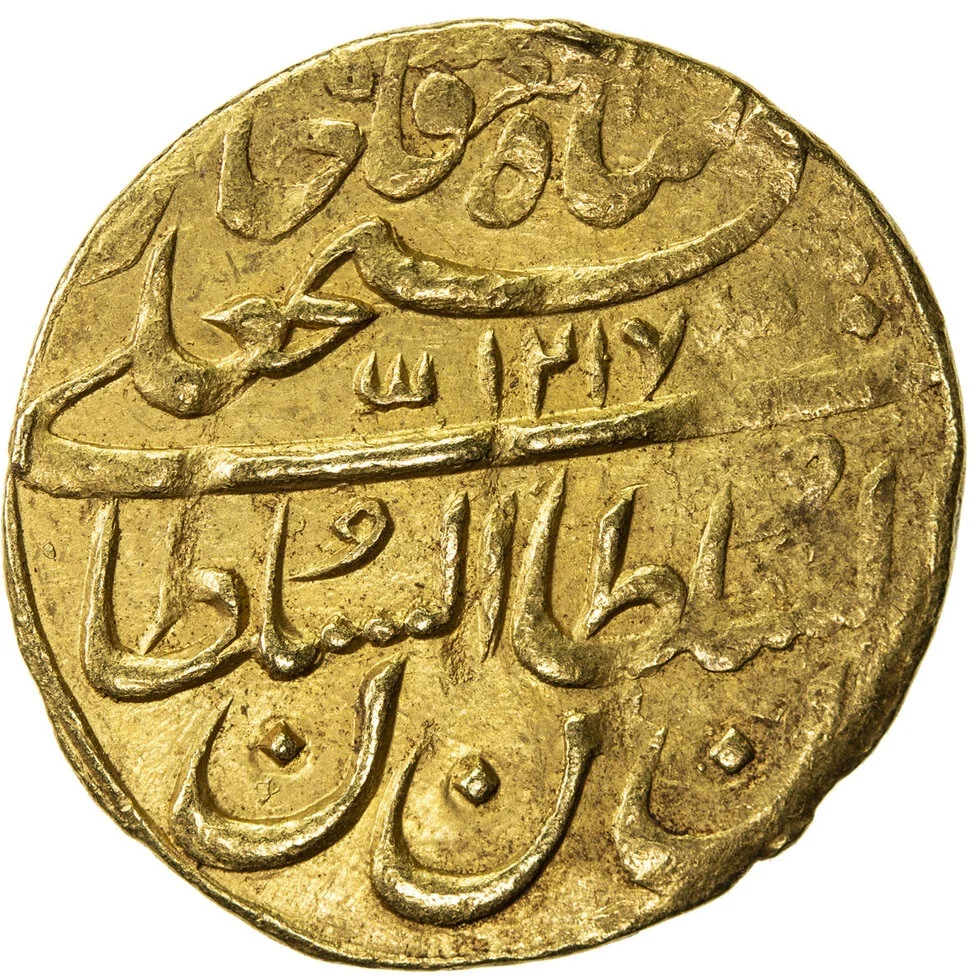
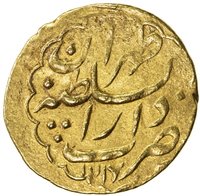
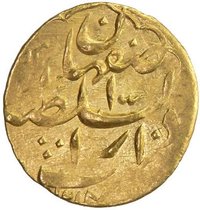
Obverse
Inscription:
العزة لله
السُّلطان بن السُّلطان فتحعلی شاه قاجار
۱۲۱۷
السُّلطان بن السُّلطان فتحعلی شاه قاجار
۱۲۱۷
Translation:
Might belongs to God
The Sultan son of the Sultan Fath-Ali Shah Qajar
1217
The Sultan son of the Sultan Fath-Ali Shah Qajar
1217
Language: Arabic
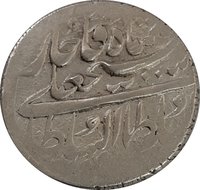
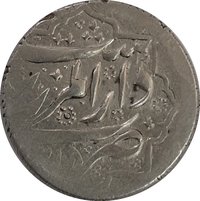
Reverse
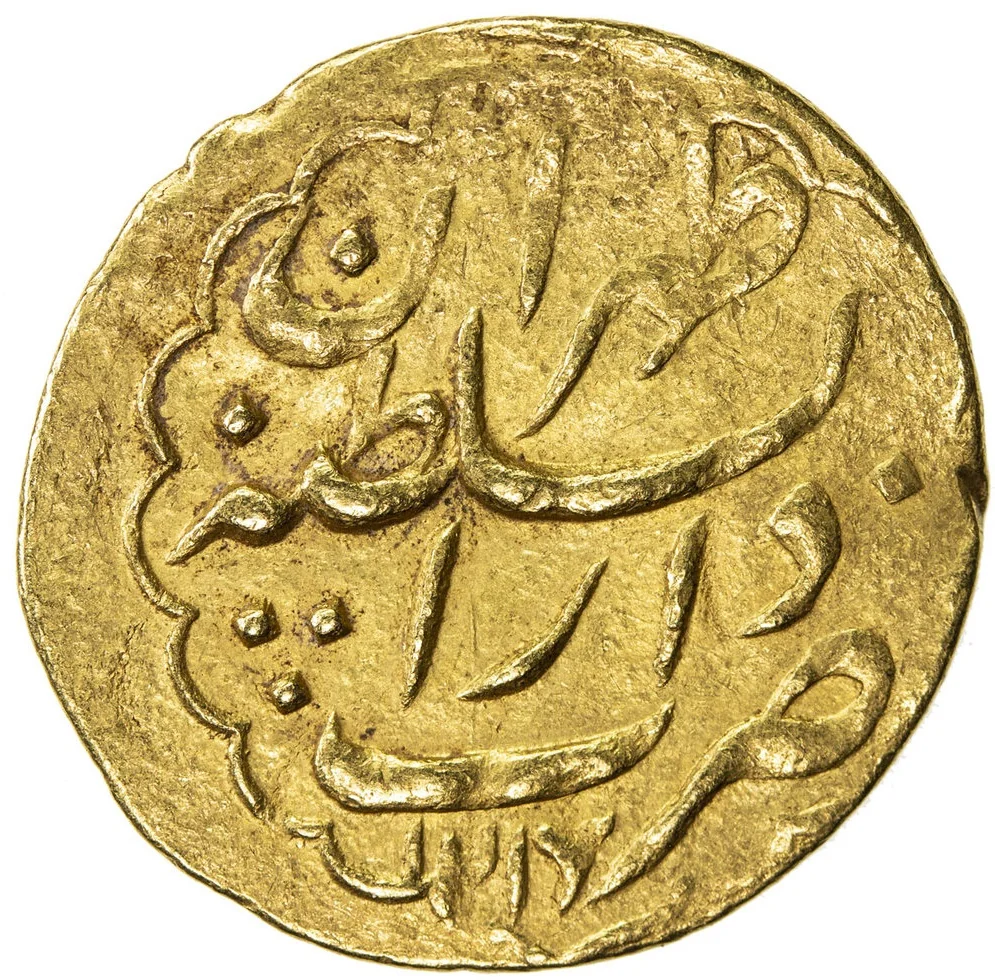
Inscription:
ضرب دارالسلطنه طهران
۱۲۱۷
۱۲۱۷
Translation:
Struck in the Seat of the Sultanate, Tehran
1217
1217
Language: Persian
Edge
Plain
Mints
| Name | Mark |
|---|---|
| Tehran | طهران |
Mintings
| Year | Mint Mark | Mintage | Quality | Collection |
|---|---|---|---|---|
| 1803 | — | — |
Historical background
In 1803, Iran was under the rule of the Qajar dynasty, specifically Fath-Ali Shah Qajar, who had ascended to the throne in 1797. The monetary system he inherited was deeply fractured and debased, a legacy of the 18th century's political turmoil, including the fall of the Safavid dynasty and the destructive invasions of Nader Shah and subsequent civil wars. The currency in circulation was primarily the silver qiran (also called kran) and the copper shahi and dinar, but there was no standardized national coinage. Coins were minted in various provincial capitals (like Tabriz, Isfahan, and Herat) with inconsistent weight, purity, and design, leading to a chaotic and unreliable monetary environment that hampered both domestic trade and international commerce.
The fundamental problem was a severe shortage of precious metals, particularly silver. Decades of war, isolation from global trade routes, and a lack of substantial silver mines had drained the treasury and the economy of bullion. This scarcity was exacerbated by the government's practice of debasement—reducing the silver content in coins to fund court expenditures and military campaigns, such as the ongoing conflict with Russia (the Russo-Persian War of 1804–1813 was about to begin). Consequently, the value of currency was highly unstable and varied significantly from region to region, with money-changers (sarraf) playing an essential but often exploitative role in determining exchange rates.
This monetary disorder reflected and intensified the broader weaknesses of the Qajar state. The central government had limited control over provincial governors, many of whom operated their own mints, further fragmenting the system. While Fath-Ali Shah's court displayed immense wealth, the state's fiscal foundations were precarious, reliant on irregular land taxes and tributes. Thus, in 1803, Iran's currency situation was not a system in the modern sense, but a fragmented and debased collection of coins, symptomatic of a decentralized state struggling with economic weakness on the eve of a major geopolitical confrontation.
The fundamental problem was a severe shortage of precious metals, particularly silver. Decades of war, isolation from global trade routes, and a lack of substantial silver mines had drained the treasury and the economy of bullion. This scarcity was exacerbated by the government's practice of debasement—reducing the silver content in coins to fund court expenditures and military campaigns, such as the ongoing conflict with Russia (the Russo-Persian War of 1804–1813 was about to begin). Consequently, the value of currency was highly unstable and varied significantly from region to region, with money-changers (sarraf) playing an essential but often exploitative role in determining exchange rates.
This monetary disorder reflected and intensified the broader weaknesses of the Qajar state. The central government had limited control over provincial governors, many of whom operated their own mints, further fragmenting the system. While Fath-Ali Shah's court displayed immense wealth, the state's fiscal foundations were precarious, reliant on irregular land taxes and tributes. Thus, in 1803, Iran's currency situation was not a system in the modern sense, but a fragmented and debased collection of coins, symptomatic of a decentralized state struggling with economic weakness on the eve of a major geopolitical confrontation.
✨ Legendary