

Obverse
Description:
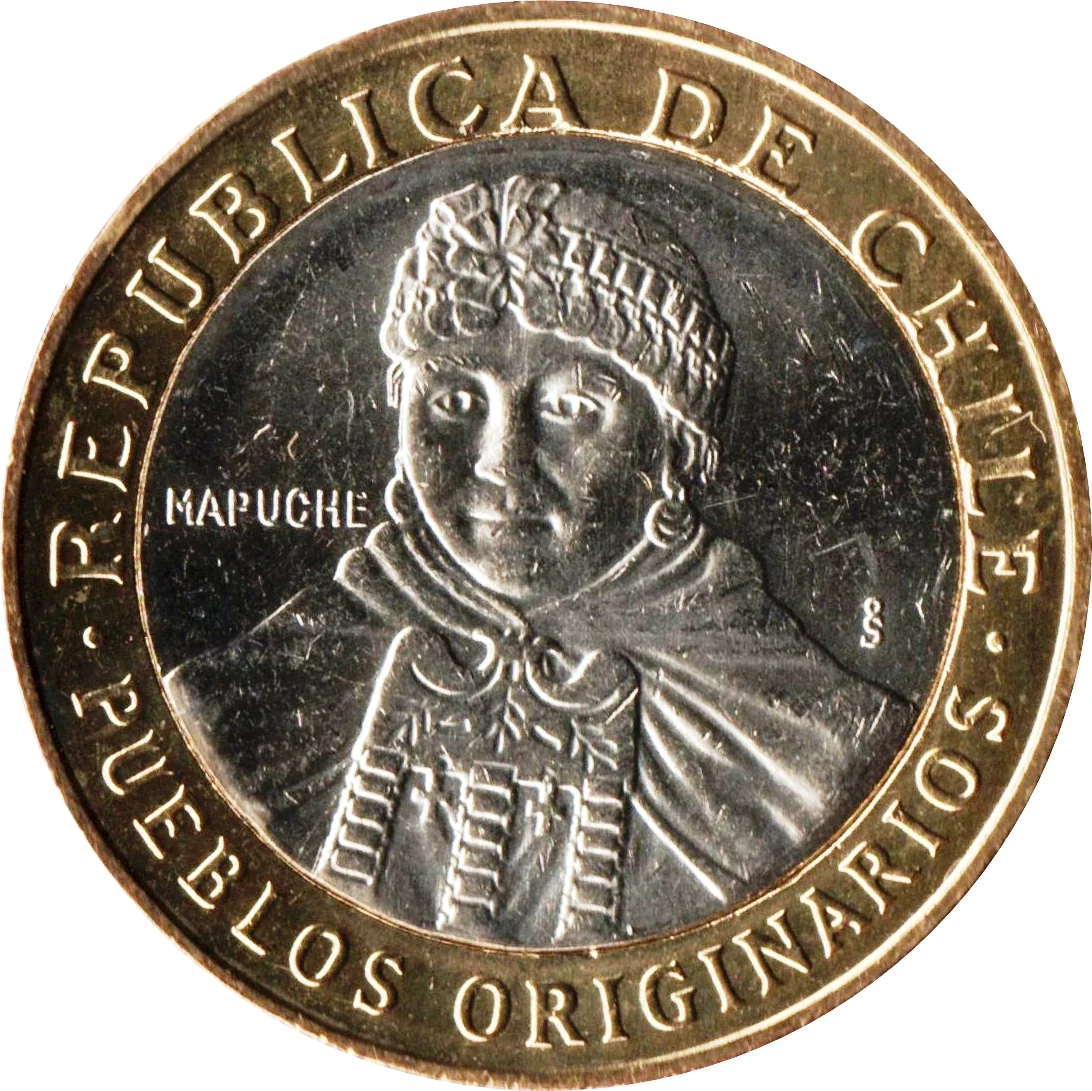
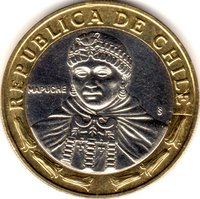
Mapuche woman
Inscription:
REPUBLICA DE CHILE
MAPUCHE
So
· PUEBLOS ORIGINARIOS ·
MAPUCHE
So
· PUEBLOS ORIGINARIOS ·
Translation:
REPUBLIC OF CHILE
MAPUCHE
So
· ORIGINAL PEOPLES ·
MAPUCHE
So
· ORIGINAL PEOPLES ·
Script: Latin
Languages: Mapudungun, Spanish
Reverse
Edge
3 reeded segments
Categories
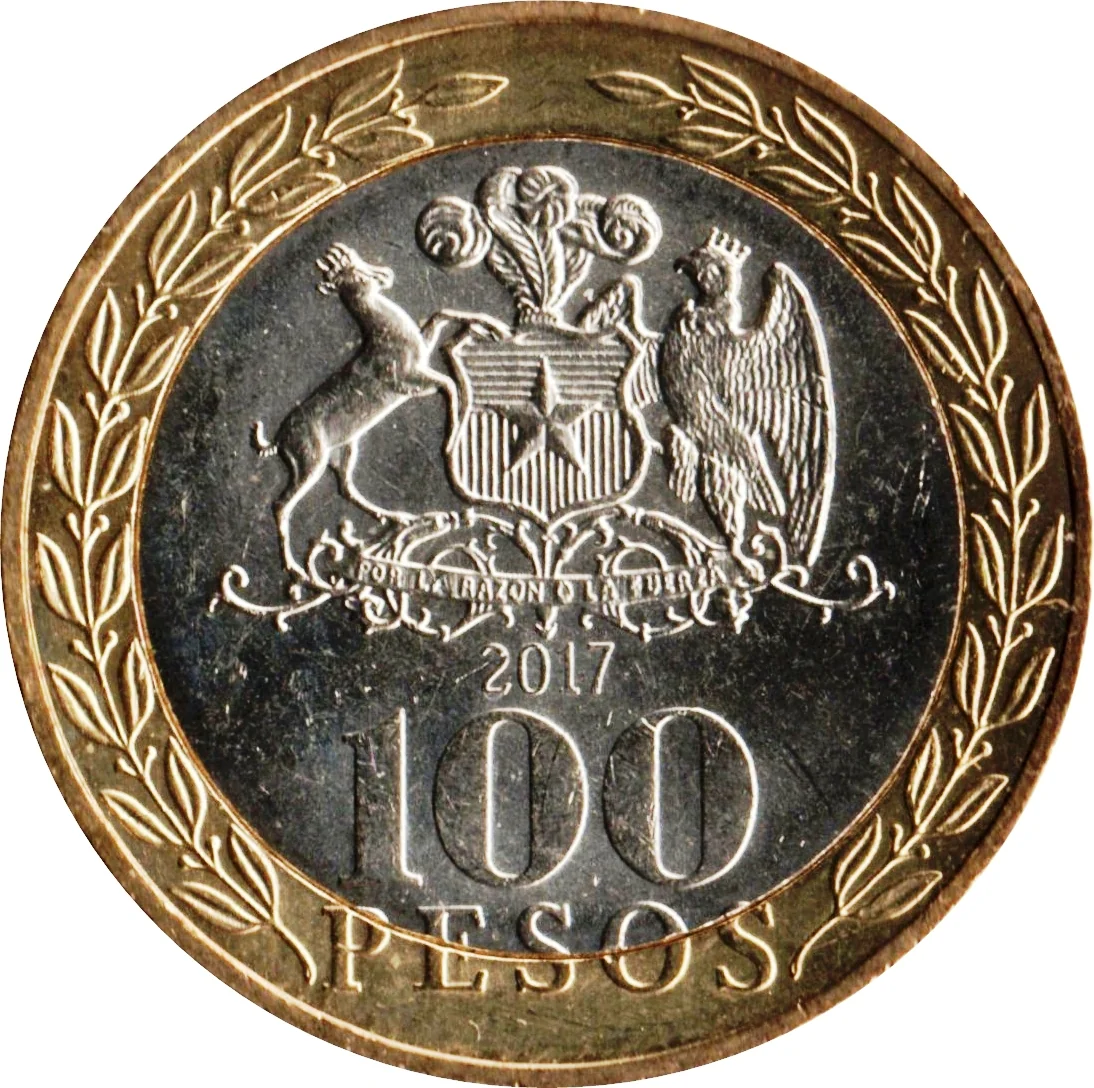
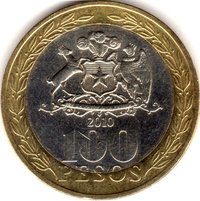
| Symbols> Coat of Arms |
| Symbol> Wreath |
Mints
| Name | Mark |
|---|---|
| Royal Dutch Mint | — |
| Casa de Moneda de Chile | (So) |
Mintings
| Year | Mint Mark | Mintage | Quality | Collection |
|---|---|---|---|---|
| 2001 | So | 7,000,000 | ||
| 2003 | So | 7,000,000 | ||
| 2004 | So | 9,000,000 | ||
| 2005 | — | — | ||
| 2005 | So | 40,000,000 | ||
| 2006 | — | — | ||
| 2006 | So | 47,000,000 | ||
| 2008 | So | 88,000,000 | ||
| 2009 | So | 92,000,000 | ||
| 2010 | So | 241,000,000 | ||
| 2011 | So | 178,000,000 | ||
| 2012 | So | 35,000,000 | ||
| 2013 | So | 160,000,000 | ||
| 2014 | — | 37,000,000 | ||
| 2015 | — | 181,000,000 | ||
| 2016 | So | 96,000,000 | ||
| 2017 | So | 134,400,000 | ||
| 2018 | So | 39,600,000 | ||
| 2021 | So | — | ||
| 2022 | So | — | ||
| 2023 | So | — |
Historical background
In 2001, Chile's currency situation was characterized by a managed exchange rate regime facing significant external pressures. Following the 1999 recession, the Central Bank of Chile had shifted from a rigid exchange rate band to a floating system, but it maintained a policy of active intervention to curb excessive volatility and prevent a disorderly depreciation. The primary tool was a crawling peg-like mechanism, where the peso's reference exchange rate was adjusted daily based on the differential between Chilean and international inflation, a system designed to maintain export competitiveness. However, the year was dominated by the global economic slowdown, particularly the recession in Argentina—a major trading partner—and weakened demand from the United States, which collectively depressed prices for Chile's key export, copper.
These external shocks placed sustained downward pressure on the Chilean peso. Despite the Central Bank's interventions in the foreign exchange market to support the currency, the peso depreciated approximately 15% against the US dollar over the course of the year. This depreciation was a double-edged sword: while it aided exporters by making their goods cheaper on the international market, it also raised the cost of imports and servicing foreign debt, contributing to inflationary pressures. Inflation for the year reached 3.6%, exceeding the Central Bank's target range of 2-4%, a concern that complicated monetary policy decisions.
The currency depreciation and inflation dynamics prompted a tightening response from the Central Bank of Chile. Throughout 2001, it raised its key monetary policy interest rate several times, ultimately reaching 6.5% by year's end, one of the highest real rates in the world at the time. This aggressive stance aimed to anchor inflation expectations and attract capital inflows to stabilize the peso, even at the risk of slowing domestic economic growth. Consequently, the currency situation in 2001 reflected a delicate balancing act, as authorities navigated between supporting a flagging economy through a competitive exchange rate and maintaining strict inflation control through orthodox monetary policy.
These external shocks placed sustained downward pressure on the Chilean peso. Despite the Central Bank's interventions in the foreign exchange market to support the currency, the peso depreciated approximately 15% against the US dollar over the course of the year. This depreciation was a double-edged sword: while it aided exporters by making their goods cheaper on the international market, it also raised the cost of imports and servicing foreign debt, contributing to inflationary pressures. Inflation for the year reached 3.6%, exceeding the Central Bank's target range of 2-4%, a concern that complicated monetary policy decisions.
The currency depreciation and inflation dynamics prompted a tightening response from the Central Bank of Chile. Throughout 2001, it raised its key monetary policy interest rate several times, ultimately reaching 6.5% by year's end, one of the highest real rates in the world at the time. This aggressive stance aimed to anchor inflation expectations and attract capital inflows to stabilize the peso, even at the risk of slowing domestic economic growth. Consequently, the currency situation in 2001 reflected a delicate balancing act, as authorities navigated between supporting a flagging economy through a competitive exchange rate and maintaining strict inflation control through orthodox monetary policy.
🌱 Very Common