

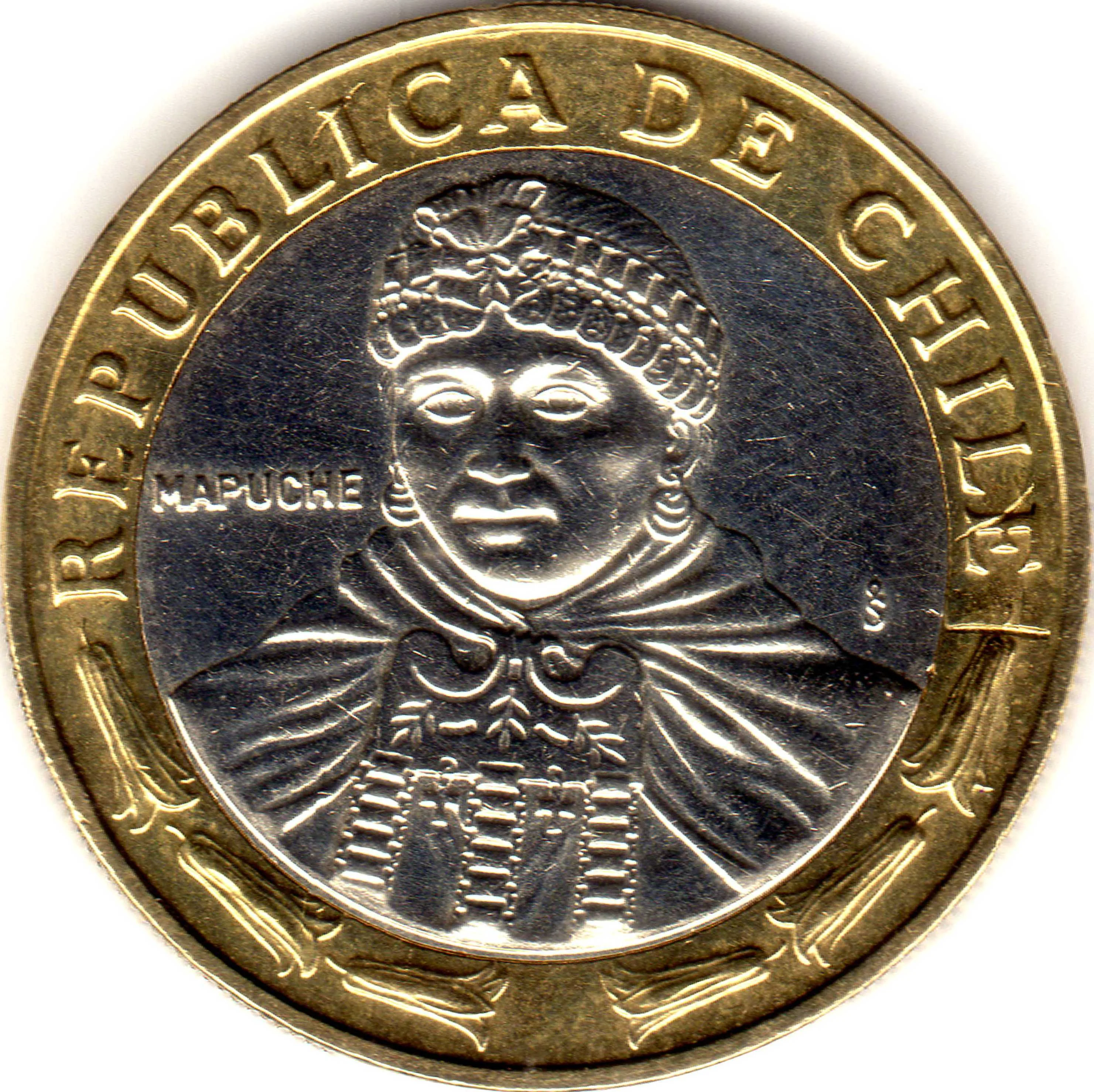
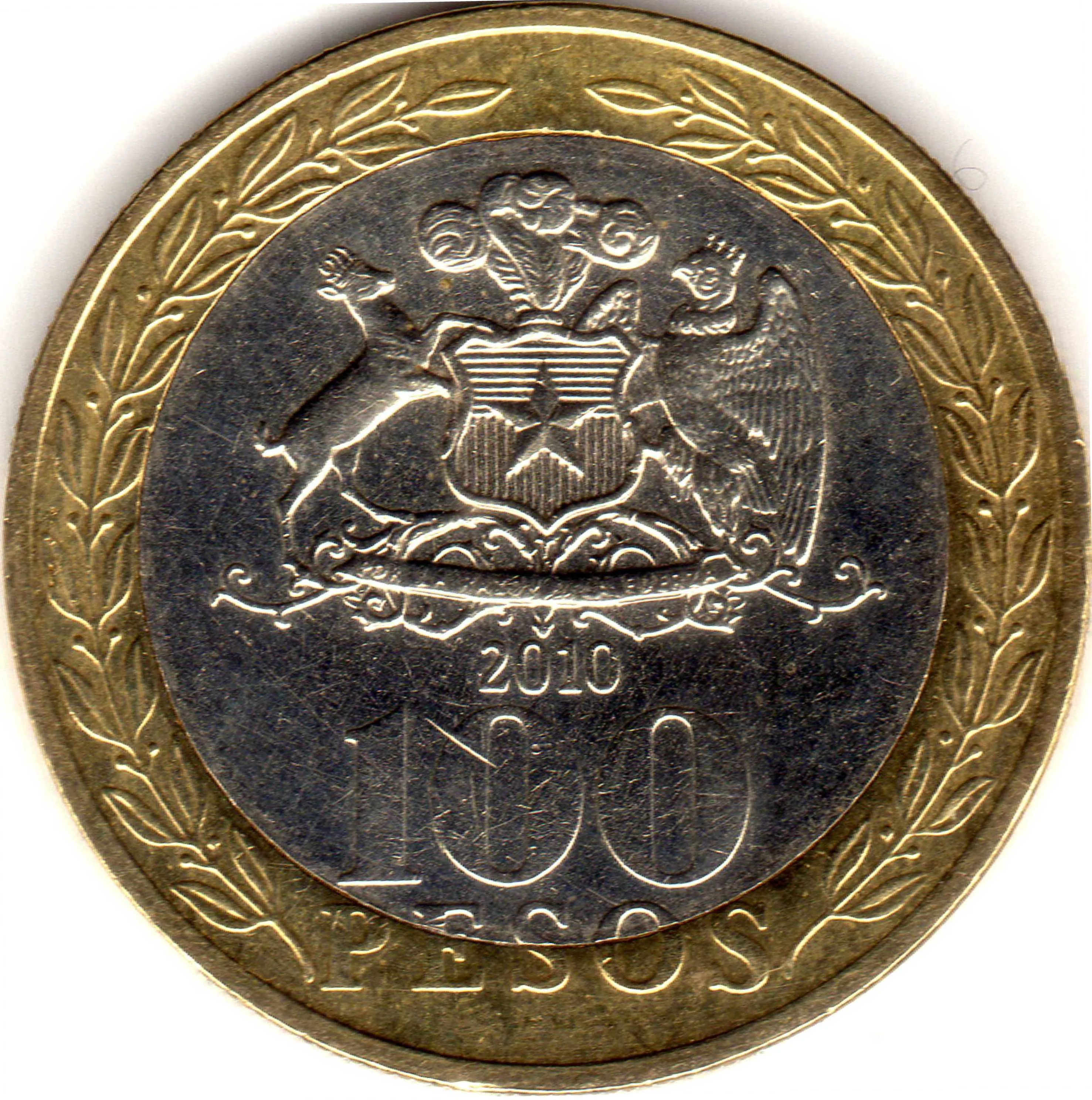
Obverse
Description:
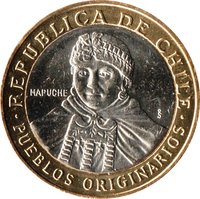
Mapuche woman with six copihue flowers below.
Inscription:
REPUBLICA DE CHILE
MAPUCHE
So
MAPUCHE
So
Translation:
REPUBLIC OF CHILE
MAPUCHE
MAPUCHE
Script: Latin
Languages: Mapudungun, Spanish
Reverse
Edge
3 reeded segments
Mints
| Name | Mark |
|---|---|
| Casa de Moneda de Chile | (So) |
Mintings
| Year | Mint Mark | Mintage | Quality | Collection |
|---|---|---|---|---|
| 2010 | So | — |
Historical background
In 2010, Chile's currency situation was characterized by a period of significant appreciation of the Chilean peso (CLP) against the US dollar, a trend that had been building since the mid-2000s. The primary driver was high global prices for copper, Chile's principal export, which surged following the global financial crisis due to robust demand from China. This created strong capital inflows and a large trade surplus, increasing demand for pesos and pushing its value higher. The appreciation raised concerns among exporters and policymakers about "Dutch disease," where a strong currency could hurt the competitiveness of non-mining sectors like agriculture and manufacturing.
The Central Bank of Chile, under President José De Gregorio, responded with a dual strategy of monetary policy and direct intervention. Having lowered the benchmark interest rate to a historic low of 0.5% in 2009 to counter the crisis, the bank began a tightening cycle in mid-2010, which modestly supported the peso by making local assets more attractive. More directly, in January 2010, the bank announced a $50 billion foreign exchange intervention program, committing to purchase US dollars to build reserves and dampen peso strength. This program, unprecedented in scale for Chile, signaled a strong commitment to preventing excessive volatility and protecting the export-oriented economy.
Overall, the 2010 currency landscape reflected Chile's successful emergence from the global recession but also the challenges of managing commodity-driven prosperity. While the strong peso helped control inflation and made imports cheaper for consumers, it created persistent tension between different economic sectors. The central bank's interventions underscored a pragmatic shift away from a purely free-floating exchange rate, aiming to balance stability for traders and investors with the long-term health of a diversified economy, setting a precedent for future management of commodity cycles.
The Central Bank of Chile, under President José De Gregorio, responded with a dual strategy of monetary policy and direct intervention. Having lowered the benchmark interest rate to a historic low of 0.5% in 2009 to counter the crisis, the bank began a tightening cycle in mid-2010, which modestly supported the peso by making local assets more attractive. More directly, in January 2010, the bank announced a $50 billion foreign exchange intervention program, committing to purchase US dollars to build reserves and dampen peso strength. This program, unprecedented in scale for Chile, signaled a strong commitment to preventing excessive volatility and protecting the export-oriented economy.
Overall, the 2010 currency landscape reflected Chile's successful emergence from the global recession but also the challenges of managing commodity-driven prosperity. While the strong peso helped control inflation and made imports cheaper for consumers, it created persistent tension between different economic sectors. The central bank's interventions underscored a pragmatic shift away from a purely free-floating exchange rate, aiming to balance stability for traders and investors with the long-term health of a diversified economy, setting a precedent for future management of commodity cycles.
💎 Very Rare