

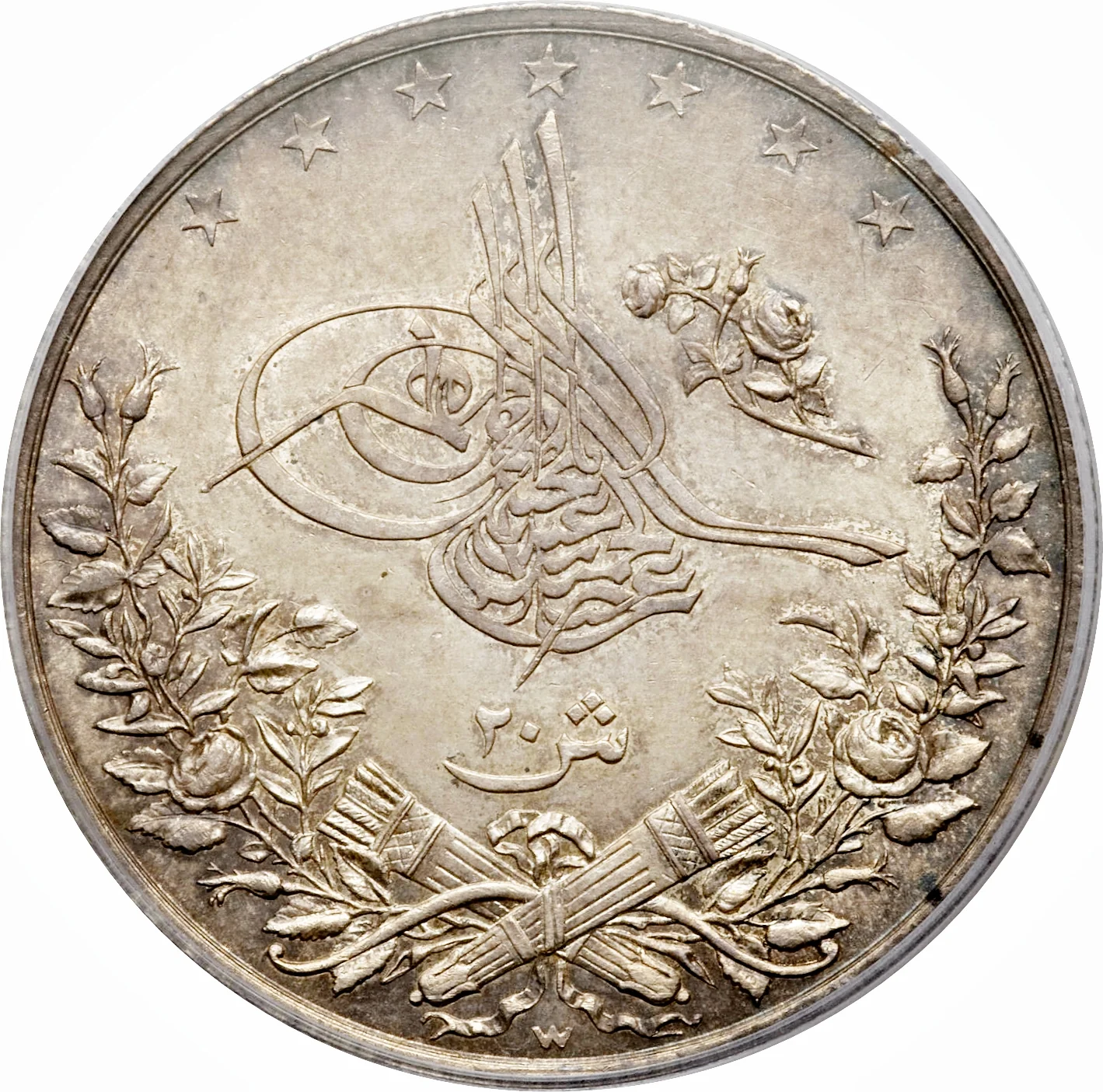
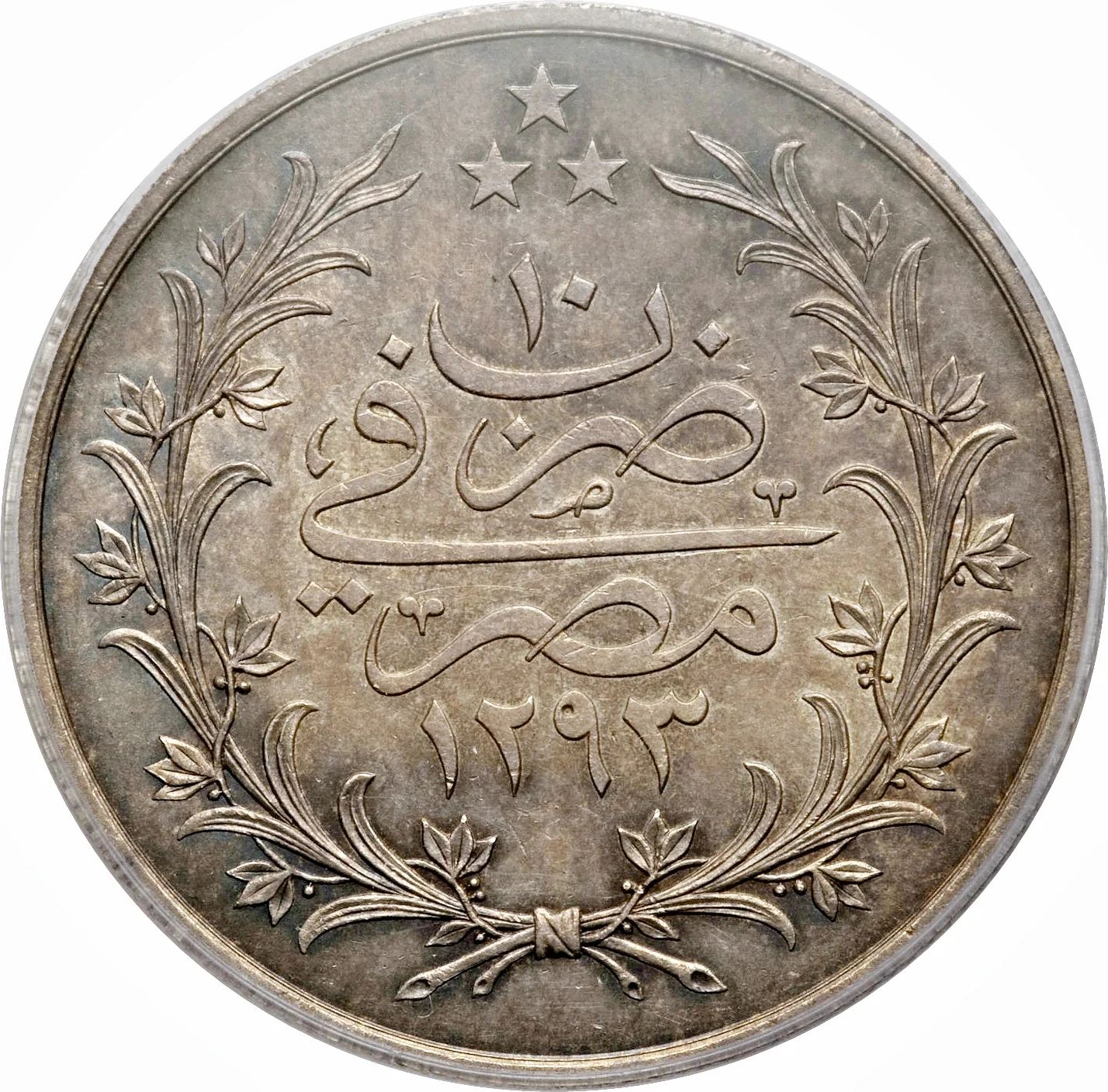
20 Qirsh – Egypt
Egypt
Context
Years: 1885–1907
Issuer: Egypt 
Ruler: Abdul Hamid II
Currency:
(1834—1916)
Demonetized: Yes
Total mintage: 3,455,000
Material
References
KM: #Click to copy to clipboard296
Numista: #28412
Value
Bullion value: $66.30
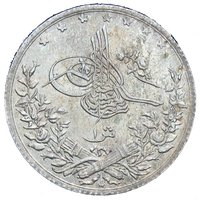
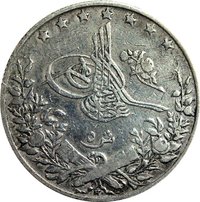
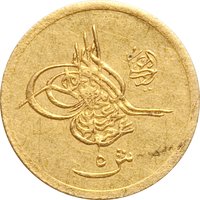
Obverse
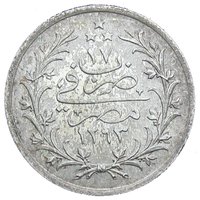
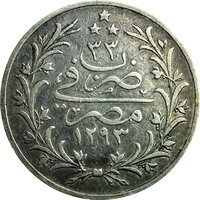
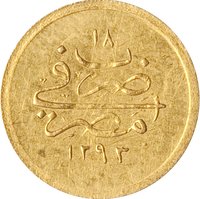
Reverse
Edge
Reeded
Mints
| Name | Mark |
|---|---|
| Heaton and Sons / The Mint Birmingham | H |
| Berlin | W |
Mintings
| Year | Mint Mark | Mintage | Quality | Collection |
|---|---|---|---|---|
| 1885 | — | 874,000 | ||
| 1886 | — | 126,000 | ||
| 1890 | — | 29,000 | ||
| 1891 | — | 55,000 | ||
| 1892 | — | 54,000 | ||
| 1892 | — | — | Proof | |
| 1895 | — | 172,000 | ||
| 1896 | — | 158,000 | ||
| 1897 | — | 287,000 | ||
| 1899 | — | 500,000 | ||
| 1902 | — | 25,000 | ||
| 1903 | — | 425,000 | ||
| 1904 | — | 200,000 | ||
| 1905 | — | 250,000 | ||
| 1906 | — | — | ||
| 1907 | — | 300,000 |
Historical background
In 1885, Egypt's currency situation was characterized by a complex and unstable duality, a direct legacy of the Khedivate's bankruptcy and the subsequent British occupation in 1882. The nation operated with two parallel, and often conflicting, monetary standards: a gold-based standard and a silver-based standard. The official currency for government accounts and foreign debt repayment was the gold Egyptian pound, which was pegged to and equivalent to the British sovereign. However, the vast majority of daily transactions for the Egyptian populace were conducted in silver piastres, the value of which fluctuated wildly on international markets.
This bimetallic system created severe economic distortions. A global decline in the value of silver throughout the 1870s and 1880s meant the silver piastre steadily depreciated against the gold pound. This inflicted a hidden tax on the peasantry (fellahin), who paid their taxes in silver but saw the state's gold-denominated debts and obligations become effectively more expensive. The instability hampered commerce, complicated government budgeting, and perpetuated financial uncertainty, all under the watch of British financial controllers who prioritized debt servicing and fiscal stability for European creditors.
Recognizing the crippling inefficiency, the British administration moved decisively to reform the system in 1885. The government demonetized the old silver coinage and introduced a new, unified currency based on a gold standard. The Egyptian pound was defined as 100 piastres, with the piastre itself now a subsidiary token coin, its value firmly fixed to gold. This reform, effectively placing Egypt on the Sterling Gold Standard, brought immediate monetary stability, simplified trade, and further entrenched British financial control, setting the framework for Egypt's currency system for decades to come.
This bimetallic system created severe economic distortions. A global decline in the value of silver throughout the 1870s and 1880s meant the silver piastre steadily depreciated against the gold pound. This inflicted a hidden tax on the peasantry (fellahin), who paid their taxes in silver but saw the state's gold-denominated debts and obligations become effectively more expensive. The instability hampered commerce, complicated government budgeting, and perpetuated financial uncertainty, all under the watch of British financial controllers who prioritized debt servicing and fiscal stability for European creditors.
Recognizing the crippling inefficiency, the British administration moved decisively to reform the system in 1885. The government demonetized the old silver coinage and introduced a new, unified currency based on a gold standard. The Egyptian pound was defined as 100 piastres, with the piastre itself now a subsidiary token coin, its value firmly fixed to gold. This reform, effectively placing Egypt on the Sterling Gold Standard, brought immediate monetary stability, simplified trade, and further entrenched British financial control, setting the framework for Egypt's currency system for decades to come.
🌟 Uncommon