

5 qirsh – Egypt
Add to wishlist
Egypt
Context
Years: 1889–1908
Islamic (Hijri) Year:: 1293
Issuer: Egypt
Ruler: Abdul Hamid II
Currency:
(1834—1916)
Demonetized: Yes
Total mintage: 8,000
Material
References
KM: #
Numista: #36892
Value
Bullion value: $56.69
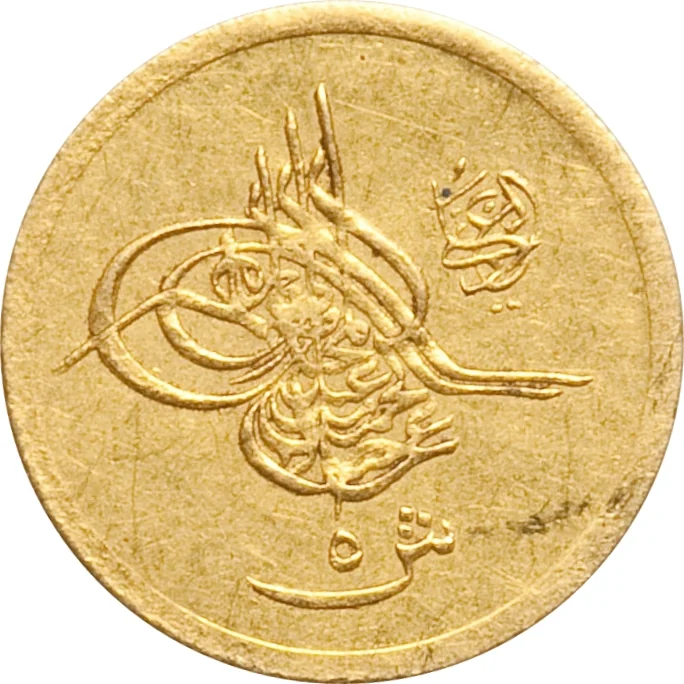
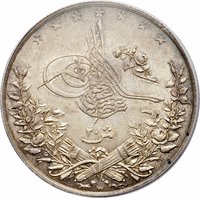
Obverse
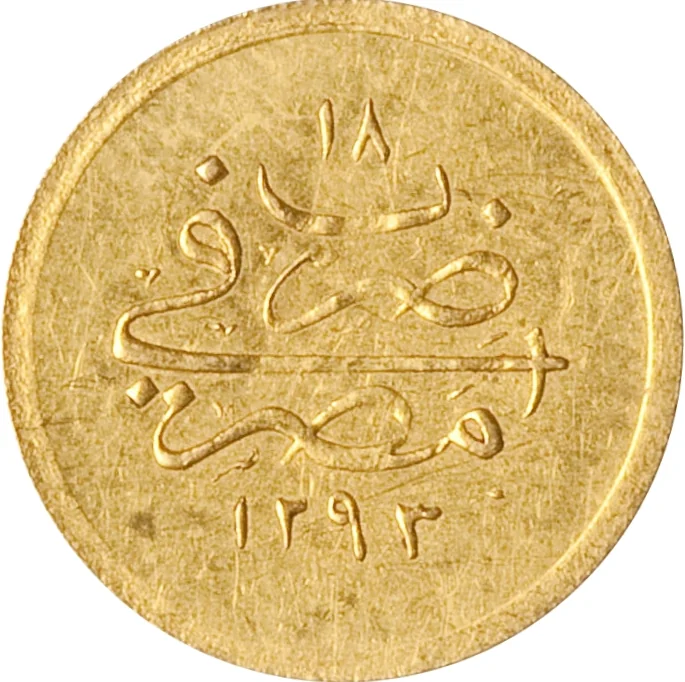
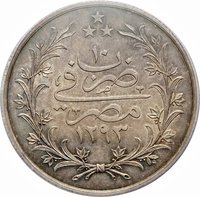
Reverse
Edge
Mintings
| Year | Mint Mark | Mintage | Quality | Collection |
|---|---|---|---|---|
| 1889 | — | — | ||
| 1890 | — | — | ||
| 1892 | — | — | ||
| 1898 | — | — | ||
| 1900 | — | — | ||
| 1908 | — | 8,000 |
Historical background
In 1889, Egypt’s currency situation was defined by its integration into the British imperial financial system and the constraints of the Public Debt Administration, established following the country's bankruptcy in 1876. The official currency was the Egyptian pound (EGP), which was pegged to and at par with the British gold sovereign. This gold standard, formally adopted in 1885, aimed to provide monetary stability and attract foreign investment, but it effectively subordinated Egyptian monetary policy to British interests and the needs of international creditors. The system ensured that Egypt's currency was stable and convertible, which facilitated the country's primary role as a cotton exporter, but it also tied the economy tightly to fluctuations in the global price of that single commodity.
This monetary regime existed under the heavy burden of massive foreign debt. The Anglo-French Dual Control had been replaced in 1882 by British occupation, and financial oversight was exercised by the Caisse de la Dette Publique. While the currency itself was stable, the broader financial picture was one of austerity, with a significant portion of state revenue—from lucrative sources like railway and port income—legally earmarked for debt service. This fiscal straitjacket limited the Khedive’s government in spending on infrastructure and development, despite the overall economy growing through agricultural exports. The soundness of the currency in the hand of a foreign merchant stood in contrast to the financial pressures on the Egyptian state and rural populace.
Consequently, the currency situation reflected the political reality of Egypt as a British protectorate in all but name. The stable gold-backed pound facilitated trade and European commercial interests, ensuring smooth repatriation of profits and debt payments. However, it offered little flexibility to respond to domestic economic needs, and the broader financial control stifled Egyptian fiscal autonomy. The year 1889 thus represents a period of colonial-era monetary stability imposed from the outside, underpinning an economic system designed for creditor security and export dependency rather than sovereign national development.
This monetary regime existed under the heavy burden of massive foreign debt. The Anglo-French Dual Control had been replaced in 1882 by British occupation, and financial oversight was exercised by the Caisse de la Dette Publique. While the currency itself was stable, the broader financial picture was one of austerity, with a significant portion of state revenue—from lucrative sources like railway and port income—legally earmarked for debt service. This fiscal straitjacket limited the Khedive’s government in spending on infrastructure and development, despite the overall economy growing through agricultural exports. The soundness of the currency in the hand of a foreign merchant stood in contrast to the financial pressures on the Egyptian state and rural populace.
Consequently, the currency situation reflected the political reality of Egypt as a British protectorate in all but name. The stable gold-backed pound facilitated trade and European commercial interests, ensuring smooth repatriation of profits and debt payments. However, it offered little flexibility to respond to domestic economic needs, and the broader financial control stifled Egyptian fiscal autonomy. The year 1889 thus represents a period of colonial-era monetary stability imposed from the outside, underpinning an economic system designed for creditor security and export dependency rather than sovereign national development.
✨ Legendary