

1 Shu – Japan
Japan
Material
Weight: 1.86 g
Silver weight: 1.86 g
Thickness: 1 mm
Shape: Irregular rectangular
Composition: Silver
Magnetic: No
Techniques: Hammered, Countermarked
Alignment: Medal alignment
flip
References
Numista: #282638
Value
Bullion value: $5.29
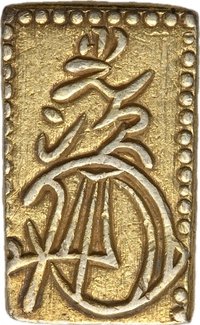
Obverse
Description:
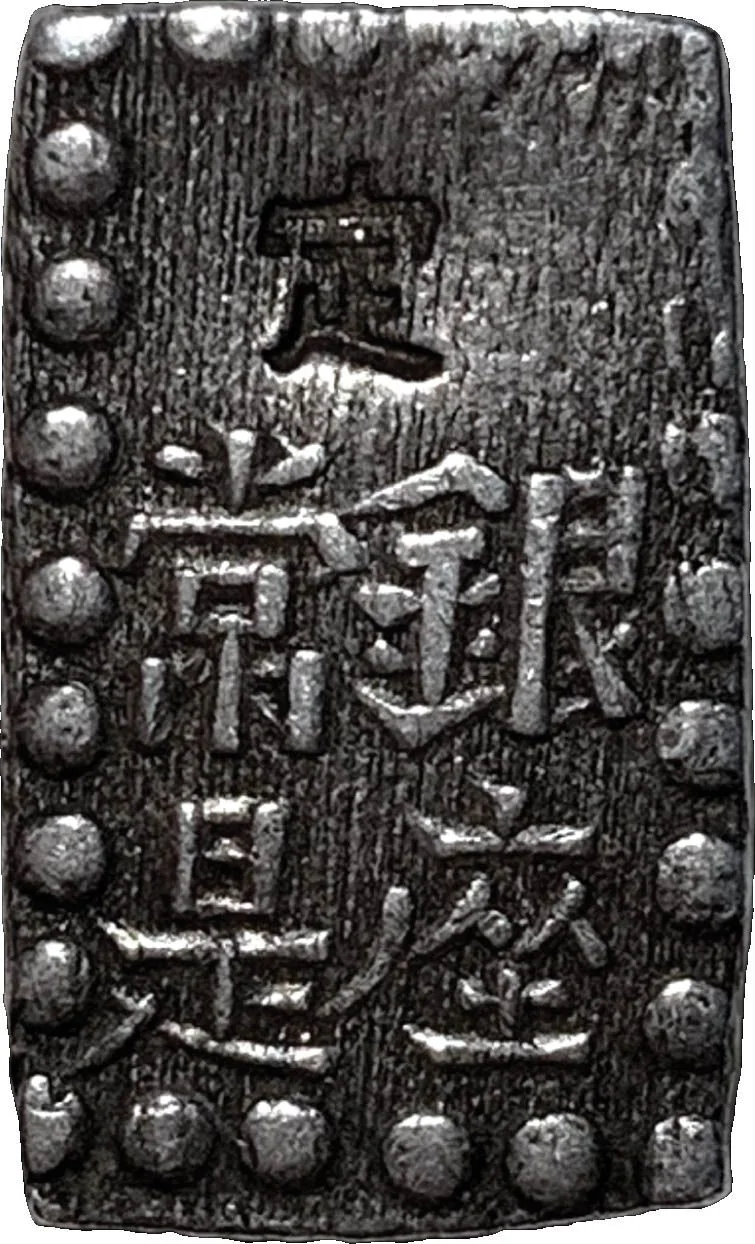
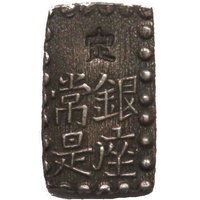
Incuse 'Jo' counterstamp on 4 kanji, pearl border.
Inscription:
定
常銀
是座
常銀
是座
Translation:
Fixed Standard Silver;
This is the seat.
This is the seat.
Scripts: Chinese (traditional, regular script)
Language: Classical Chinese
Reverse
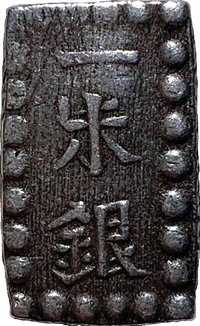
Description:
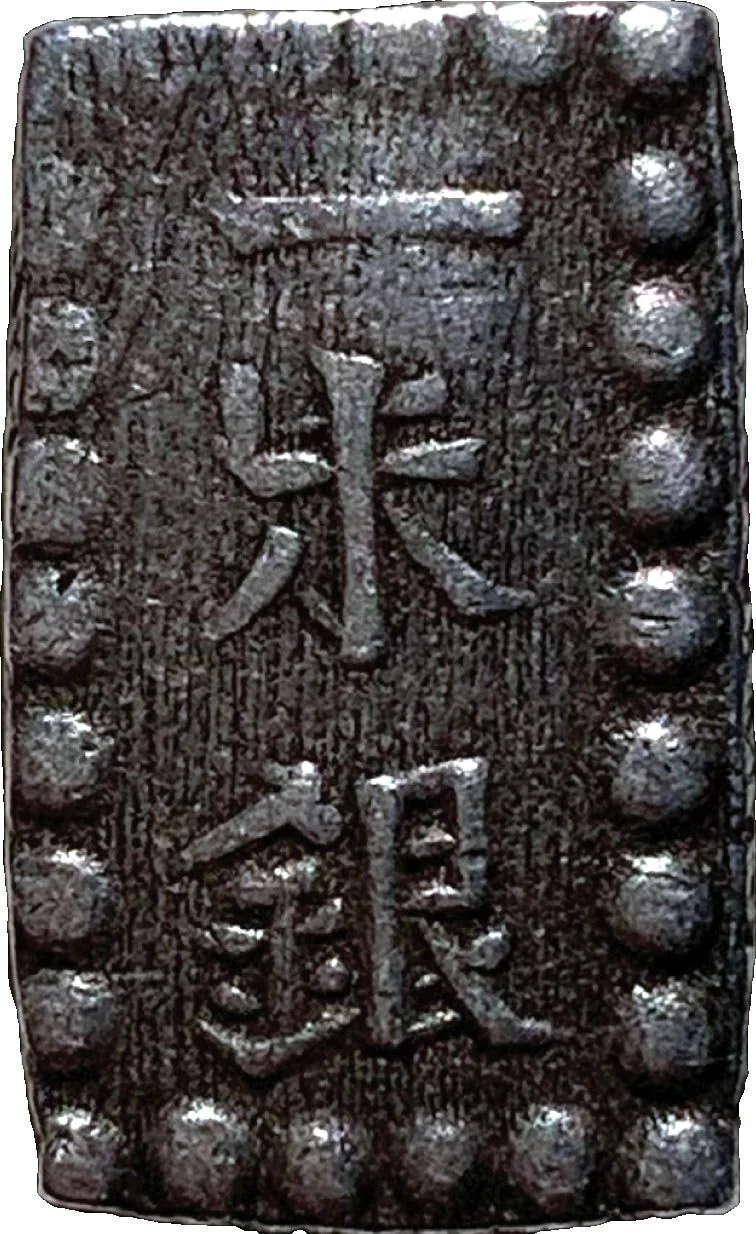
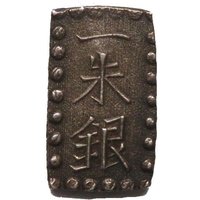
Three kanji in a pearl frame.
Inscription:
一
朱
銀
朱
銀
Translation:
One Zhu Silver
Scripts: Chinese (traditional, regular script)
Language: Chinese
Edge
Vertical reeding on short sides,slanted reeding on long sides
Mints
| Name | Mark |
|---|---|
| Ginza, Edo | — |
Mintings
| Year | Mint Mark | Mintage | Quality | Collection |
|---|---|---|---|---|
| — | — | — |
Historical background
In 1854, Japan's currency system was a complex and fragmented relic of the Tokugawa shogunate's feudal structure, on the brink of crisis due to the forced reopening of the country. The arrival of Commodore Matthew Perry's "Black Ships" in 1853 and the signing of the Convention of Kanagawa in 1854 shattered over two centuries of sakoku (national seclusion). This immediately exposed Japan's archaic monetary system to the pressures of international trade. The system was based on a tri-metallic standard of gold, silver, and copper, but its values were fixed by the shogunate at rates that diverged wildly from global market prices, making Japan a target for arbitrage.
Internally, the currency was chaotic. The Tokugawa government minted gold koban, silver ichibu-gin, and copper mon, but over 200 semi-autonomous domains also issued their own paper scrip, called hansatsu, which was only valid within their own borders. This patchwork of currencies hindered domestic commerce and reflected the decentralized political power of the era. Crucially, the shogunate's official gold-to-silver ratio was approximately 1:5, while the global rate was around 1:15. This discrepancy meant that foreign traders, paying with silver, could purchase Japanese gold coins at a massive discount and export them for enormous profit, leading to a rapid and destabilizing drain of gold from the country.
Thus, in 1854, Japan stood at a monetary precipice. The external treaties had unlocked a one-way flow of gold bullion out of the economy, threatening national wealth and financial stability. Internally, the system was ill-equipped for modern commerce. The Perry expedition did not just open ports; it exposed the fundamental incompatibility of Edo-period finance with the Western economic order, setting in motion a financial crisis that would be a direct catalyst for the monetary reforms of the Meiji Restoration in the following decades.
Internally, the currency was chaotic. The Tokugawa government minted gold koban, silver ichibu-gin, and copper mon, but over 200 semi-autonomous domains also issued their own paper scrip, called hansatsu, which was only valid within their own borders. This patchwork of currencies hindered domestic commerce and reflected the decentralized political power of the era. Crucially, the shogunate's official gold-to-silver ratio was approximately 1:5, while the global rate was around 1:15. This discrepancy meant that foreign traders, paying with silver, could purchase Japanese gold coins at a massive discount and export them for enormous profit, leading to a rapid and destabilizing drain of gold from the country.
Thus, in 1854, Japan stood at a monetary precipice. The external treaties had unlocked a one-way flow of gold bullion out of the economy, threatening national wealth and financial stability. Internally, the system was ill-equipped for modern commerce. The Perry expedition did not just open ports; it exposed the fundamental incompatibility of Edo-period finance with the Western economic order, setting in motion a financial crisis that would be a direct catalyst for the monetary reforms of the Meiji Restoration in the following decades.
🌟 Limited