

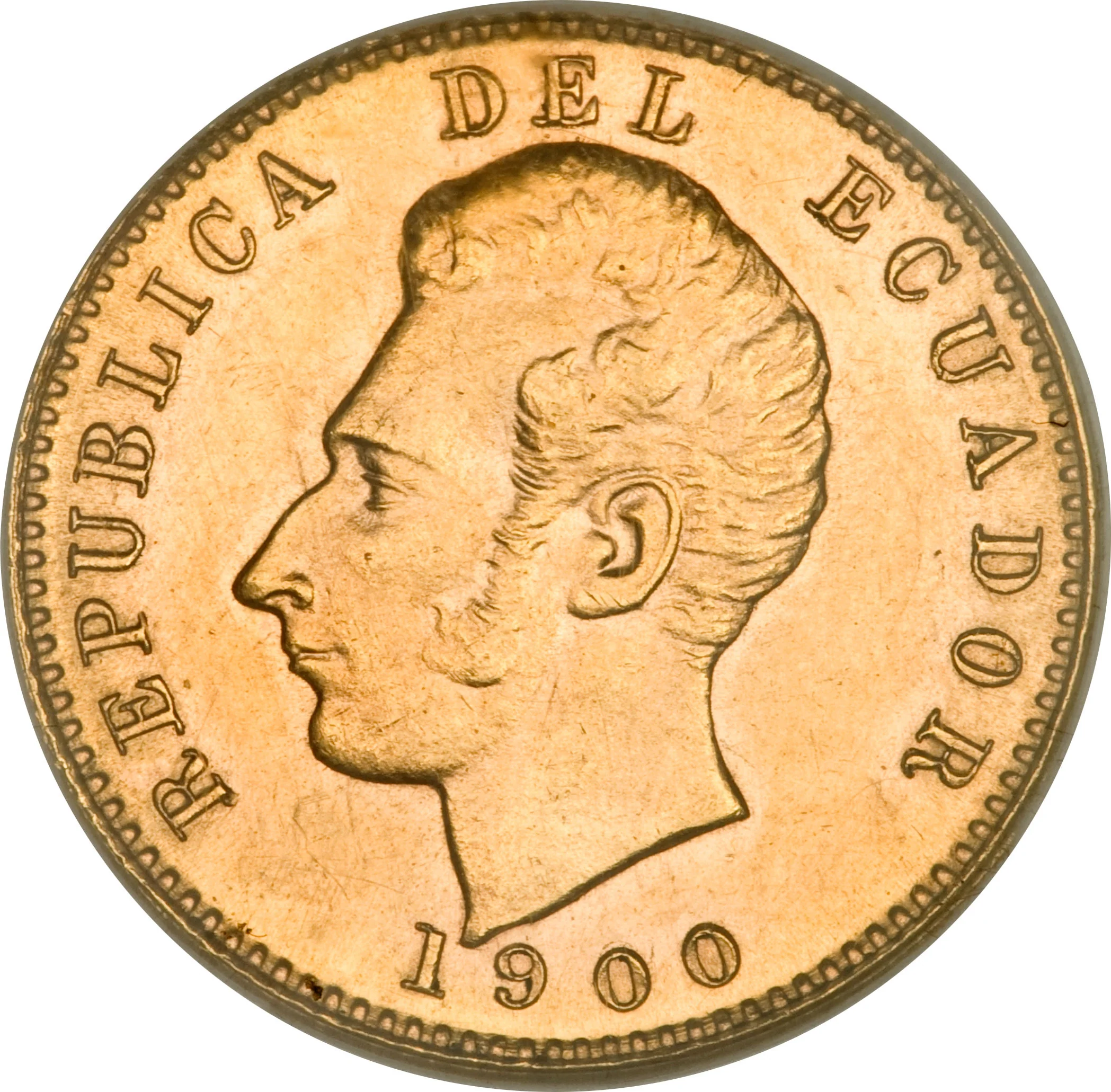
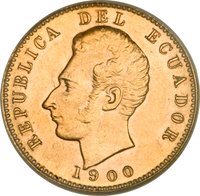
Obverse
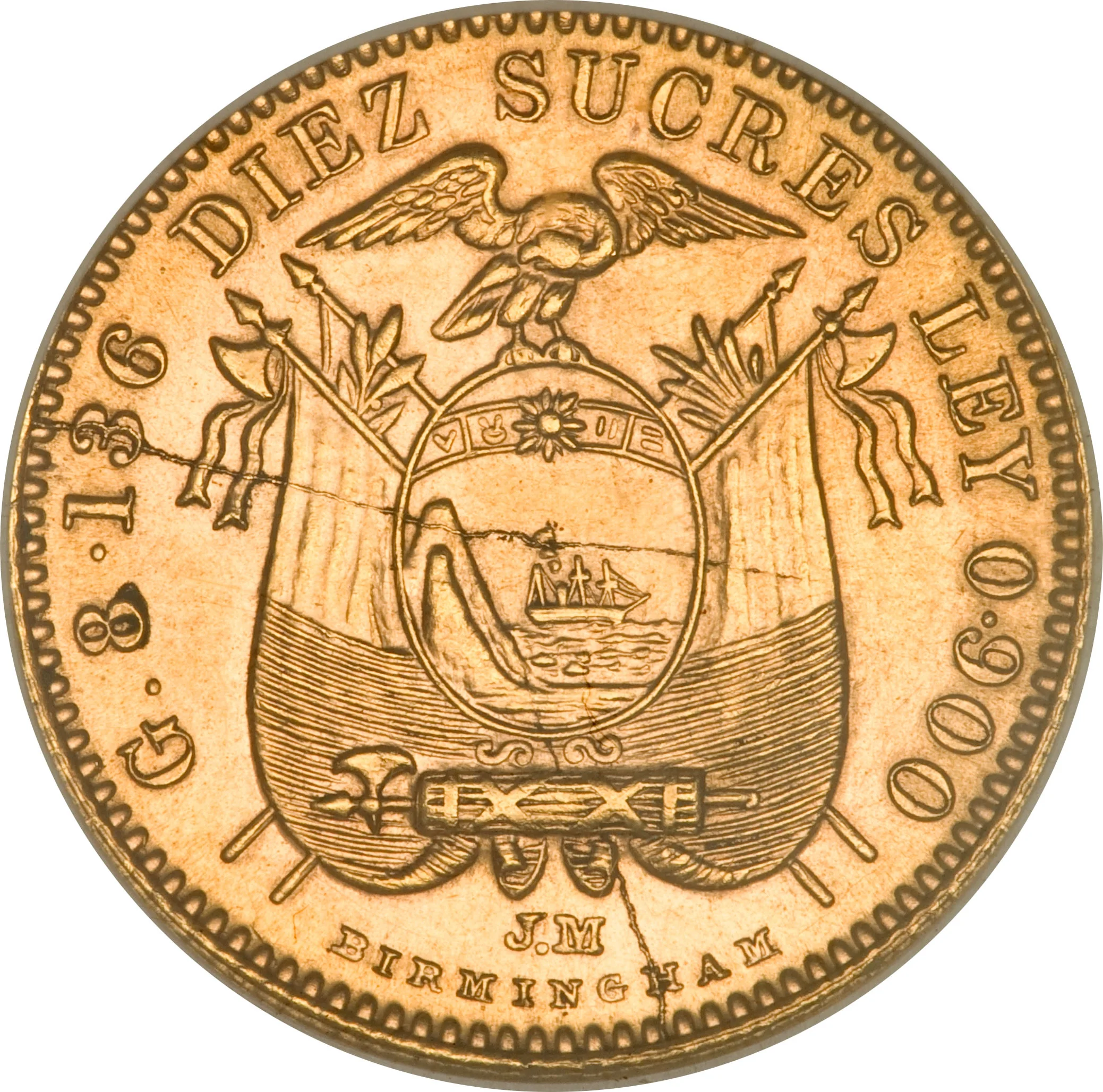
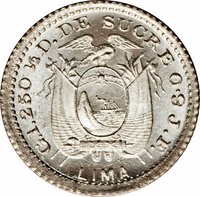
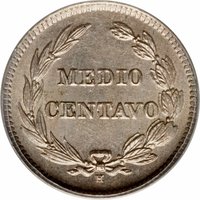
Reverse
Edge
Reeded
Mints
| Name | Mark |
|---|---|
| Heaton and Sons / The Mint Birmingham | — |
Mintings
| Year | Mint Mark | Mintage | Quality | Collection |
|---|---|---|---|---|
| 1899 | JM | 50,000 | ||
| 1900 | JM | 50,000 |
Historical background
In 1899, Ecuador found itself in the midst of a severe monetary crisis, the culmination of decades of fiscal instability and political fragmentation. Since its independence, the country had struggled with a chaotic currency system where both Colombian pesos and privately minted coins circulated alongside debased domestic currency. The government, chronically short of revenue and burdened by foreign debt, had repeatedly resorted to printing unbacked paper money, leading to rampant inflation. By the late 1890s, the sucre, officially established in 1884, was collapsing in value, causing a profound loss of public confidence and crippling economic transactions.
The crisis reached its peak under the liberal government of President Eloy Alfaro, who faced the daunting task of modernizing the state while stabilizing its finances. The immediate trigger was the dramatic fall in the world price of silver, which underpinned Ecuador's currency. This caused the silver content of Ecuadorian coins to be worth more abroad than their face value domestically, leading to massive hoarding and exportation of coins. The result was a severe shortage of hard currency in circulation, paralyzing commerce and exacerbating the existing hyperinflation of the paper money that remained.
This dire situation forced the Alfaro administration to take radical action. In 1899, the government proposed a controversial and historic solution: the adoption of the gold standard. This meant pegging the sucre to gold and demonetizing silver, a move intended to attract foreign investment, stabilize the exchange rate, and curb inflation. The decision, enacted in 1900, was profoundly consequential, tying Ecuador's monetary system to international gold markets and setting the stage for a period of relative financial stability, though not without significant economic adjustment and political debate about ceding monetary sovereignty.
The crisis reached its peak under the liberal government of President Eloy Alfaro, who faced the daunting task of modernizing the state while stabilizing its finances. The immediate trigger was the dramatic fall in the world price of silver, which underpinned Ecuador's currency. This caused the silver content of Ecuadorian coins to be worth more abroad than their face value domestically, leading to massive hoarding and exportation of coins. The result was a severe shortage of hard currency in circulation, paralyzing commerce and exacerbating the existing hyperinflation of the paper money that remained.
This dire situation forced the Alfaro administration to take radical action. In 1899, the government proposed a controversial and historic solution: the adoption of the gold standard. This meant pegging the sucre to gold and demonetizing silver, a move intended to attract foreign investment, stabilize the exchange rate, and curb inflation. The decision, enacted in 1900, was profoundly consequential, tying Ecuador's monetary system to international gold markets and setting the stage for a period of relative financial stability, though not without significant economic adjustment and political debate about ceding monetary sovereignty.
💎 Very Rare