

25 cents – Newfoundland
Add to wishlist
Canada
Context
Years: 1917–1919
Country: Canada
Issuer: Newfoundland
Ruler: George V
Currency:
(1865—1949)
Total mintage: 628,718
Material
References
KM: #
Numista: #2785
Value
Exchange value: 0.25 NFD
Bullion value: $13.54
Inflation-adjusted value: 6.06 NFD
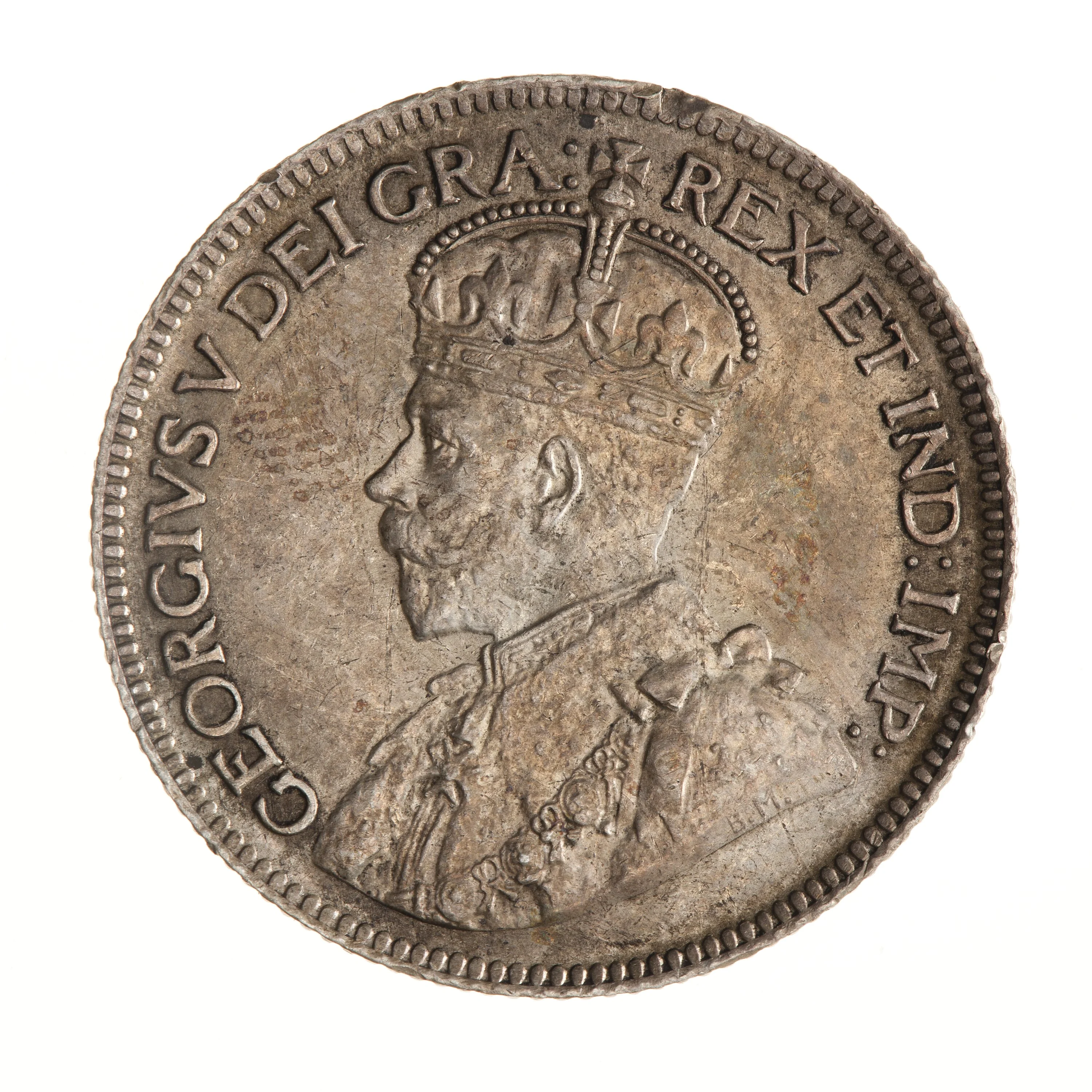
Obverse
Description:
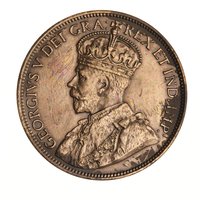
King George V in leftward profile.
Inscription:
GEORGIVS V DEI GRA: REX ET IND:IMP:
Translation:
George V by the Grace of God King and Emperor of India
Script: Latin
Language: Latin
Engraver: Edgar Bertram MacKennal
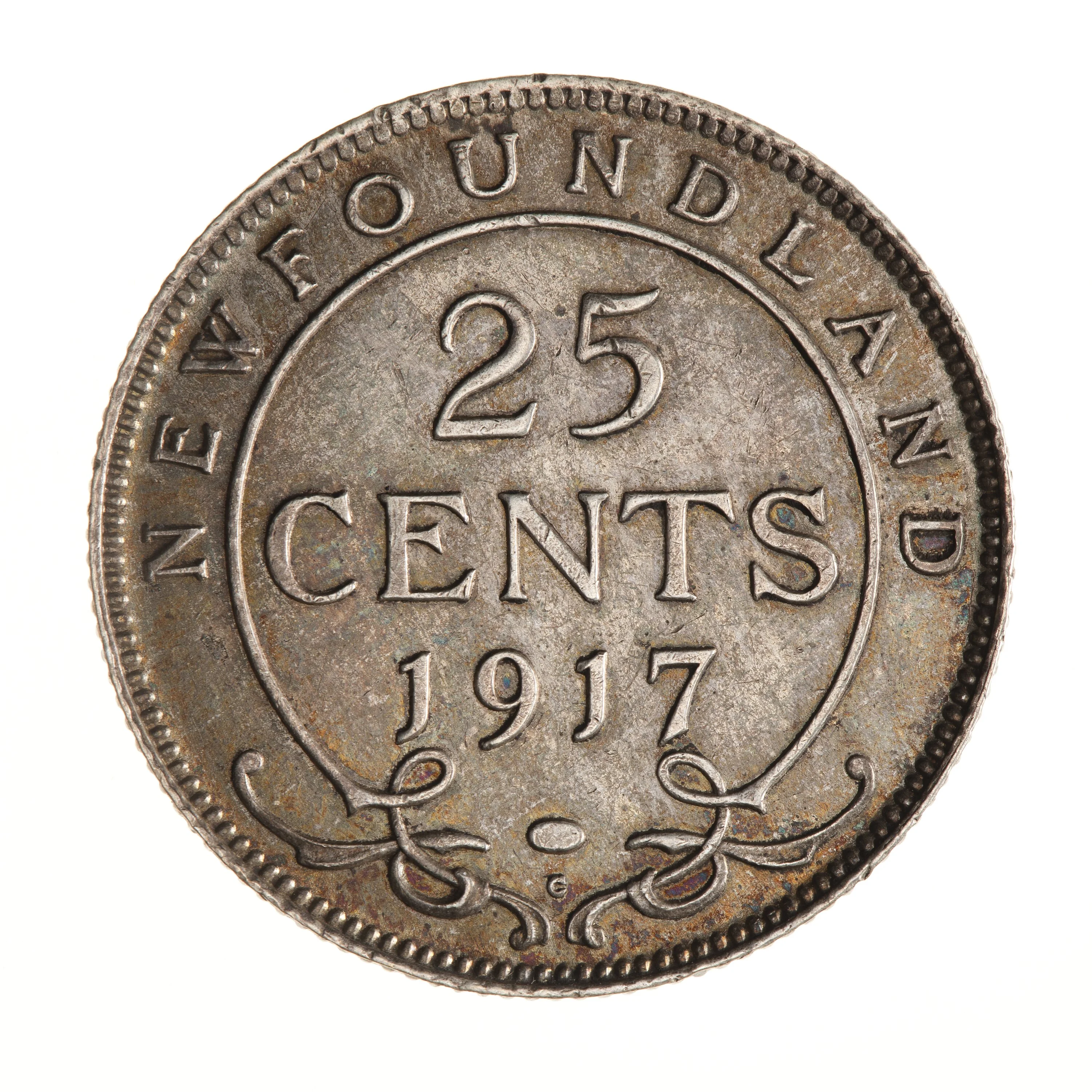
Reverse
Description:
Island name, denomination. Changed to avoid confusion with Canadian quarters.
Inscription:
NEWFOUNDLAND
25
CENTS
1919
C
25
CENTS
1919
C
Script: Latin
Engraver: William Henry James Blakemore
Edge
Reeded
Mints
| Name | Mark |
|---|---|
| Royal Canadian Mint of Ottawa | C |
Historical background
In 1917, Newfoundland’s currency situation was complex and defined by its status as a self-governing Dominion within the British Empire, separate from Canada. The official currency was the Newfoundland dollar, which was pegged at par with the Canadian dollar and the U.S. dollar. However, the colony’s physical currency in circulation was a mixture of notes issued by its own government and private banks, alongside significant quantities of Canadian and British coins. This created a somewhat fragmented monetary environment, reliant on the stability and goodwill of external economies.
The outbreak of the First World War in 1914 had placed severe strain on Newfoundland's finances. To fund its substantial war effort, the government increasingly relied on borrowing, leading to inflation and a growing public debt. While not yet in a crisis of confidence in 1917, the underlying fiscal pressures were mounting. The Newfoundland dollar remained convertible, but the war disrupted normal trade and monetary flows, causing occasional shortages of small change and complicating transactions in a resource-dependent economy.
Ultimately, the currency situation reflected Newfoundland’s broader political and economic fragility. The war expenditure was unsustainable for a small population, and the mixed currency system, while functional, highlighted a lack of deep independent monetary institutions. The financial strains of 1917 were a precursor to the more severe post-war debt crisis that, two decades later, would contribute to the collapse of responsible government and lead to Newfoundland’s eventual confederation with Canada in 1949, at which point the Canadian dollar would formally replace the Newfoundland dollar.
The outbreak of the First World War in 1914 had placed severe strain on Newfoundland's finances. To fund its substantial war effort, the government increasingly relied on borrowing, leading to inflation and a growing public debt. While not yet in a crisis of confidence in 1917, the underlying fiscal pressures were mounting. The Newfoundland dollar remained convertible, but the war disrupted normal trade and monetary flows, causing occasional shortages of small change and complicating transactions in a resource-dependent economy.
Ultimately, the currency situation reflected Newfoundland’s broader political and economic fragility. The war expenditure was unsustainable for a small population, and the mixed currency system, while functional, highlighted a lack of deep independent monetary institutions. The financial strains of 1917 were a precursor to the more severe post-war debt crisis that, two decades later, would contribute to the collapse of responsible government and lead to Newfoundland’s eventual confederation with Canada in 1949, at which point the Canadian dollar would formally replace the Newfoundland dollar.
🌱 Common