

5 krooni (Declaration of Independence) – Estonia
Add to wishlist
Circulating commemorative coins
Commemoration: 75th Anniversary of Declaration of Independence
Estonia
Context
Material
References
KM: #
Numista: #2780
Value
Exchange value: 5 EEK
Inflation-adjusted value: 75.00 EEK
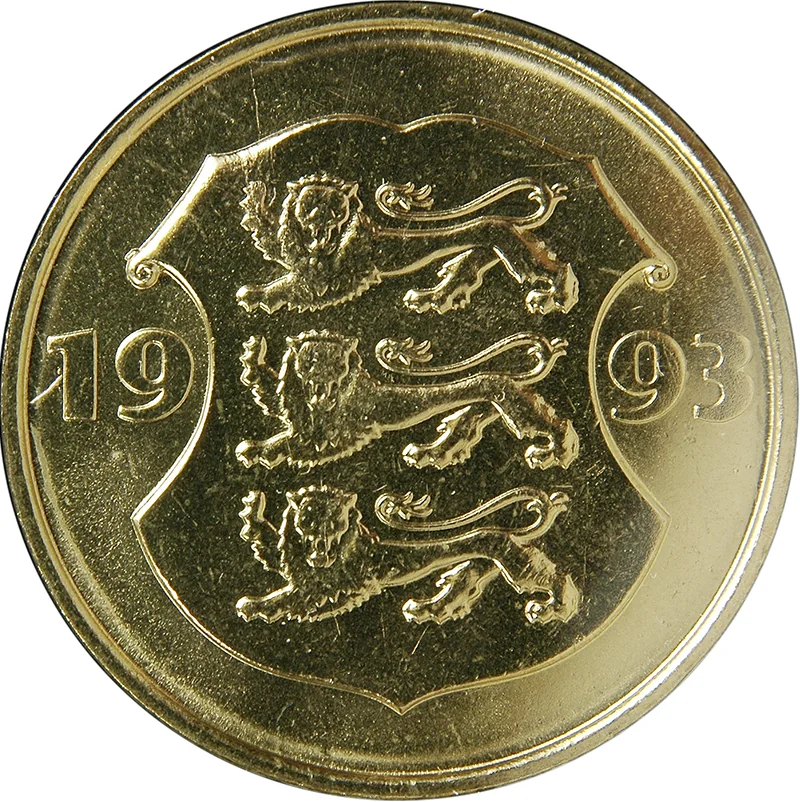
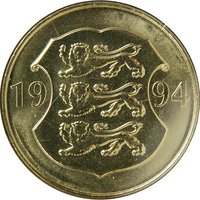
Obverse
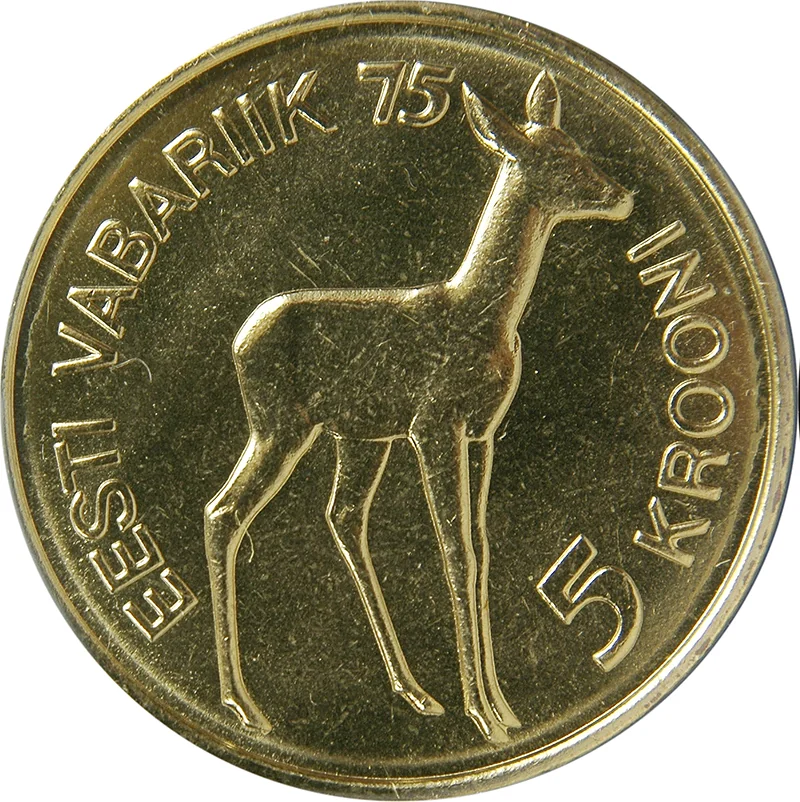
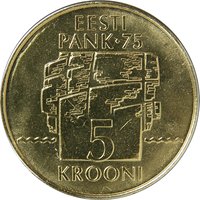
Reverse
Edge
Plain
Mints
| Name | Mark |
|---|---|
| RE Juveel / OÜ Juveliir / Riigiettevõte Juveel | M |
Mintings
| Year | Mint Mark | Mintage | Quality | Collection |
|---|---|---|---|---|
| 1993 | — | 1,510,000 | ||
| 1993 | M | — |
Historical background
In 1993, Estonia was navigating the turbulent aftermath of the Soviet collapse, having restored its independence in 1991. The country was plagued by a severe currency crisis, operating with two parallel currencies: the old Soviet ruble, which was experiencing hyperinflation and becoming worthless, and a transitional national currency, the Estonian kroon, which had been introduced in 1992. This dual system created economic chaos, with prices unstable and public trust in the monetary system eroding rapidly. The situation demanded a radical and credible solution to stabilize the economy and pave the way for growth.
The definitive answer came on June 20, 1993, when Estonia made a bold and unprecedented move by introducing a currency board system. This framework legally fixed the new Estonian kroon (EEK) to the Deutsche Mark at a rate of 8:1 (and later to the euro). The currency board's strict rule mandated that every kroon in circulation be fully backed by gold and foreign reserves, eliminating the possibility of discretionary monetary policy or printing money to finance deficits. This move was orchestrated by then-President of the Bank of Estonia, Siim Kallas, and was based on a blueprint prepared during the final years of Soviet rule.
The immediate effects were transformative. Hyperinflation was halted virtually overnight, as the fixed exchange rate provided an anchor for prices and restored public confidence. The strict fiscal discipline enforced by the currency board forced structural reforms and attracted foreign investment, setting Estonia on a path toward becoming one of the most successful transition economies. The 1993 currency reform is widely regarded as the foundational cornerstone of Estonia's subsequent economic stability and its integration into Western European structures, ultimately leading to its adoption of the euro in 2011.
The definitive answer came on June 20, 1993, when Estonia made a bold and unprecedented move by introducing a currency board system. This framework legally fixed the new Estonian kroon (EEK) to the Deutsche Mark at a rate of 8:1 (and later to the euro). The currency board's strict rule mandated that every kroon in circulation be fully backed by gold and foreign reserves, eliminating the possibility of discretionary monetary policy or printing money to finance deficits. This move was orchestrated by then-President of the Bank of Estonia, Siim Kallas, and was based on a blueprint prepared during the final years of Soviet rule.
The immediate effects were transformative. Hyperinflation was halted virtually overnight, as the fixed exchange rate provided an anchor for prices and restored public confidence. The strict fiscal discipline enforced by the currency board forced structural reforms and attracted foreign investment, setting Estonia on a path toward becoming one of the most successful transition economies. The 1993 currency reform is widely regarded as the foundational cornerstone of Estonia's subsequent economic stability and its integration into Western European structures, ultimately leading to its adoption of the euro in 2011.
🌱 Common