

1 kroon – Estonia
Add to wishlist
Circulating commemorative coins
Commemoration: 10th National Song Festival
Estonia
Obverse
Description:
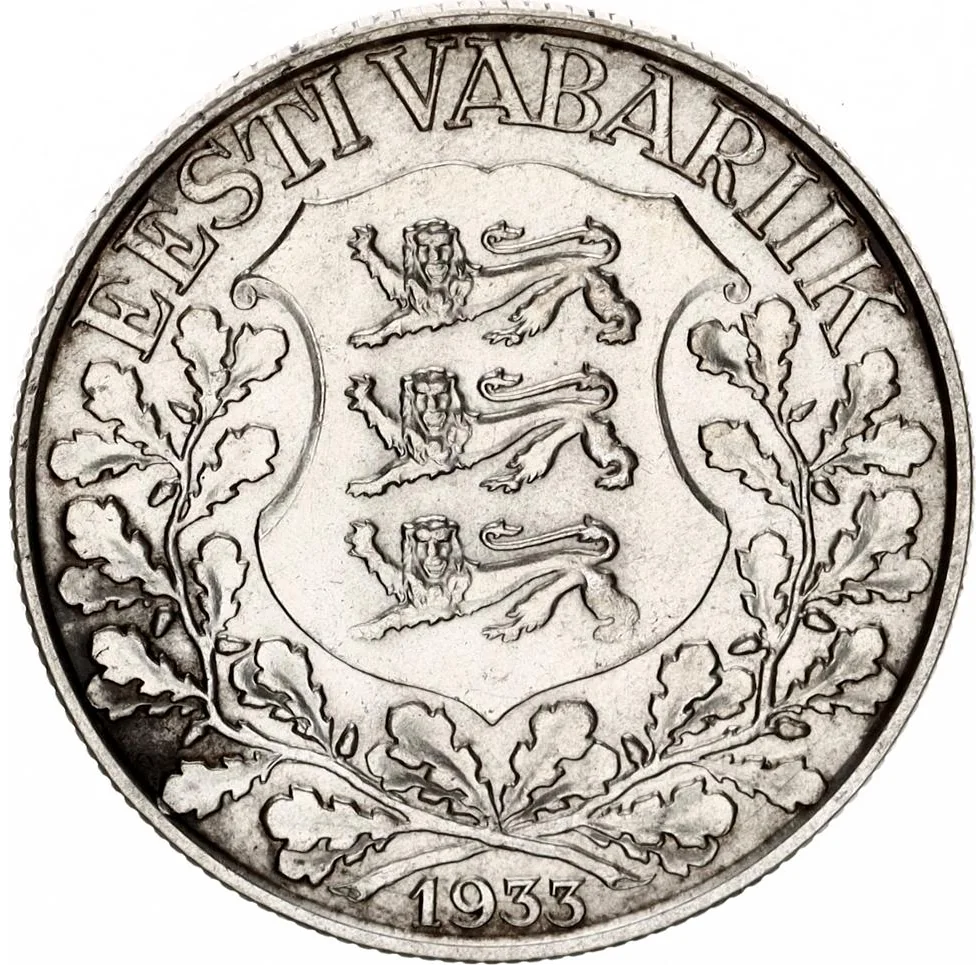
Shield with three lions, encircled by wreath, date beneath.
Inscription:
EESTI VABARIIK
1933
1933
Translation:
REPUBLIC OF ESTONIA
1933
1933
Script: Latin
Language: Estonian
Engraver: Günther Reindorff
Reverse
Description:
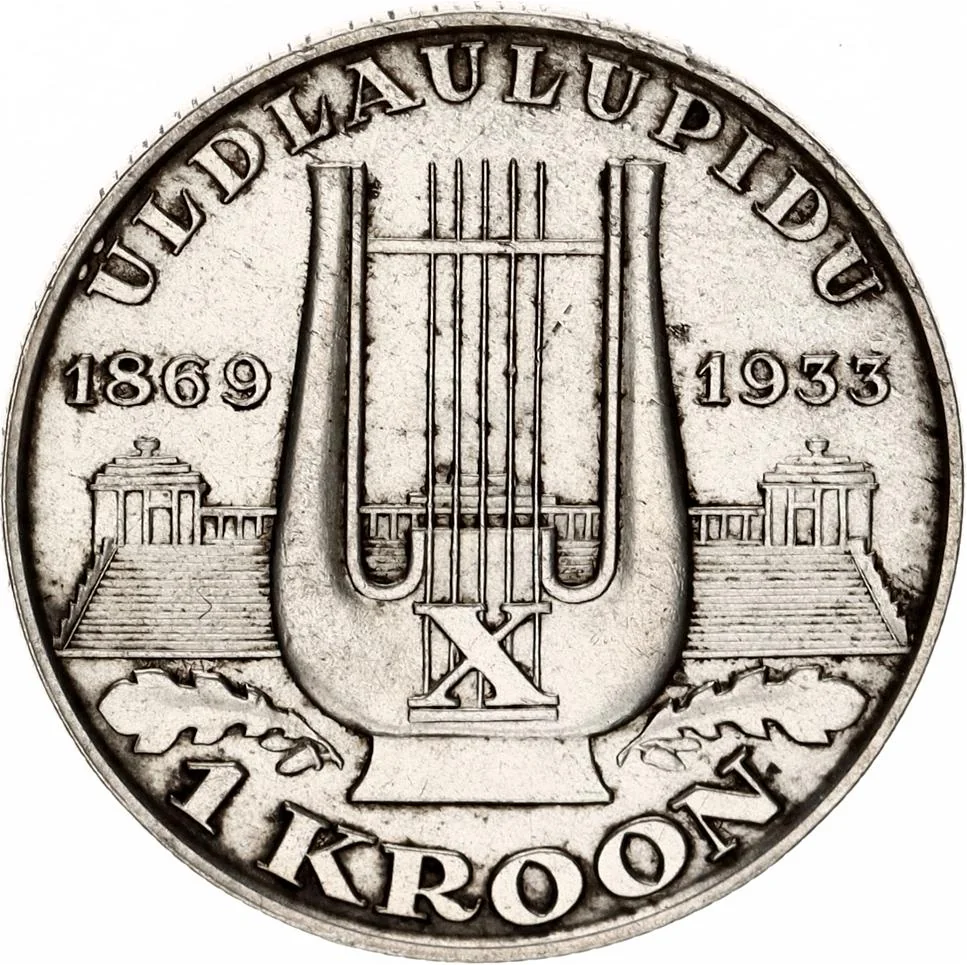
Harp categorizes dates by denomination.
Inscription:
ÜLDLAULUPIDU
1869 1933
X
1 KROON
1869 1933
X
1 KROON
Translation:
SONGFESTIVAL
1869 1933
X
1 KROON
1869 1933
X
1 KROON
Script: Latin
Language: Estonian
Engraver: Günther Reindorff
Edge
Reeded (140 grooves).
Mintings
| Year | Mint Mark | Mintage | Quality | Collection |
|---|---|---|---|---|
| 1933 | — | 350,000 |
Historical background
In 1933, Estonia's currency situation was defined by the stability of the kroon, which had been introduced in 1928 to replace the heavily inflated mark. This reform, overseen by the Bank of Estonia and backed by a currency board-like system with substantial gold and foreign exchange reserves, was largely successful. The kroon was pegged to the Swedish krona and, indirectly, to the gold standard, providing a period of monetary stability and credibility that contrasted sharply with the hyperinflation experienced earlier in the decade.
However, this stability existed within a context of severe economic pressure. The Great Depression had struck Estonia hard, causing a dramatic fall in agricultural and industrial exports, rising unemployment, and widespread debt deflation. While the currency peg prevented a monetary crisis, it also limited the government's ability to use devaluation as a tool to stimulate the economy, forcing internal adjustments through austerity and wage cuts. Consequently, the solid kroon became a symbol of both national prudence and economic hardship for many citizens.
Politically, the year 1933 was pivotal, as economic distress fueled social unrest and the rise of authoritarian movements. In a referendum that October, voters approved a constitution granting sweeping powers to a strong executive, leading to Konstantin Päts's "era of silence." While the currency itself remained technically stable, the deteriorating economic conditions directly undermined the democratic republic that had established it, setting the stage for the authoritarian regime that would govern Estonia for the rest of the decade.
However, this stability existed within a context of severe economic pressure. The Great Depression had struck Estonia hard, causing a dramatic fall in agricultural and industrial exports, rising unemployment, and widespread debt deflation. While the currency peg prevented a monetary crisis, it also limited the government's ability to use devaluation as a tool to stimulate the economy, forcing internal adjustments through austerity and wage cuts. Consequently, the solid kroon became a symbol of both national prudence and economic hardship for many citizens.
Politically, the year 1933 was pivotal, as economic distress fueled social unrest and the rise of authoritarian movements. In a referendum that October, voters approved a constitution granting sweeping powers to a strong executive, leading to Konstantin Päts's "era of silence." While the currency itself remained technically stable, the deteriorating economic conditions directly undermined the democratic republic that had established it, setting the stage for the authoritarian regime that would govern Estonia for the rest of the decade.
🌟 Uncommon