

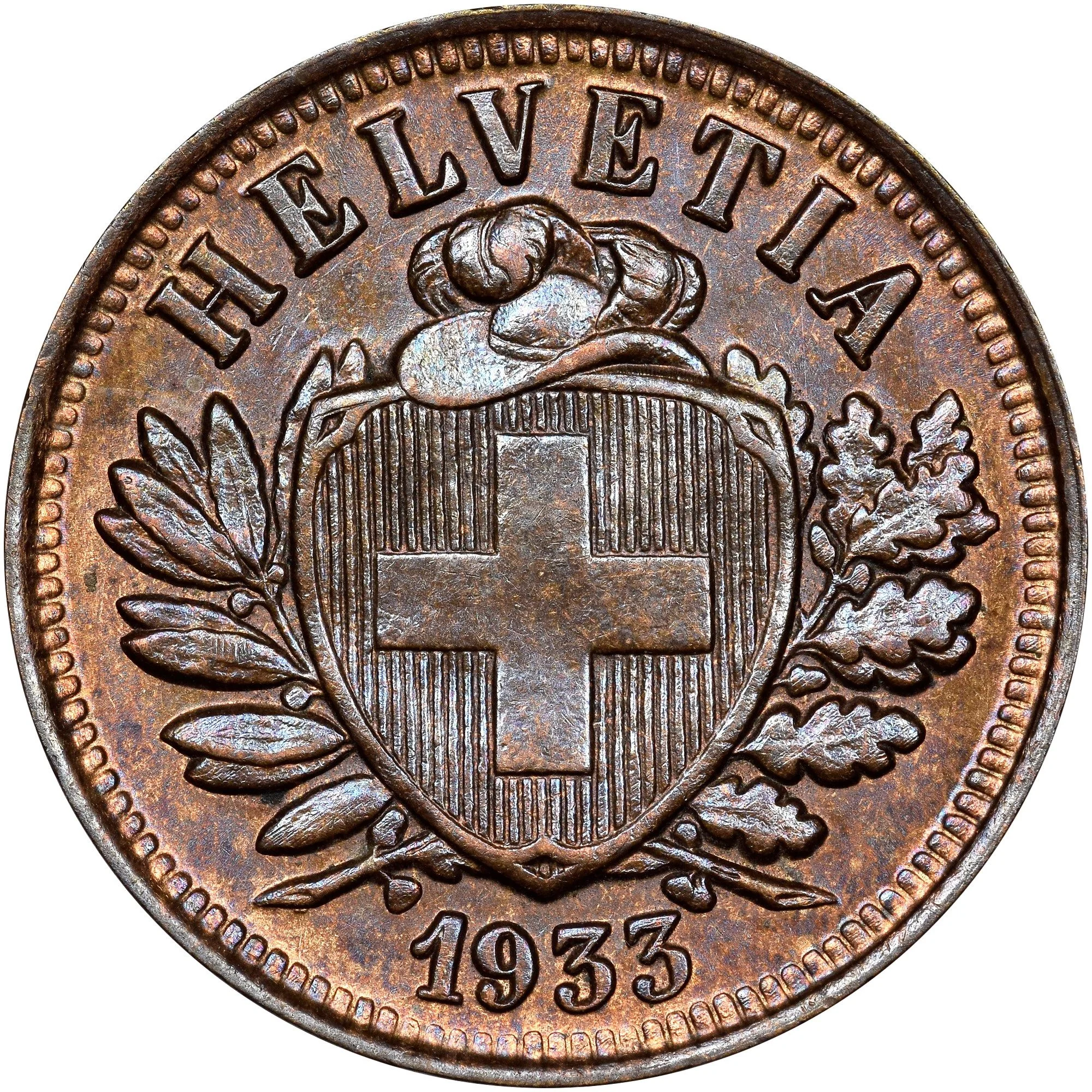

2 rappen – Switzerland
Add to wishlist
Switzerland
Context
Years: 1932–1941
Issuer: Switzerland
Period:
(since 1848)
Currency:
(since 1850)
Demonetization: 1 February 1952
Total mintage: 9,517,000
Material

References
KM: #
Numista: #277863
Value
Exchange value: 0.02 CHF
Obverse
Description:
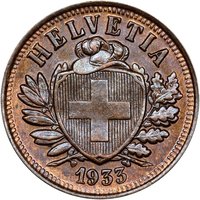
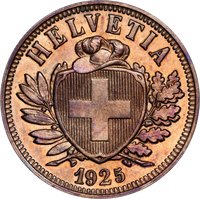
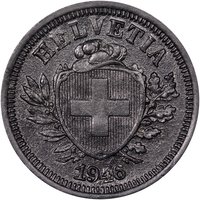
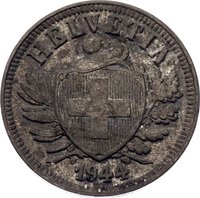
Swiss coat of arms on a decorative shield, flanked by oak and laurel branches, topped by a plumed hat.
Inscription:
HELVETIA
1934
1934
Translation:
Helvetia
1934
1934
Script: Latin
Language: Latin
Designer: Alexander Hutter
Reverse
Description:
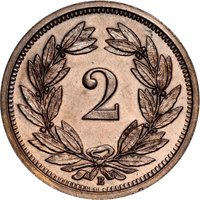
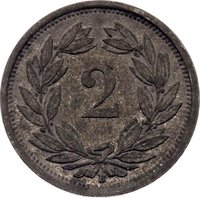
Laurel wreath tied with a ribbon below.
Inscription:
2
B
B
Script: Latin
Designer: Alexander Hutter
Edge
Plain.
Categories
| Symbols> Coat of Arms |
| Symbol> Wreath |
Mints
| Name | Mark |
|---|---|
| Bern | B |
Mintings
Historical background
In 1932, Switzerland’s currency situation was defined by its staunch defense of the gold standard amidst global monetary turmoil. While countries like Britain had abandoned gold in 1931 and the world was sinking into the Great Depression, the Swiss franc remained a coveted "safe-haven" asset. This strength was rooted in Switzerland's political neutrality, a robust banking sector, and substantial gold reserves, which instilled international confidence. However, this perceived strength created significant economic tension, as the franc's high value made Swiss exports increasingly expensive and less competitive abroad, threatening key industries like watchmaking, machinery, and tourism.
Domestically, the strong franc exacerbated deflationary pressures, causing falling prices and increasing real debt burdens for businesses and farmers. The Swiss National Bank (SNB) faced a difficult trilemma: maintain the gold peg, preserve the franc's stability, and try to combat domestic economic contraction. Its primary tools were limited to interest rate adjustments and foreign exchange interventions, but lowering rates to stimulate the economy risked triggering capital outflows and undermining the gold peg. Consequently, monetary policy remained relatively restrictive, prioritizing currency stability over economic stimulus.
The situation culminated in a major political crisis in 1932 with the "Affaire des fiches" scandal, where it was revealed the SNB had secretly shared confidential client data with a federal commission investigating capital flight. This severely damaged trust in Swiss banking secrecy and highlighted the intense pressure on authorities to control financial flows and protect the franc. Ultimately, Switzerland would hold to the gold standard longer than almost any other nation, only devaluing the franc in 1936 after France's devaluation finally made its defense economically unsustainable. The period thus encapsulates the conflict between the discipline of the gold standard and the dire need for national economic relief during the Depression.
Domestically, the strong franc exacerbated deflationary pressures, causing falling prices and increasing real debt burdens for businesses and farmers. The Swiss National Bank (SNB) faced a difficult trilemma: maintain the gold peg, preserve the franc's stability, and try to combat domestic economic contraction. Its primary tools were limited to interest rate adjustments and foreign exchange interventions, but lowering rates to stimulate the economy risked triggering capital outflows and undermining the gold peg. Consequently, monetary policy remained relatively restrictive, prioritizing currency stability over economic stimulus.
The situation culminated in a major political crisis in 1932 with the "Affaire des fiches" scandal, where it was revealed the SNB had secretly shared confidential client data with a federal commission investigating capital flight. This severely damaged trust in Swiss banking secrecy and highlighted the intense pressure on authorities to control financial flows and protect the franc. Ultimately, Switzerland would hold to the gold standard longer than almost any other nation, only devaluing the franc in 1936 after France's devaluation finally made its defense economically unsustainable. The period thus encapsulates the conflict between the discipline of the gold standard and the dire need for national economic relief during the Depression.
Series: Coat of arms series






🌱 Common