

1 rappen – Switzerland
Add to wishlist
Switzerland
Context
Years: 1942–1946
Issuer: Switzerland
Period:
(since 1848)
Currency:
(since 1850)
Demonetization: 1 February 1952
Total mintage: 53,304,000
Material
References
KM: #
Numista: #162
Value
Exchange value: 0.01 CHF
Obverse
Description:
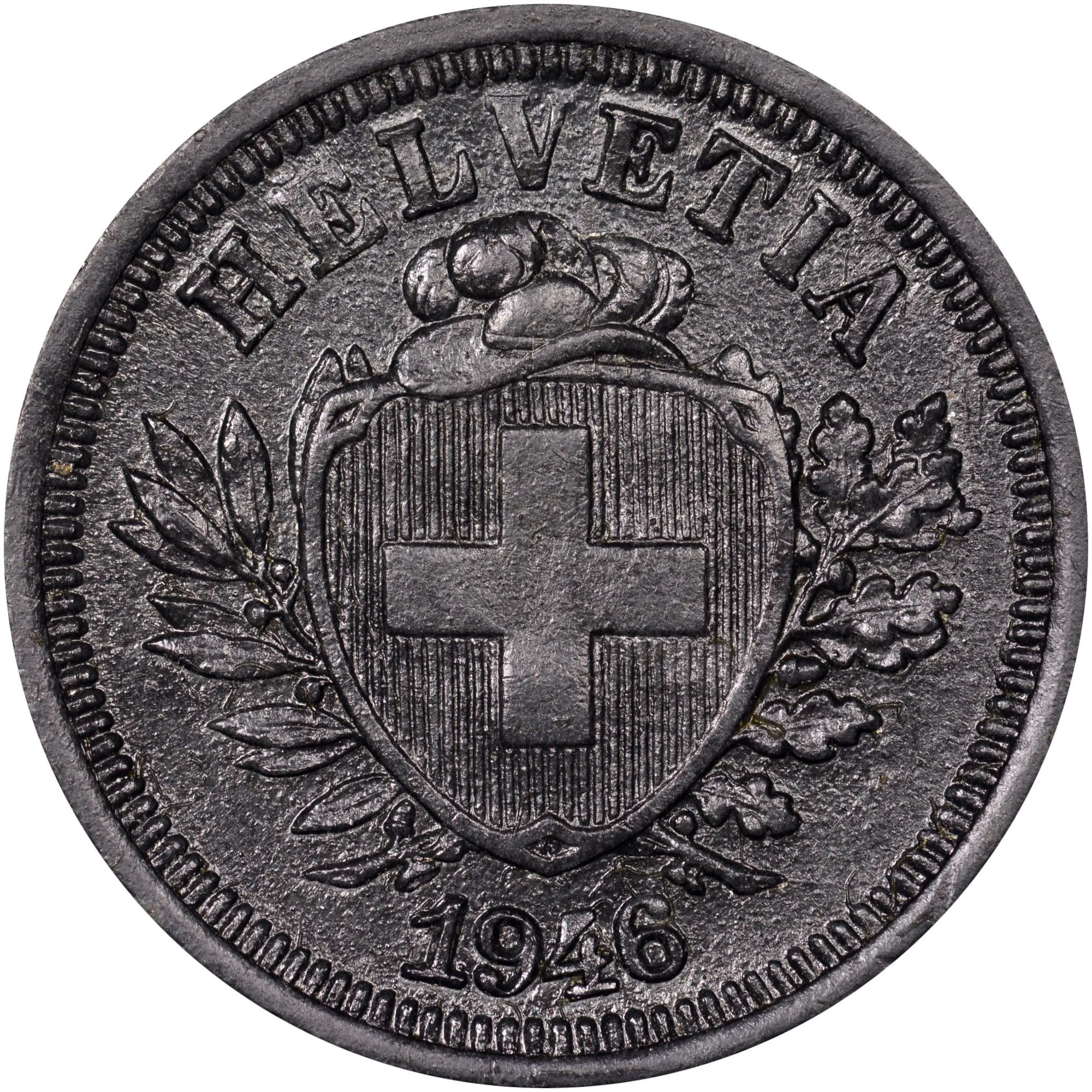
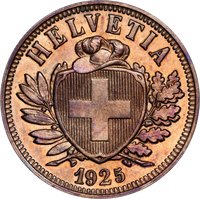
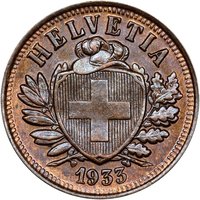
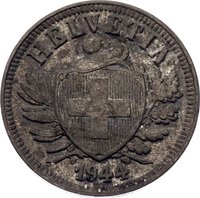
Swiss coat of arms on a decorative shield, flanked by oak and laurel branches, topped by a plumed hat.
Inscription:
HELVETIA
1946
1946
Translation:
Helvetia
1946
1946
Script: Latin
Language: Latin
Engraver: Jacques-Jean Barre
Designer: Alexander Hutter
Reverse
Description:
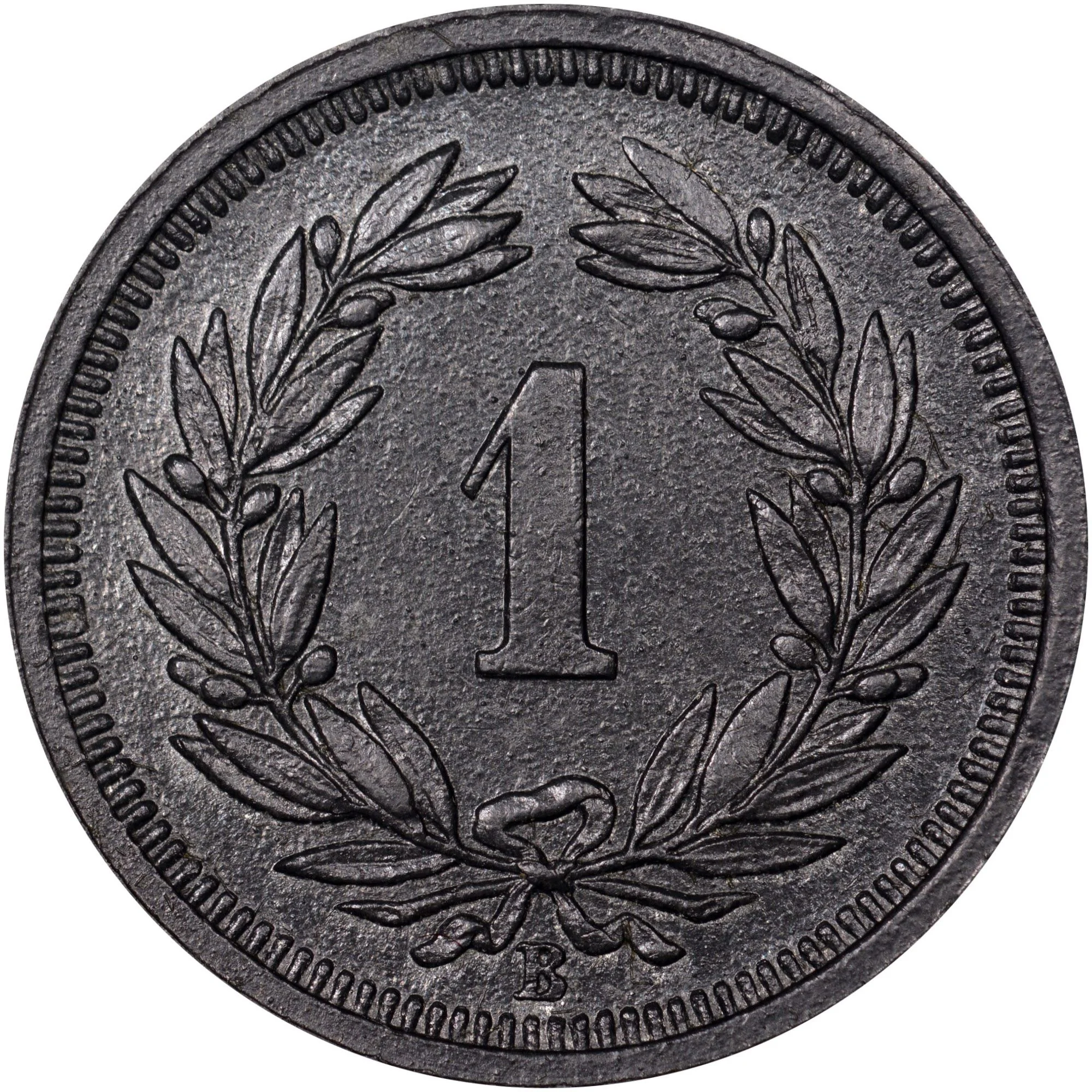
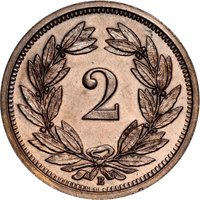
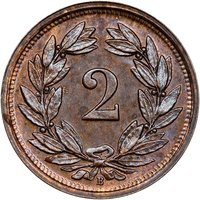
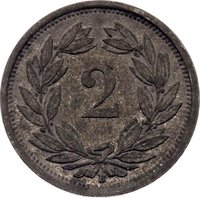
Laurel wreath tied with a ribbon below.
Inscription:
1
B
B
Script: Latin
Engraver: Jacques-Jean Barre
Designer: Alexander Hutter
Edge
Plain.
Categories
| Symbols> Coat of Arms |
| Symbol> Wreath |
Mints
| Name | Mark |
|---|---|
| Bern | B |
Mintings
Historical background
In 1942, Switzerland's currency situation was defined by its precarious position as a neutral island encircled by the Axis powers and their occupied territories. The Swiss franc (CHF) was under immense pressure, not from hyperinflation, but from the strategic manipulations of wartime finance. The Swiss National Bank (SNB) had pegged the franc to the US dollar at 4.32 CHF since 1936, a peg it maintained throughout the war. This stability was critically important, as Switzerland served as a financial hub and a vital conduit for international trade and intelligence for both sides, requiring a trustworthy and convertible currency.
The primary challenge was the massive influx of capital, particularly gold, from Nazi Germany. Germany purchased essential raw materials and goods from Switzerland using Swiss francs, which it acquired largely by selling looted gold to the SNB. This policy, while economically rational for securing Swiss imports, flooded the central bank with contested assets and created a dangerous financial dependency on the Axis. Domestically, the government implemented strict capital controls, price and wage freezes, and rationing to prevent inflation and hoarding, ensuring that the internal economy remained stable despite external chaos.
Consequently, the Swiss franc existed in a dual state: internally stable and controlled, but externally a key instrument in high-stakes, morally ambiguous financial warfare. Its value was artificially maintained, underpinned by controversial gold transactions that would later draw severe post-war criticism. The currency's strength was less a reflection of pure economic fundamentals and more a testament to Switzerland's managed neutrality, where financial policy was a core instrument of national survival in a continent at war.
The primary challenge was the massive influx of capital, particularly gold, from Nazi Germany. Germany purchased essential raw materials and goods from Switzerland using Swiss francs, which it acquired largely by selling looted gold to the SNB. This policy, while economically rational for securing Swiss imports, flooded the central bank with contested assets and created a dangerous financial dependency on the Axis. Domestically, the government implemented strict capital controls, price and wage freezes, and rationing to prevent inflation and hoarding, ensuring that the internal economy remained stable despite external chaos.
Consequently, the Swiss franc existed in a dual state: internally stable and controlled, but externally a key instrument in high-stakes, morally ambiguous financial warfare. Its value was artificially maintained, underpinned by controversial gold transactions that would later draw severe post-war criticism. The currency's strength was less a reflection of pure economic fundamentals and more a testament to Switzerland's managed neutrality, where financial policy was a core instrument of national survival in a continent at war.
Series: Coat of arms series
🌱 Very Common