

1 Yuan – Hupeh Province
China
Context
Year: 1894
Country: China 
Issuer: Hupeh Province
Ruler: Guangxu
Currency:
(1895—1949)
Demonetized: Yes
Material
References
Y: #Click to copy to clipboard127
Numista: #274608
Value
Bullion value: $68.55
Obverse
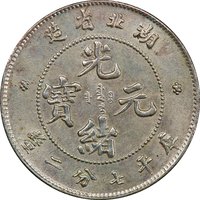
Description:
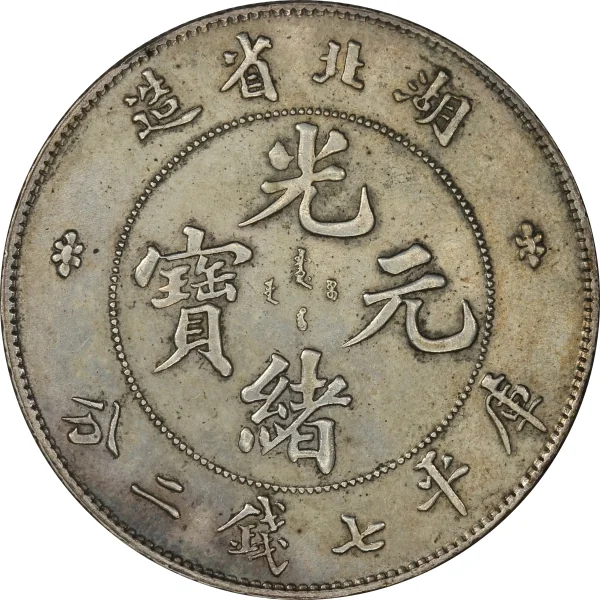
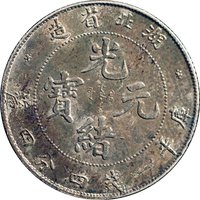
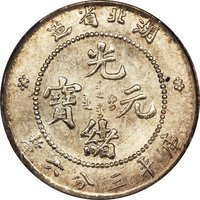
Chinese ideograms top to bottom, right to left, with central Manchu text, all encircled by more Chinese characters.
Inscription:
造省北湖
光
ᠪᠠᡩᠠᡵᠠᠩᡤᠠ
寶 ᠶᡠᠸᠠᠨ ᠪᠣᠣ 元
ᡩᠣᡵᠣ
緒
分二錢七平庫
光
ᠪᠠᡩᠠᡵᠠᠩᡤᠠ
寶 ᠶᡠᠸᠠᠨ ᠪᠣᠣ 元
ᡩᠣᡵᠣ
緒
分二錢七平庫
Translation:
Made at the North Lake Bureau of the Ministry of Public Works.
Guangxu
Badarangga
Doro
Yuan Bao (Coin)
7 Fen 2 Candareens, Treasury Standard
Guangxu
Badarangga
Doro
Yuan Bao (Coin)
7 Fen 2 Candareens, Treasury Standard
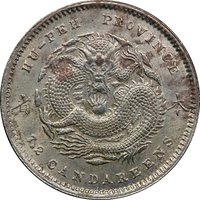
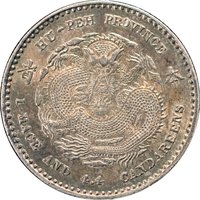
Reverse
Edge
Reeded.
Categories
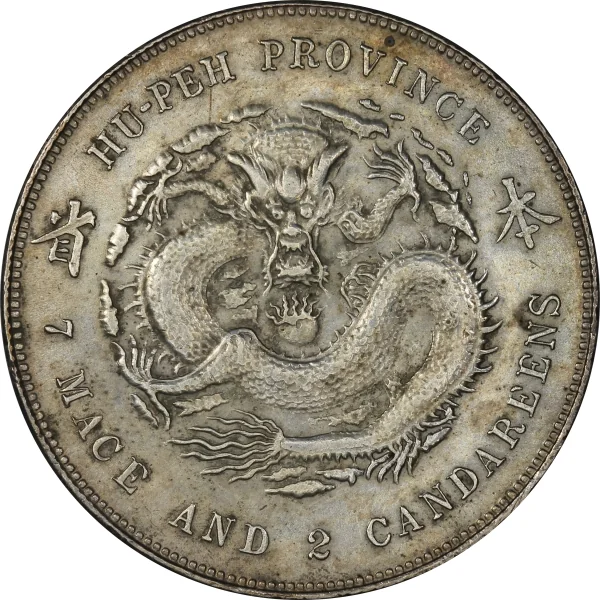
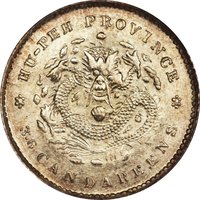
| Mythology> Fantastic animal |
Mintings
| Year | Mint Mark | Mintage | Quality | Collection |
|---|---|---|---|---|
| 1894 | — | — |
Historical background
In 1894, the currency situation in Hubei (Hupeh) Province was complex and fragmented, reflecting the broader monetary disarray of the late Qing Dynasty. The province operated with a multi-layered system: high-value transactions and government accounts used silver, primarily in the form of sycee ingots (measured in taels), while everyday commerce relied on a flood of copper cash coins (tongbao). However, the critical issue was the severe shortage and debasement of this copper currency. Worn-out, privately minted, and counterfeit cash coins circulated widely, causing their value relative to silver to fluctuate erratically and creating significant hardship for peasants and laborers who were paid in copper but often taxed in silver.
This chaotic environment was beginning to be influenced by two major developments centered in the provincial capital, Wuchang. First, the modern Hubei Copper Coin Mint, established by the progressive Viceroy Zhang Zhidong in 1893, had just begun production. It aimed to replace old-style cash with new, standardized machine-struck copper coins (ten-cash and twenty-cash pieces), which were initially well-received. Second, Zhang Zhidong had also opened the Hubei Silver Coin Mint in 1889, producing silver dollars (yuan) in an attempt to standardize the silver currency. These modern minting efforts represented a direct imperial attempt to impose monetary order, control seigniorage revenue, and simplify tax collection.
Despite these modernizing steps, the overall currency picture in 1894 remained one of transition and confusion. The new machine-struck coins had to compete with the old mixed-quality coinage, and silver sycee still circulated alongside the new silver dollars, with complex exchange rates between them. Furthermore, foreign silver dollars (especially Mexican pesos) and banknotes from foreign and nascent Chinese banks added to the circulatory medley. Thus, Hubei stood at a crossroads, with its traditional monetary system crumbling under weight of inefficiency and fraud, while nascent, state-driven reforms struggled to gain full traction in a province increasingly integrated into national and international trade networks.
This chaotic environment was beginning to be influenced by two major developments centered in the provincial capital, Wuchang. First, the modern Hubei Copper Coin Mint, established by the progressive Viceroy Zhang Zhidong in 1893, had just begun production. It aimed to replace old-style cash with new, standardized machine-struck copper coins (ten-cash and twenty-cash pieces), which were initially well-received. Second, Zhang Zhidong had also opened the Hubei Silver Coin Mint in 1889, producing silver dollars (yuan) in an attempt to standardize the silver currency. These modern minting efforts represented a direct imperial attempt to impose monetary order, control seigniorage revenue, and simplify tax collection.
Despite these modernizing steps, the overall currency picture in 1894 remained one of transition and confusion. The new machine-struck coins had to compete with the old mixed-quality coinage, and silver sycee still circulated alongside the new silver dollars, with complex exchange rates between them. Furthermore, foreign silver dollars (especially Mexican pesos) and banknotes from foreign and nascent Chinese banks added to the circulatory medley. Thus, Hubei stood at a crossroads, with its traditional monetary system crumbling under weight of inefficiency and fraud, while nascent, state-driven reforms struggled to gain full traction in a province increasingly integrated into national and international trade networks.
💎 Very Rare