

5 Fen – Hupeh Province
China
Context
Years: 1895–1905
Country: China 
Issuer: Hupeh Province
Ruler: Guangxu
Currency:
(1895—1949)
Demonetized: Yes
Total mintage: 4,278,000
Material
References
Y: #Click to copy to clipboard123
Numista: #15961
Value
Bullion value: $3.03
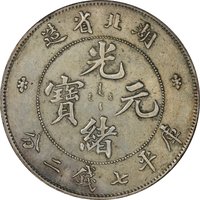
Obverse
Description:
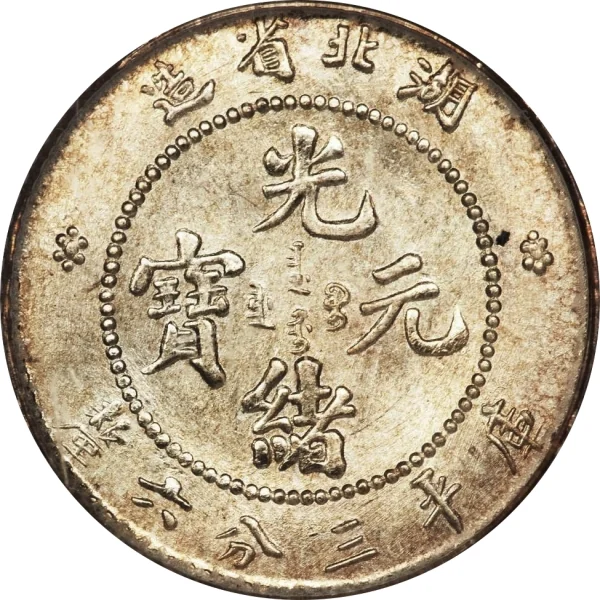
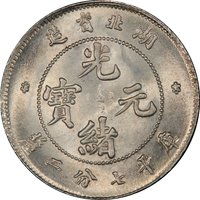
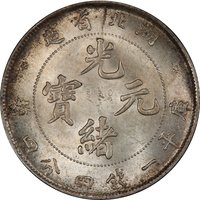
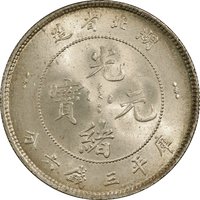
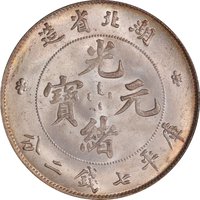
Chinese ideograms top to bottom, right to left, with central Manchu text, all encircled by more Chinese characters.
Inscription:
造省北湖
光
ᠪᠠᡩᠠᡵᠠᠩᡤᠠ
寶 ᠶᡠᠸᠠᠨ ᠪᠣᠣ 元
ᡩᠣᡵᠣ
緒
釐六錢三平庫
光
ᠪᠠᡩᠠᡵᠠᠩᡤᠠ
寶 ᠶᡠᠸᠠᠨ ᠪᠣᠣ 元
ᡩᠣᡵᠣ
緒
釐六錢三平庫
Translation:
Made at the North Lake Bureau of the Ministry of Works.
Guangxu [Reign]
Badarangga Doro
Yuan Bao (Standard Coin)
Three Mace and Six Candareens, Treasury Standard Weight.
Guangxu [Reign]
Badarangga Doro
Yuan Bao (Standard Coin)
Three Mace and Six Candareens, Treasury Standard Weight.
Scripts: Chinese, Mongolian / Manchu
Languages: Manchu, Classical Chinese
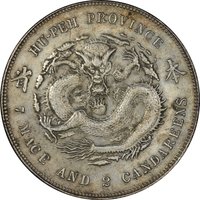
Reverse
Description:
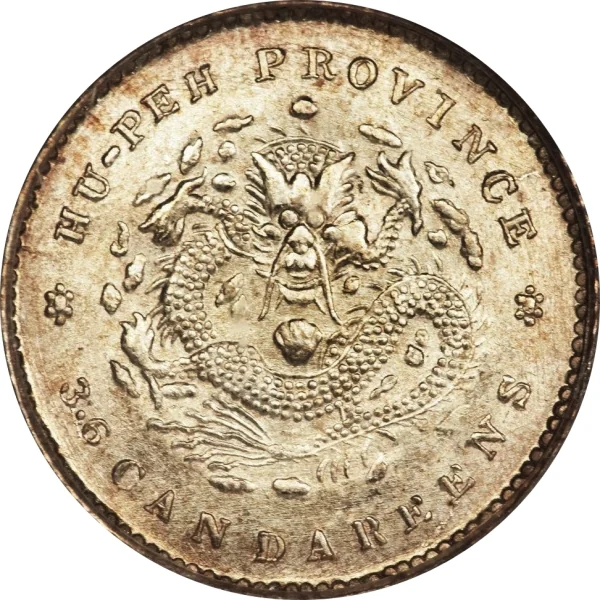
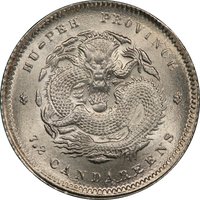
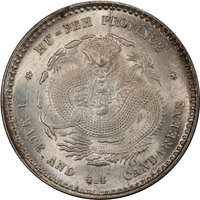
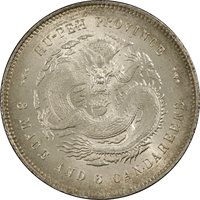
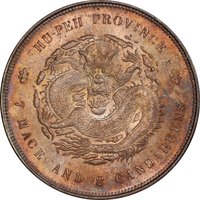
Dragon encircling a pearl, surrounded by English text.
Inscription:
HU-PEH PROVINCE
3.6 CANDAREENS
3.6 CANDAREENS
Script: Latin
Edge
Reeded.
Categories
| Mythology> Fantastic animal |
Mintings
| Year | Mint Mark | Mintage | Quality | Collection |
|---|---|---|---|---|
| — | — | 4,278,000 |
Historical background
In 1895, the currency situation in Hubei (Hupeh) Province was a complex and turbulent reflection of China's late Qing dynasty monetary crisis. The province, a major commercial hub centered on Wuhan, operated with a chaotic multi-currency system. The primary mediums of exchange included silver sycee (measured in taels), copper cash coins (wen), and a growing volume of foreign silver dollars, particularly Mexican "Eagle" dollars. The lack of standardized exchange between these forms created constant friction in trade, as the value of sycee varied by purity and the exchange rate between silver and copper was highly volatile, often to the detriment of peasants and small merchants.
This instability was acutely exacerbated by the First Sino-Japanese War (1894–1895). The massive indemnity of 230 million taels imposed by the Treaty of Shimonoseki, signed in April 1895, drained silver reserves from the entire empire, including Hubei. Provincial authorities faced severe fiscal strain, leading to increased minting of debased copper cash and the issuance of unofficial paper notes to meet obligations. This further devalued local currency and spurred inflation, placing immense hardship on the population and disrupting the commercial life of the Yangtze River basin.
In response to this crisis, and as part of broader, self-strengthening reforms, Hubei's progressive governor-general, Zhang Zhidong, took decisive action in 1895. He expanded the output of the Hubei Provincial Mint, one of China's most modern, to produce more standardized copper coinage. More significantly, he aggressively petitioned the throne to pioneer a provincial silver coinage. His efforts culminated in 1896 with the successful minting of Hubei's first provincial silver dollars, a crucial step toward monetary standardization that aimed to stabilize the local economy, assert provincial authority, and reduce reliance on chaotic sycee and foreign coinage.
This instability was acutely exacerbated by the First Sino-Japanese War (1894–1895). The massive indemnity of 230 million taels imposed by the Treaty of Shimonoseki, signed in April 1895, drained silver reserves from the entire empire, including Hubei. Provincial authorities faced severe fiscal strain, leading to increased minting of debased copper cash and the issuance of unofficial paper notes to meet obligations. This further devalued local currency and spurred inflation, placing immense hardship on the population and disrupting the commercial life of the Yangtze River basin.
In response to this crisis, and as part of broader, self-strengthening reforms, Hubei's progressive governor-general, Zhang Zhidong, took decisive action in 1895. He expanded the output of the Hubei Provincial Mint, one of China's most modern, to produce more standardized copper coinage. More significantly, he aggressively petitioned the throne to pioneer a provincial silver coinage. His efforts culminated in 1896 with the successful minting of Hubei's first provincial silver dollars, a crucial step toward monetary standardization that aimed to stabilize the local economy, assert provincial authority, and reduce reliance on chaotic sycee and foreign coinage.
💎 Extremely Rare