

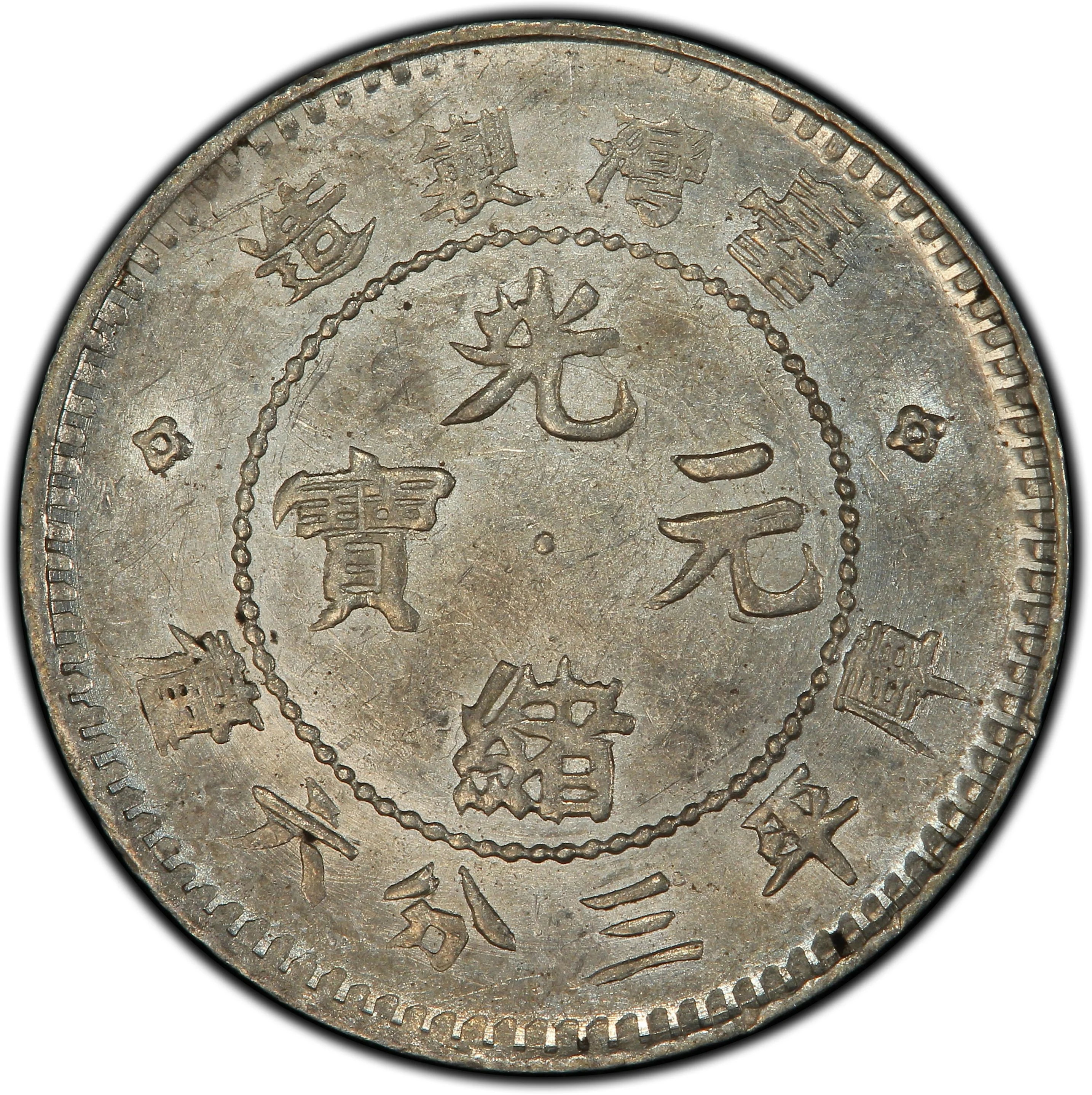
5 Fen – Taiwan Province
China
Context
Years: 1893–1894
Country: China 
Issuer: Taiwan Province
Ruler: Guangxu
Currency:
(1893—1895)
Demonetized: Yes
Material
References
Y: #Click to copy to clipboard246
Numista: #274208
Value
Bullion value: $3.02
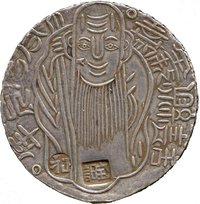
Obverse
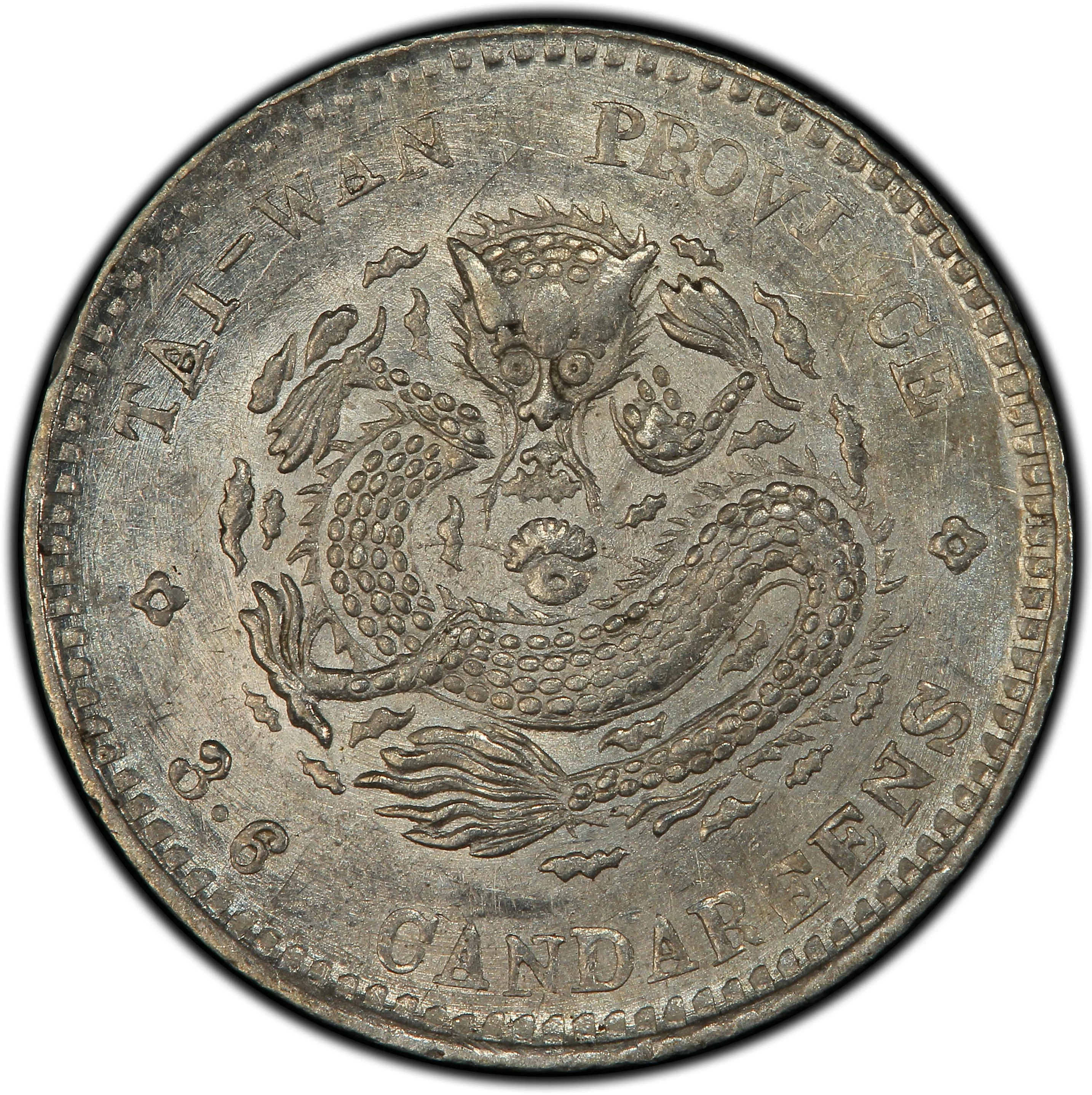
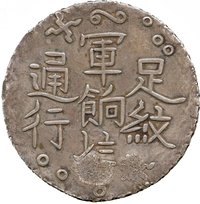
Reverse
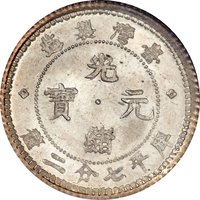
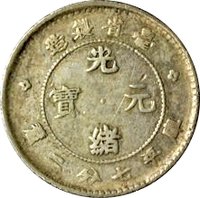
Description:
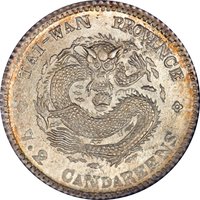
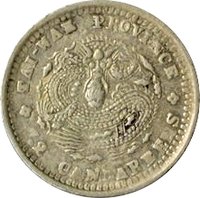
Dragon encircling a pearl, surrounded by English text.
Inscription:
TAI-WAN PROVINCE
3.6 CANDAREENS
3.6 CANDAREENS
Script: Latin
Edge
Reeded.
Categories
| Mythology> Fantastic animal |
Mintings
| Year | Mint Mark | Mintage | Quality | Collection |
|---|---|---|---|---|
| — | — | — |
Historical background
In 1893, Taiwan Province was under the administration of the Qing Dynasty, and its currency situation was complex and fragmented, reflecting the island's transitional economy. The official currency was the silver tael and its subsidiary copper cash coins, which were minted in provincial facilities like the Taipei Mint. However, the circulation was dominated by a mixture of foreign silver dollars—particularly the Mexican "Eagle" dollar, the Japanese yen, and the Spanish Carolus dollar—which were preferred for larger transactions due to their standardized silver content. This created a multi-currency environment where exchange rates fluctuated based on the weight and purity of the silver.
The monetary system faced significant challenges, including counterfeiting of copper cash, which led to local distrust, and a general shortage of standardized coinage that hampered commerce. Furthermore, the Qing's broader financial weakness meant imperial control over the currency in its frontier province was often ineffective. Local transactions frequently relied on privately minted sycee (silver ingots) and promissory notes from merchant houses, leading to a lack of uniformity. This monetary disorder mirrored the administrative and economic pressures on the Qing state just before the First Sino-Japanese War (1894-1895).
This unstable and heterogeneous currency background was abruptly resolved by geopolitical change. Following the Qing's defeat in the war, Taiwan was ceded to Japan in 1895 under the Treaty of Shimonoseki. The new colonial government moved swiftly to impose financial order, gradually replacing the old Qing and foreign currencies with a unified Japanese yen system, thereby ending the distinctive monetary landscape of the Qing-era province.
The monetary system faced significant challenges, including counterfeiting of copper cash, which led to local distrust, and a general shortage of standardized coinage that hampered commerce. Furthermore, the Qing's broader financial weakness meant imperial control over the currency in its frontier province was often ineffective. Local transactions frequently relied on privately minted sycee (silver ingots) and promissory notes from merchant houses, leading to a lack of uniformity. This monetary disorder mirrored the administrative and economic pressures on the Qing state just before the First Sino-Japanese War (1894-1895).
This unstable and heterogeneous currency background was abruptly resolved by geopolitical change. Following the Qing's defeat in the war, Taiwan was ceded to Japan in 1895 under the Treaty of Shimonoseki. The new colonial government moved swiftly to impose financial order, gradually replacing the old Qing and foreign currencies with a unified Japanese yen system, thereby ending the distinctive monetary landscape of the Qing-era province.
✨ Legendary