

1 Yuan – Taiwan Province
China

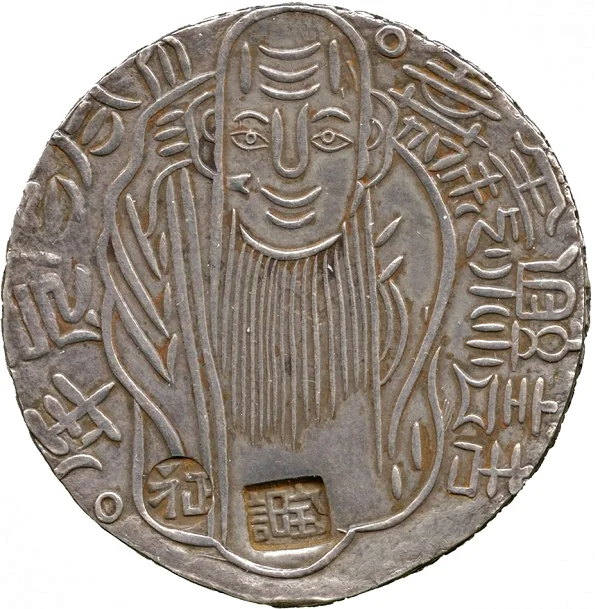
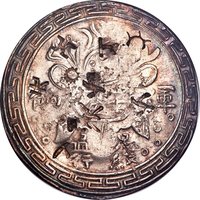
Obverse
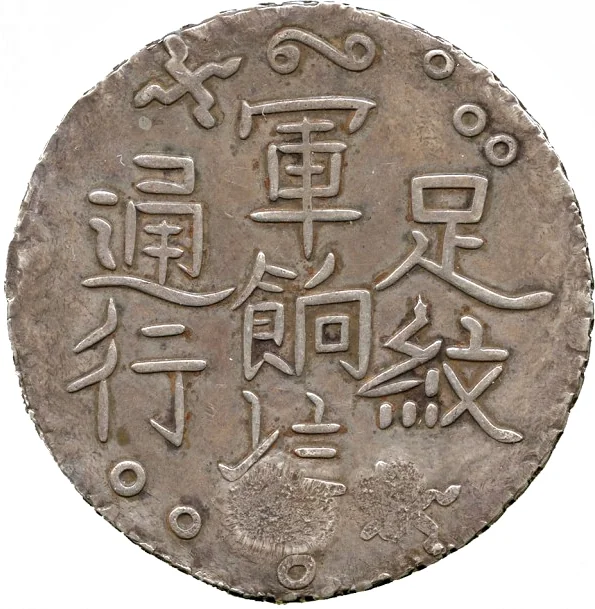
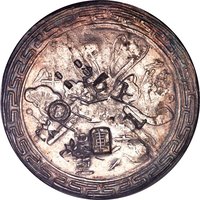
Reverse
Inscription:
通軍足
行餉紋
行餉紋
Translation:
Sufficient for the Army's Use,
Currency for Military Pay.
Currency for Military Pay.
Language: Chinese
Edge
Mintings
| Year | Mint Mark | Mintage | Quality | Collection |
|---|---|---|---|---|
| 1862 | — | — |
Historical background
In 1862, Taiwan Province, under the administrative control of the Qing Dynasty, operated within a complex and fragmented monetary system typical of the empire's coastal regions. The primary official currency was the silver tael, a unit of weight rather than a coin, used for large transactions and tax payments. However, the actual circulating medium was dominated by a mix of foreign and unofficial coins. Spanish and Mexican silver dollars (known as "Carolus" or "Eagle" dollars) were particularly prevalent due to Taiwan's role in international trade, alongside various older Chinese silver sycees and copper cash coins for everyday smaller purchases.
This period was marked by significant monetary instability. The value and exchange rates between silver and copper cash fluctuated wildly, exacerbated by the Taiwanese monetary unit known as the "tael of exchange" or "fictional tael," which was an accounting unit used to denominate silver but had no standard physical form. Furthermore, the ongoing Taiping Rebellion (1850-1864) on the mainland disrupted fiscal and monetary administration, leading to shortages of official coinage and encouraging the circulation of privately minted, often debased, copper cash and silver. This created a chaotic environment for merchants and peasants alike, where transaction values were uncertain.
Local authorities and merchant guilds attempted to manage this chaos by issuing their own fiduciary notes and setting exchange rates, but with limited centralized control. The situation was further complicated by increased foreign economic activity following the Treaty of Tientsin (1858), which opened Tamsui and Anping as treaty ports. This solidified the position of foreign silver dollars while highlighting the inefficiency of the Qing's monetary system on the island. Thus, in 1862, Taiwan's currency landscape was one of hybridity and disorder, caught between traditional Qing systems, local adaptation, and growing foreign influence.
This period was marked by significant monetary instability. The value and exchange rates between silver and copper cash fluctuated wildly, exacerbated by the Taiwanese monetary unit known as the "tael of exchange" or "fictional tael," which was an accounting unit used to denominate silver but had no standard physical form. Furthermore, the ongoing Taiping Rebellion (1850-1864) on the mainland disrupted fiscal and monetary administration, leading to shortages of official coinage and encouraging the circulation of privately minted, often debased, copper cash and silver. This created a chaotic environment for merchants and peasants alike, where transaction values were uncertain.
Local authorities and merchant guilds attempted to manage this chaos by issuing their own fiduciary notes and setting exchange rates, but with limited centralized control. The situation was further complicated by increased foreign economic activity following the Treaty of Tientsin (1858), which opened Tamsui and Anping as treaty ports. This solidified the position of foreign silver dollars while highlighting the inefficiency of the Qing's monetary system on the island. Thus, in 1862, Taiwan's currency landscape was one of hybridity and disorder, caught between traditional Qing systems, local adaptation, and growing foreign influence.
✨ Legendary