

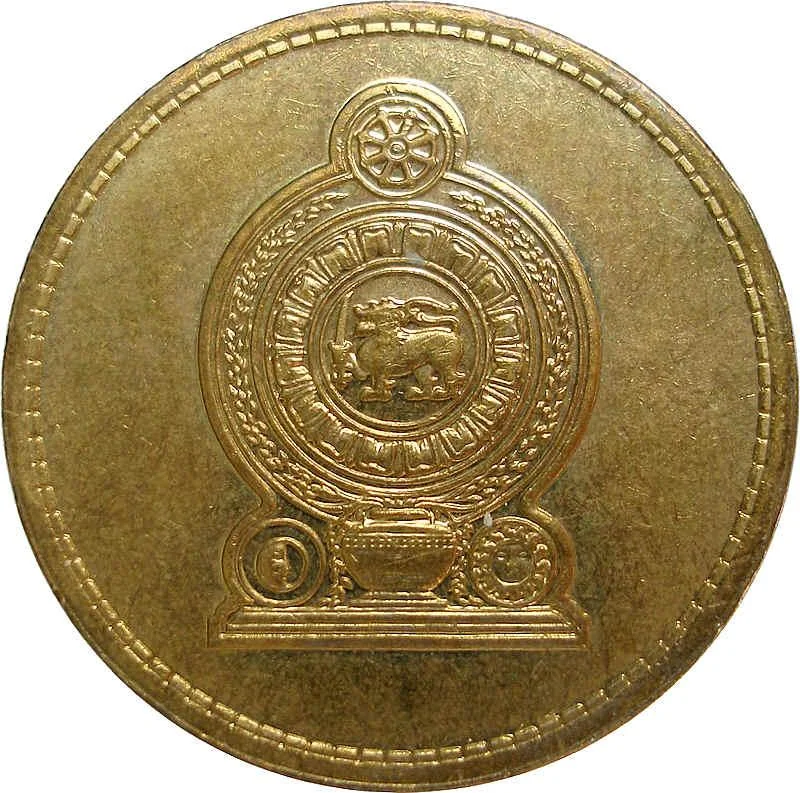
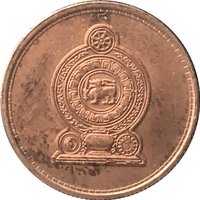
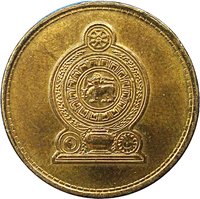
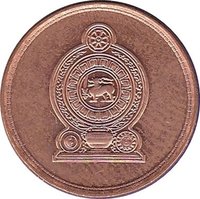
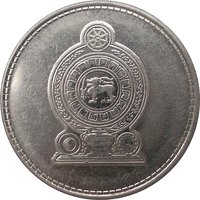
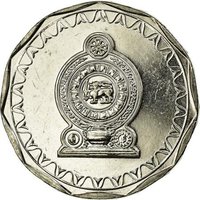
Obverse
Description:
Sri Lanka's emblem
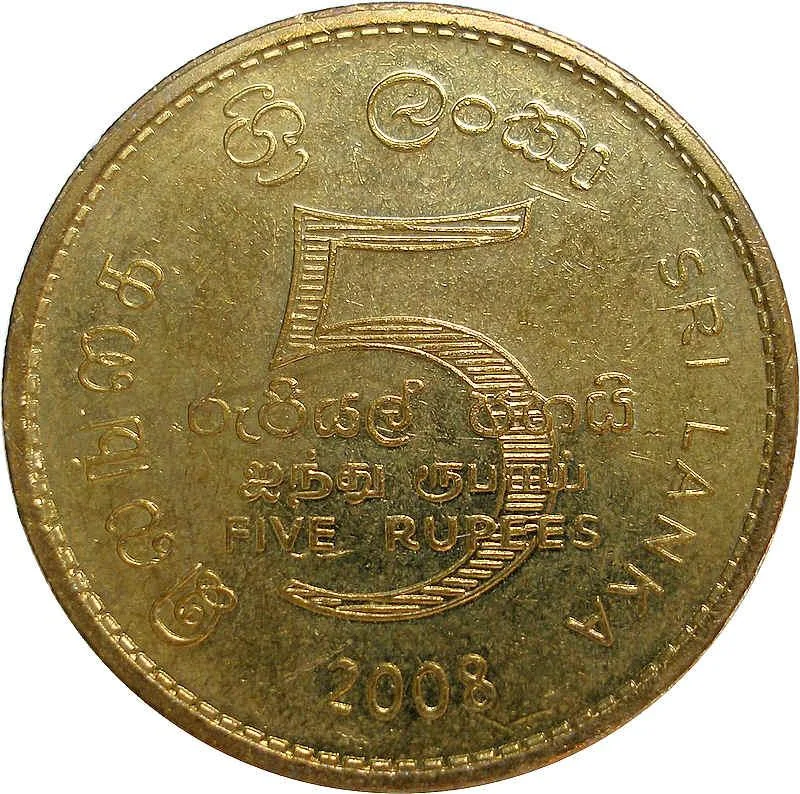
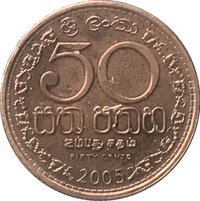
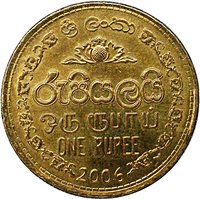
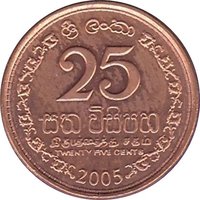
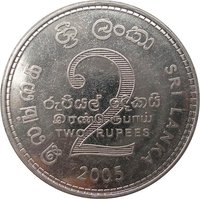
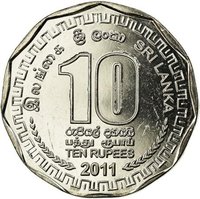
Reverse
Mints
| Name | Mark |
|---|---|
| Royal Mint | — |
Mintings
| Year | Mint Mark | Mintage | Quality | Collection |
|---|---|---|---|---|
| 2005 | — | 30,000,000 | ||
| 2006 | — | 67,140,000 | ||
| 2008 | — | 20,000,000 | ||
| 2009 | — | — | ||
| 2011 | — | 60,000,000 | ||
| 2013 | — | 98,000,000 |
Historical background
In 2005, Sri Lanka's currency situation was characterized by relative stability and managed flexibility under a pegged exchange rate regime. The Central Bank of Sri Lanka (CBSL) maintained a peg of the Sri Lankan Rupee (LKR) primarily to the US Dollar, with the official rate hovering around LKR 100 to 101 per USD for much of the year. This stability was actively defended through CBSL interventions in the foreign exchange market, supported by reasonable levels of foreign reserves, which stood at approximately USD 2.5 to 3 billion. The period followed the 2001-2002 currency crisis, and the CBSL's policy focused on rebuilding confidence, controlling inflation, and maintaining a competitive exchange rate to support exports.
The economic backdrop was one of post-tsunami reconstruction and escalating conflict, which created competing pressures. The devastating December 2004 Indian Ocean tsunami required massive imports for rebuilding, putting downward pressure on the rupee. Simultaneously, the renewed intensity of the civil war with the LTTE increased security expenditures and dampened investor sentiment, posing risks to the balance of payments. However, these pressures were partially offset by strong inflows from remittances, garment exports, and tourism (despite the conflict), which helped cushion the current account and provided the CBSL with the means to manage the peg.
Overall, 2005 represented a year of cautious management where the CBSL successfully maintained nominal exchange rate stability. However, this stability came at a cost, including the need for ongoing market interventions and the accumulation of some external debt. The underlying vulnerabilities—a persistent budget deficit, a costly civil war, and reliance on volatile inflows—meant the managed peg was under latent strain. The situation set the stage for the increasing challenges the rupee would face in the subsequent years as these fundamental pressures intensified.
The economic backdrop was one of post-tsunami reconstruction and escalating conflict, which created competing pressures. The devastating December 2004 Indian Ocean tsunami required massive imports for rebuilding, putting downward pressure on the rupee. Simultaneously, the renewed intensity of the civil war with the LTTE increased security expenditures and dampened investor sentiment, posing risks to the balance of payments. However, these pressures were partially offset by strong inflows from remittances, garment exports, and tourism (despite the conflict), which helped cushion the current account and provided the CBSL with the means to manage the peg.
Overall, 2005 represented a year of cautious management where the CBSL successfully maintained nominal exchange rate stability. However, this stability came at a cost, including the need for ongoing market interventions and the accumulation of some external debt. The underlying vulnerabilities—a persistent budget deficit, a costly civil war, and reliance on volatile inflows—meant the managed peg was under latent strain. The situation set the stage for the increasing challenges the rupee would face in the subsequent years as these fundamental pressures intensified.
Series: 2005 Sri Lanka circulation coins
🌱 Very Common