

10 cash – South Xinjiang
Add to wishlist
China
Context
Years: 1890–1899
Country: China
Issuer: South Xinjiang
Ruler: Guangxu
Currency:
(1759—1909)
Demonetized: Yes
Material
Diameter: 25 mm
Shape: Round with a square hole
Composition: Copper
Magnetic: No
Technique: Cast
Alignment: Medal alignment
flip
References
Numista: #272756
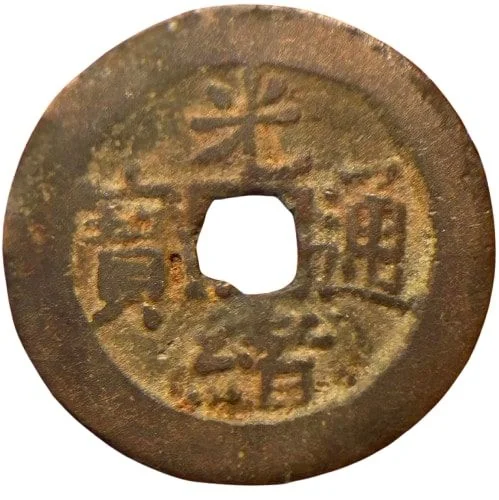
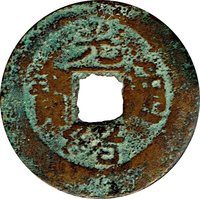
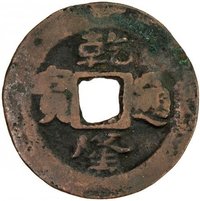
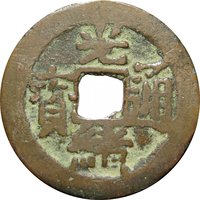
Obverse
Description:
Four Chinese characters read vertically, right to left.
Inscription:
光
寶 通
緒
寶 通
緒
Translation:
Guangxu
Tong Bao
Tong Bao
Scripts: Chinese (traditional, regular script)
Language: Chinese
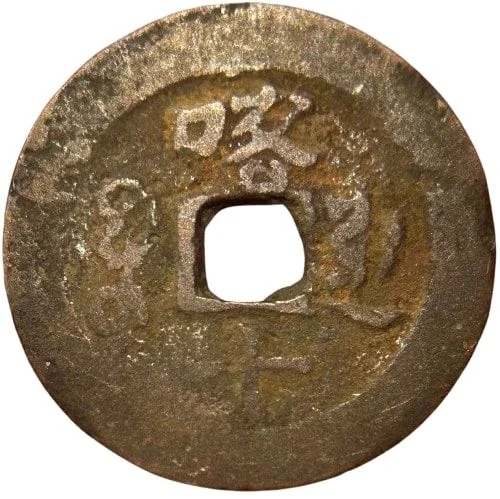
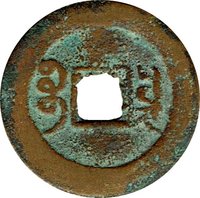
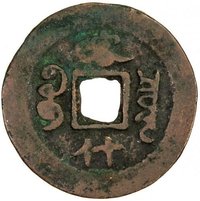
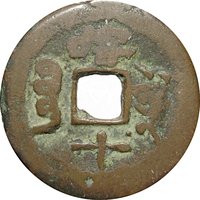
Reverse
Description:
One Chinese ideogram above and below, one Manchu word left and right.
Inscription:
喀
ᠪᠣᠣ ᡴᡠᠴᠠ
十
ᠪᠣᠣ ᡴᡠᠴᠠ
十
Translation:
Boo Kucha
Ten
Ten
Languages: Classical Mongolian, Chinese
Edge
Plain
Mints
| Name | Mark |
|---|---|
| Kucha Mint | — |
Mintings
| Year | Mint Mark | Mintage | Quality | Collection |
|---|---|---|---|---|
| — | — | — |
Historical background
In 1890, the currency situation in South Xinjiang (the Tarim Basin region) was characterized by profound complexity and instability, a direct legacy of its position at the crossroads of empires. Following the Qing dynasty's reconquest of the region from the Yakub Beg-led state in the late 1870s, official authority was re-established, but monetary control remained fragmented. The primary official currency was the Xinjiang red cash (Hongqian), a locally minted copper coin with a lower copper content and value than standard cash coins (zhiqian) used in China proper. This created a disruptive exchange rate, as trade with the rest of the empire required constant conversion, hampering commerce.
However, the Qing monetary system existed alongside a vibrant and older circulatory sphere rooted in Central Asian trade. Silver yamboos (ingots) and the Kashgar tanga, a silver coin of substantial local prestige, remained the preferred medium for larger transactions and long-distance trade along the Silk Road. Furthermore, Russian influence was growing rapidly; the Russian ruble, particularly the silver tsarist ruble, circulated widely, especially in northern Xinjiang but increasingly in southern markets due to the 1881 Treaty of St. Petersburg, which granted Russian merchants extensive trading rights. This made South Xinjiang a zone of competing currency realms.
The result was a financially burdensome environment for the local populace and merchants. Daily transactions required navigating a confusing hierarchy of coins with fluctuating values, leading to widespread manipulation by money changers and officials. The Qing authorities struggled to impose a unified standard, as the red cash was distrusted, while silver and foreign coins drained out for imports. This monetary disorder reflected the broader transitional and contested nature of late 19th-century Xinjiang, caught between a weakening Qing central administration, resilient local traditions, and expanding Russian economic power.
However, the Qing monetary system existed alongside a vibrant and older circulatory sphere rooted in Central Asian trade. Silver yamboos (ingots) and the Kashgar tanga, a silver coin of substantial local prestige, remained the preferred medium for larger transactions and long-distance trade along the Silk Road. Furthermore, Russian influence was growing rapidly; the Russian ruble, particularly the silver tsarist ruble, circulated widely, especially in northern Xinjiang but increasingly in southern markets due to the 1881 Treaty of St. Petersburg, which granted Russian merchants extensive trading rights. This made South Xinjiang a zone of competing currency realms.
The result was a financially burdensome environment for the local populace and merchants. Daily transactions required navigating a confusing hierarchy of coins with fluctuating values, leading to widespread manipulation by money changers and officials. The Qing authorities struggled to impose a unified standard, as the red cash was distrusted, while silver and foreign coins drained out for imports. This monetary disorder reflected the broader transitional and contested nature of late 19th-century Xinjiang, caught between a weakening Qing central administration, resilient local traditions, and expanding Russian economic power.

✨ Legendary