

Obverse
Description:
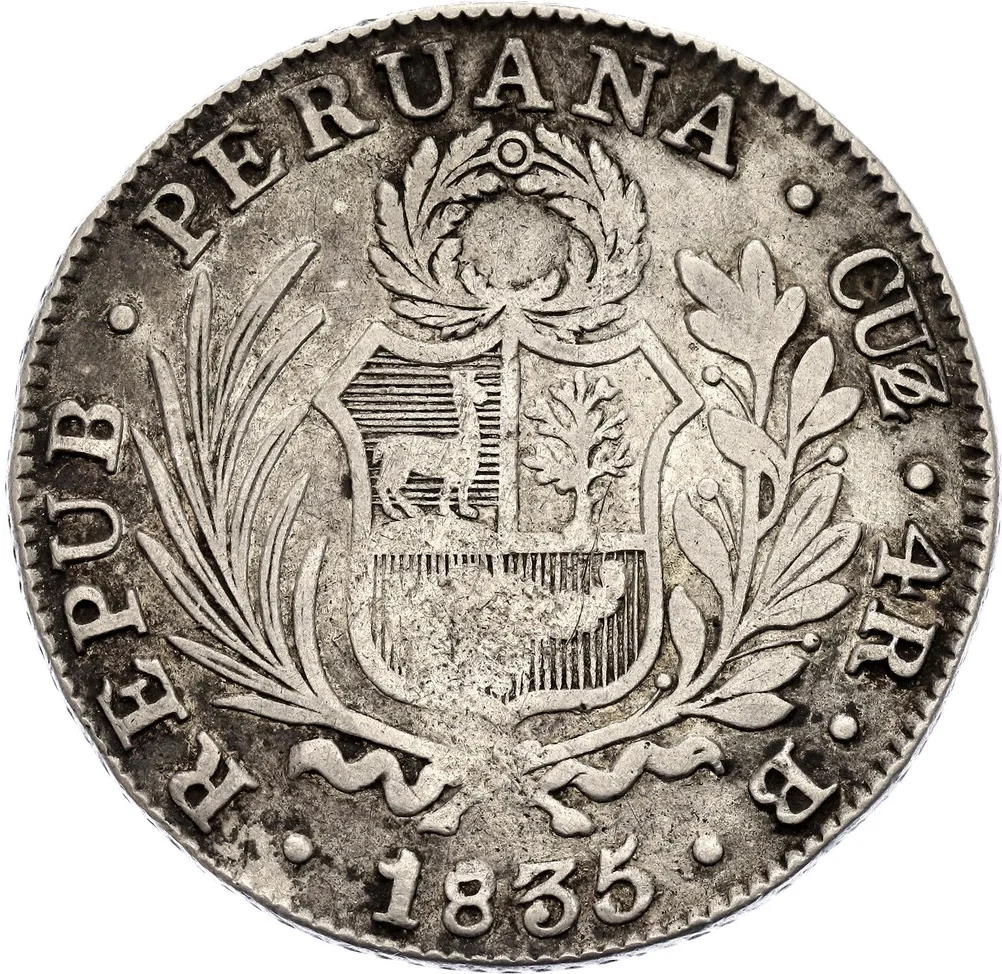
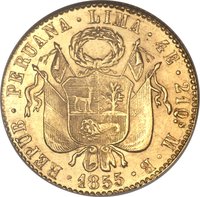
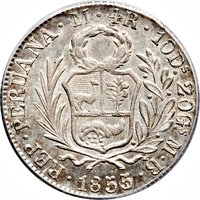
Wreath above arms, flanked by sprigs, date beneath.
Inscription:
REPUB . PERUANA . CUZ . 4R . B
. 1836 .
. 1836 .
Script: Latin
Reverse
Description:
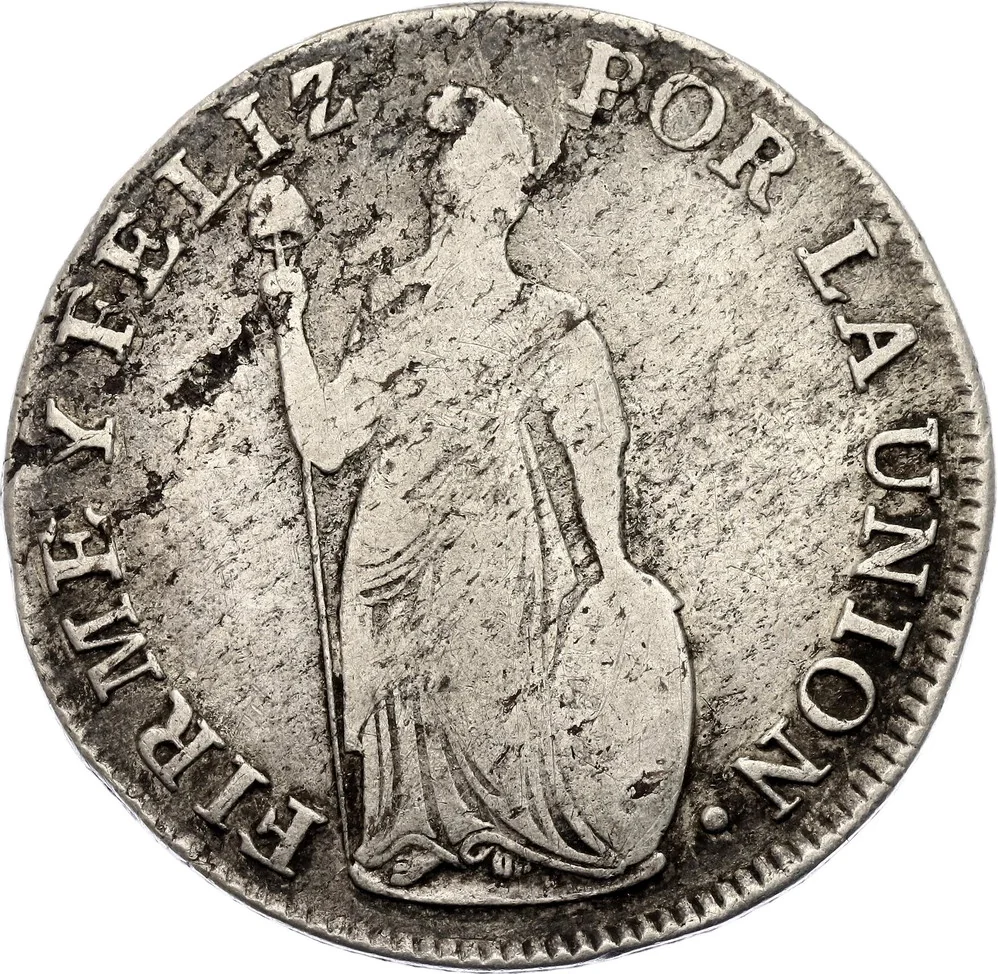
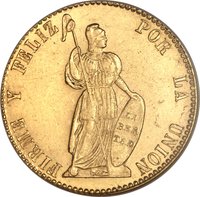
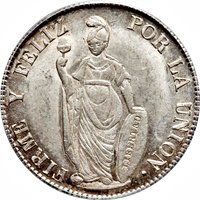
Standing Liberty quarter. Mint mark within monogram; numerous die varieties.
Inscription:
FIRME Y FELIZ POR LA UNION .
Script: Latin
Edge
Mintings
| Year | Mint Mark | Mintage | Quality | Collection |
|---|---|---|---|---|
| 1835 | CUZco | — | ||
| 1836 | AREQ | — | ||
| 1836 | CUZco | — | ||
| 1839 | AREQ | — | ||
| 1840 | AREQ | — |
Historical background
In 1835, Peru’s currency situation was chaotic and fragmented, a direct reflection of the nation's profound political instability following independence from Spain. The country was embroiled in the political and military struggle of the Peru-Bolivian Confederation, with competing caudillos and regional factions vying for control. This political disunity prevented the establishment of a unified, national monetary authority or a standardized currency system, leaving the financial landscape in disarray.
The circulating medium was a confusing mixture of physical currencies. These included worn and clipped Spanish colonial coins, such as pesos and reales, alongside a limited and often mistrusted issuance of republican coinage from the Lima mint. More significantly, a flood of foreign coins, particularly Bolivian pesos and Chilean currency, circulated widely due to regional trade and the movements of armies. The value and acceptance of these coins varied greatly by region and the whims of local authorities, leading to widespread confusion in commerce.
Consequently, Peru suffered from severe monetary inflation and a lack of public confidence. The government, desperate for revenue to fund its military campaigns, resorted to debasing coinage and was unable to guarantee the value of any currency in circulation. This environment of financial uncertainty stifled economic recovery and long-term investment, as merchants and the public struggled with unpredictable exchange rates and the very real risk that their money might be suddenly rejected or devalued, exacerbating the economic hardships of the period.
The circulating medium was a confusing mixture of physical currencies. These included worn and clipped Spanish colonial coins, such as pesos and reales, alongside a limited and often mistrusted issuance of republican coinage from the Lima mint. More significantly, a flood of foreign coins, particularly Bolivian pesos and Chilean currency, circulated widely due to regional trade and the movements of armies. The value and acceptance of these coins varied greatly by region and the whims of local authorities, leading to widespread confusion in commerce.
Consequently, Peru suffered from severe monetary inflation and a lack of public confidence. The government, desperate for revenue to fund its military campaigns, resorted to debasing coinage and was unable to guarantee the value of any currency in circulation. This environment of financial uncertainty stifled economic recovery and long-term investment, as merchants and the public struggled with unpredictable exchange rates and the very real risk that their money might be suddenly rejected or devalued, exacerbating the economic hardships of the period.
🌟 Limited