


Obverse
Description:
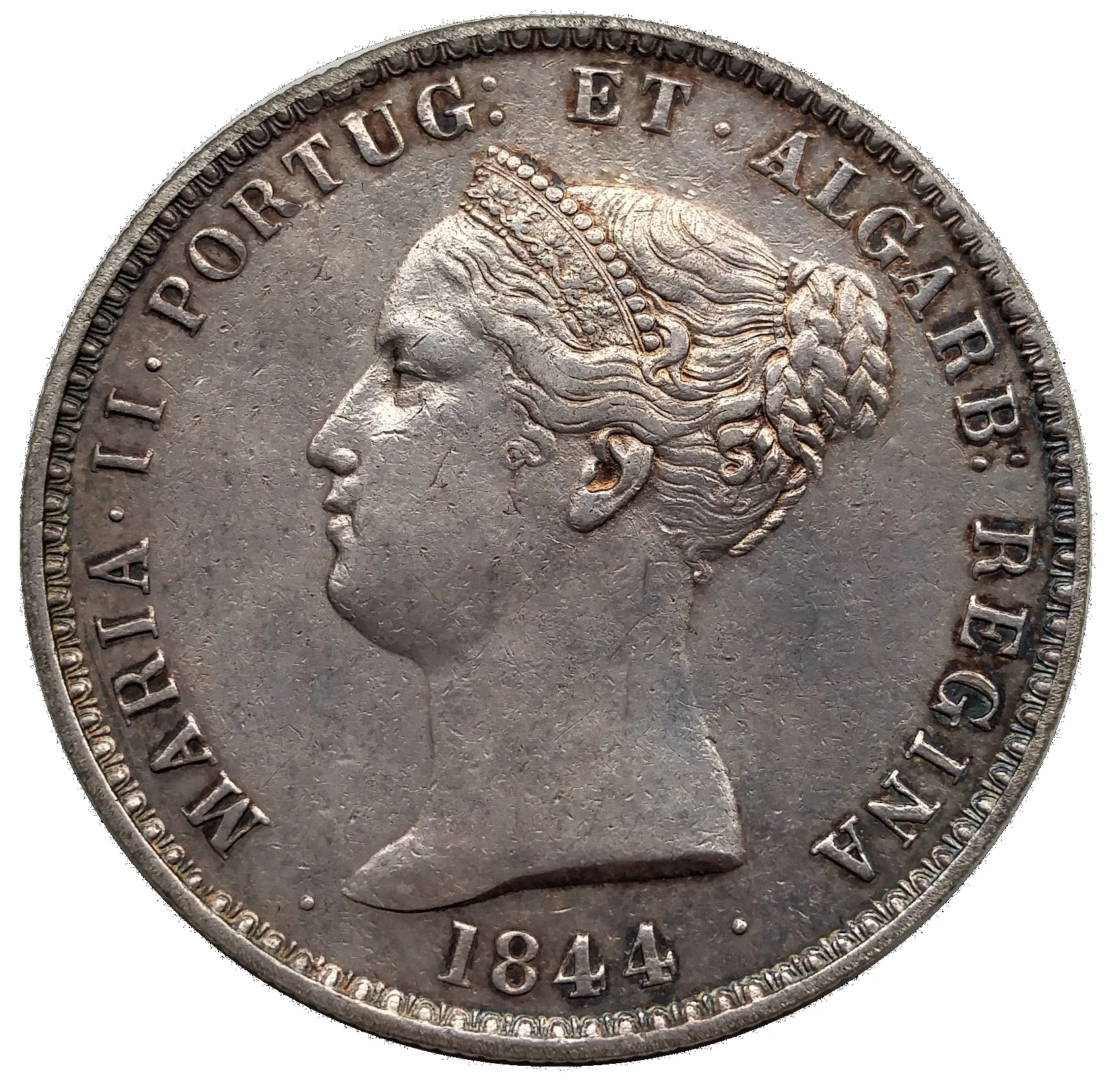
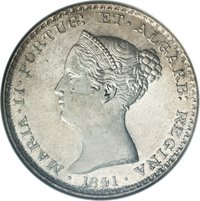
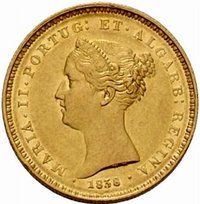
Queen in diadem and chinion, left-facing. Latin inscription encircles portrait; year below.
Inscription:
MARIA.II.PORTUG:ET.ALGARB:REGINA
W WYON
1844
W WYON
1844
Translation:
Maria II, Queen of Portugal and the Algarves
W Wyon
1844
W Wyon
1844
Script: Latin
Designer: William Wyon
Reverse
Description:
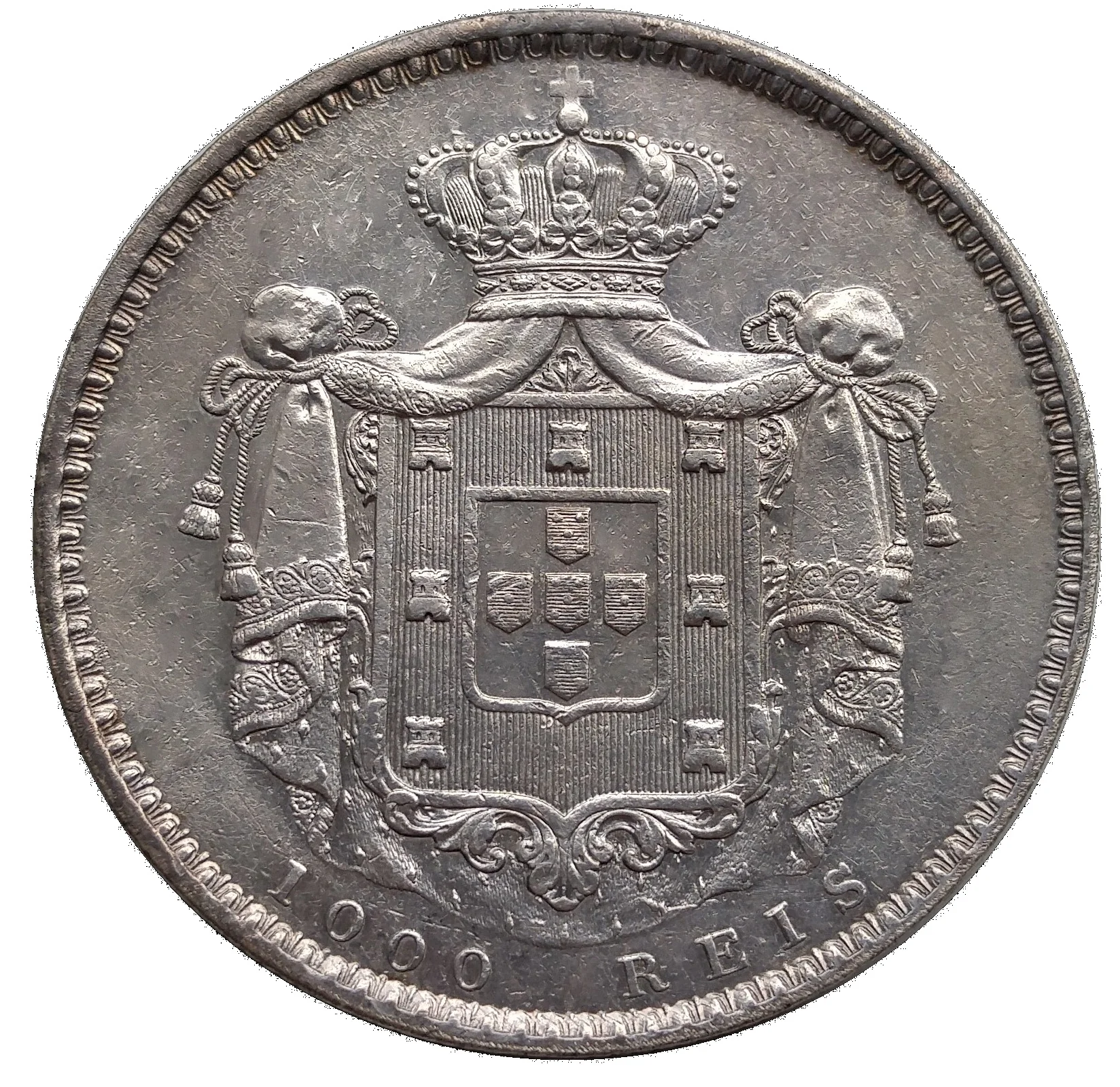
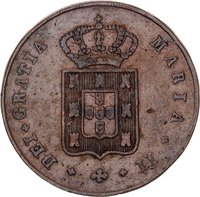
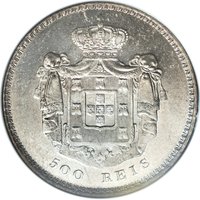
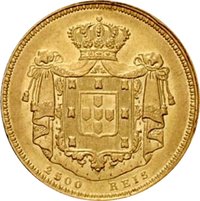
Portuguese royal arms on ermine, crowned. Value below.
Inscription:
1000 REIS
Script: Latin
Edge
Reeded
Mints
| Name | Mark |
|---|---|
| Imprensa Nacional - Casa da Moeda | — |
Mintings
| Year | Mint Mark | Mintage | Quality | Collection |
|---|---|---|---|---|
| 1837 | — | 2,295 | ||
| 1838 | — | 3,959 | ||
| 1842 | — | 1,515 | ||
| 1844 | — | — | ||
| 1845 | — | 10,724 |
Historical background
In 1837, Portugal's currency situation was a complex and turbulent legacy of the Liberal Wars (1828-1834). The victorious Liberal government, led by Queen Maria II, faced a kingdom with a severely debased and chaotic monetary system. The conflict had drained the treasury, leading to excessive issuance of paper money (papel-moeda) by both sides, which circulated alongside a variety of older Portuguese coins, foreign currencies (like British gold), and even privately issued tokens. This resulted in a profound loss of public confidence in paper notes and widespread instability in everyday commerce.
The core of the problem was the drastic depreciation of the paper currency against gold and silver. The government's paper money, intended to be convertible, had become virtually worthless, trading at a steep discount to metallic currency. This created a dual-system economy where transactions in specie were preferred but scarce, while the paper necessary for official payments was deeply distrusted. The state's finances were crippled by this disparity, as tax revenues collected in depreciated paper were insufficient to cover obligations, many of which were demanded in gold.
In response, the government of the Septemberist Prime Minister, the Duke of Terceira, enacted a crucial monetary reform in 1837. This law aimed to restore order by demonetizing the old, discredited paper issues and establishing a new, more stable currency unit: the real. More importantly, it affirmed Portugal's commitment to a bimetallic standard (gold and silver) and laid the groundwork for eventual stability. While not an instant solution—financial pressures and depreciation continued for years—the 1837 reform was a foundational step toward the comprehensive reform that would come a decade later with the creation of the escudo in 1847.
The core of the problem was the drastic depreciation of the paper currency against gold and silver. The government's paper money, intended to be convertible, had become virtually worthless, trading at a steep discount to metallic currency. This created a dual-system economy where transactions in specie were preferred but scarce, while the paper necessary for official payments was deeply distrusted. The state's finances were crippled by this disparity, as tax revenues collected in depreciated paper were insufficient to cover obligations, many of which were demanded in gold.
In response, the government of the Septemberist Prime Minister, the Duke of Terceira, enacted a crucial monetary reform in 1837. This law aimed to restore order by demonetizing the old, discredited paper issues and establishing a new, more stable currency unit: the real. More importantly, it affirmed Portugal's commitment to a bimetallic standard (gold and silver) and laid the groundwork for eventual stability. While not an instant solution—financial pressures and depreciation continued for years—the 1837 reform was a foundational step toward the comprehensive reform that would come a decade later with the creation of the escudo in 1847.
💎 Very Rare