

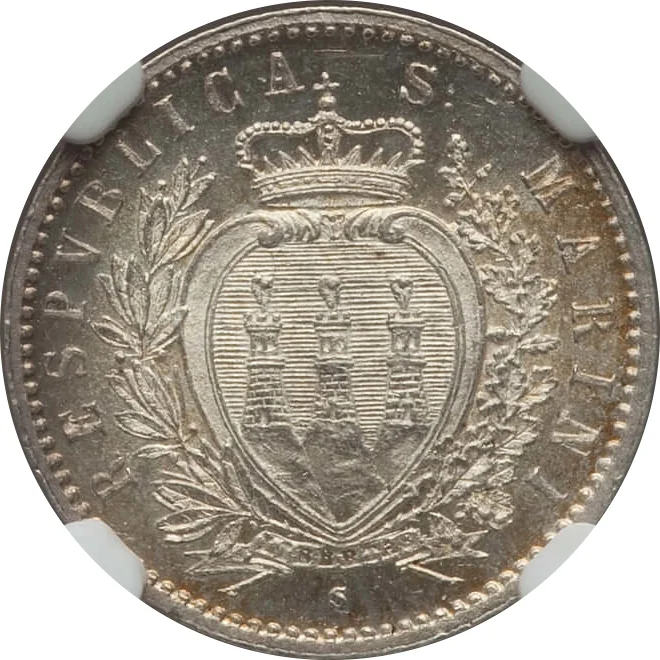
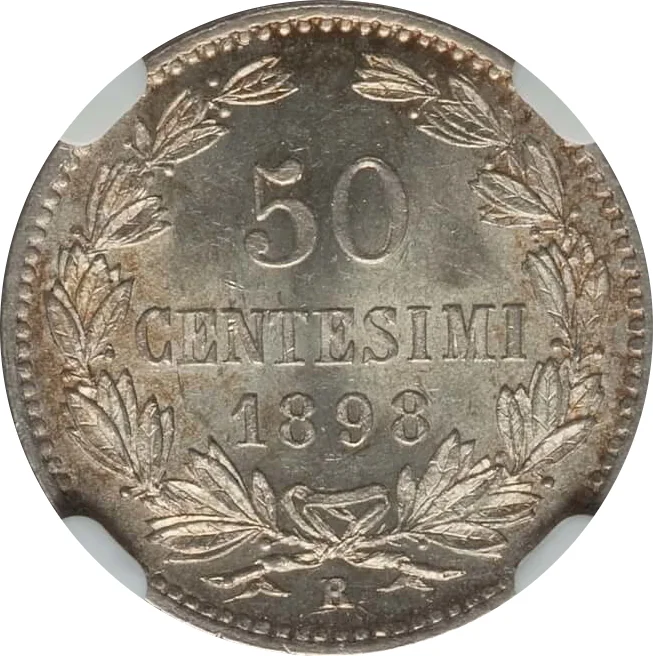
50 Centesimi – San Marino
San Marino
Context
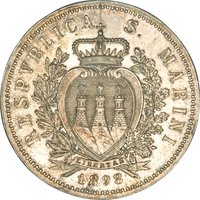
Year: 1898
Issuer: San Marino 
Period:
(since 301)
Currency:
(1864—2001)
Demonetized: Yes
Total mintage: 40,000
Material
References
KM: #Click to copy to clipboard3
Numista: #27072
Value
Exchange value: 0.50 SML
Bullion value: $5.82
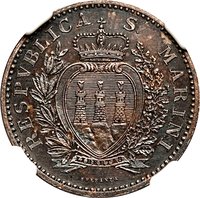
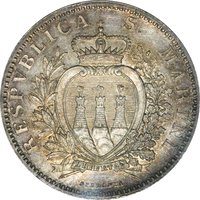
Obverse
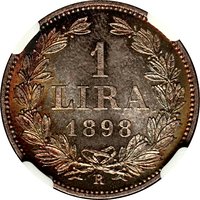
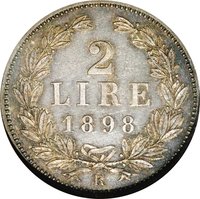
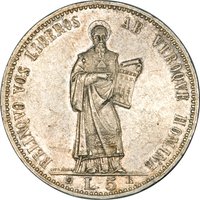
Reverse
Edge
Plain
Categories
| Symbols> Coat of Arms |
Mints
| Name | Mark |
|---|---|
| Rome | R |
Mintings
| Year | Mint Mark | Mintage | Quality | Collection |
|---|---|---|---|---|
| 1898 | R | 40,000 |
Historical background
In 1898, San Marino’s currency situation was intrinsically tied to that of the surrounding Kingdom of Italy, operating under a de facto monetary union without issuing its own circulating coinage. Following the Italian unification, the Italian Lira, based on the Latin Monetary Union standards, had become the dominant and official medium of exchange within the Republic. San Marino’s historic right to mint its own coins was, at this time, largely dormant for everyday transactions; the last small-scale issues for collectors and ceremony had been in the 1860s. For all practical commercial and state purposes, Italian coins and banknotes were used exclusively.
This arrangement was formalized through a series of conventions with Italy, most notably the 1862 Treaty of Friendship and the subsequent 1897 Convention. The 1897 agreement, which came into force just a year before the period in question, was particularly significant as it explicitly recognized the use of Italian currency within San Marino and granted the Republic a limited, symbolic right to mint its own fractional silver and copper coinage. However, these Sammarinese coins were strictly limited in quantity, had to align with Italian weight and metal standards, and were intended more as tokens of sovereignty than for economic independence.
Consequently, the background of 1898 is one of monetary dependency balanced by negotiated privilege. San Marino had ceded control over its monetary policy to Italy and was integrated into the Italian economic sphere. The state’s revenue, including the vital annual compensation from Italy for forgone customs duties, was calculated in Italian Lira. While this integration provided stability and facilitated trade, it also meant that San Marino’s financial health was directly susceptible to the economic conditions and fiscal decisions made in Rome, a reality that would define its monetary landscape for decades to come.
This arrangement was formalized through a series of conventions with Italy, most notably the 1862 Treaty of Friendship and the subsequent 1897 Convention. The 1897 agreement, which came into force just a year before the period in question, was particularly significant as it explicitly recognized the use of Italian currency within San Marino and granted the Republic a limited, symbolic right to mint its own fractional silver and copper coinage. However, these Sammarinese coins were strictly limited in quantity, had to align with Italian weight and metal standards, and were intended more as tokens of sovereignty than for economic independence.
Consequently, the background of 1898 is one of monetary dependency balanced by negotiated privilege. San Marino had ceded control over its monetary policy to Italy and was integrated into the Italian economic sphere. The state’s revenue, including the vital annual compensation from Italy for forgone customs duties, was calculated in Italian Lira. While this integration provided stability and facilitated trade, it also meant that San Marino’s financial health was directly susceptible to the economic conditions and fiscal decisions made in Rome, a reality that would define its monetary landscape for decades to come.
⭐ Somewhat Rare